Before the sun is up, someone in the house is already awake. Mustard oil is warming on the stove, a bowl of ubtan is waiting by the bathroom door, and the whole place smells a little like Diwali. That quiet, early start is Choti Diwali.
Choti Diwali 2026 is on Sunday, 8 November, and yes, it shares its date with the main Diwali. Morning is for the oil bath. Evening is for lamps. In between sits the old Narakasura story most of us grew up hearing.
Below you'll find the date, the New Delhi snan time, why the day matters, the puja steps and a samagri list. Timings shift a little from city to city, so glance at your local panchang too.
Choti Diwali 2026 at a Glance: Date, Tithi and Snan Time
Short on time? This is the quick version: the date, the tithi, the New Delhi bath timing, who gets worshipped and what comes next. Everything is in IST. Your city may differ by a few minutes, so check your local panchang before setting the alarm.
Date (India) | Sunday, 8 November 2026 |
|---|---|
Other names | Naraka Chaturdashi, Roop Chaudas, Narak Nivaran Chaturdashi |
Chaturdashi tithi (IST) | Begins 10:48 AM on 7 November. Ends 11:28 AM on 8 November. |
Abhyang snan, New Delhi | About 5:36 AM to 6:37 AM, before sunrise |
Key deities | Lord Krishna, Goddess Kali, Yama |
What comes next | Diwali Lakshmi Puja, evening of 8 November |
What Is Choti Diwali? Meaning, Names and Where It Fits
Choti Diwali is the little festival that comes right before the big Diwali night. You'll also hear it called Naraka Chaturdashi or Roop Chaudas. Mornings matter most: an early oil bath, clean clothes, and a few diyas once it gets dark.
"Choti" simply means small. Naraka comes from the demon Narakasura, and Chaturdashi is the fourteenth tithi of the dark fortnight. That falls in Kartik if your calendar is Purnimanta, and in Ashwin if it's Amanta.
It's day two of the five-day Diwali stretch. Missed day one? Our Dhanteras 2026 guide covers it. Some families also start a day earlier with Govatsa Dwadashi.
Normally Choti Diwali lands a day before Diwali. In 2026 the two share one date. Chaturdashi lasts until 11:28 AM on 8 November, and Amavasya begins that same evening. For a short background read, Wikipedia has one.
Diwali 2026 Calendar: All 5 Days in Order
Diwali runs for five days, and Choti Diwali is day two. The table below lists each day with its date and a one-line meaning, which helps when you're juggling cleaning, shopping, puja and relatives' visits. Dates are for India.
Day | Date | Festival | In a line |
|---|---|---|---|
1 | Friday, 6 Nov | Something new for the home and a lamp for protection | |
2 | Sunday, 8 Nov (morning) | Naraka Chaturdashi (Choti Diwali) | Early oil bath and evening lamps |
3 | Sunday, 8 Nov (evening) | The main night of lamps and prayers | |
4 | Tuesday, 10 Nov | Govardhan Puja | Annakut, food offerings and thanks |
5 | Wednesday, 11 Nov | Bhai Dooj | Brothers and sisters |
Some calendars show Govardhan Puja on 9 November and Bhai Dooj on 10 November. We've gone with the India dates.
Why Is Choti Diwali Celebrated? 4 Stories Behind the Day
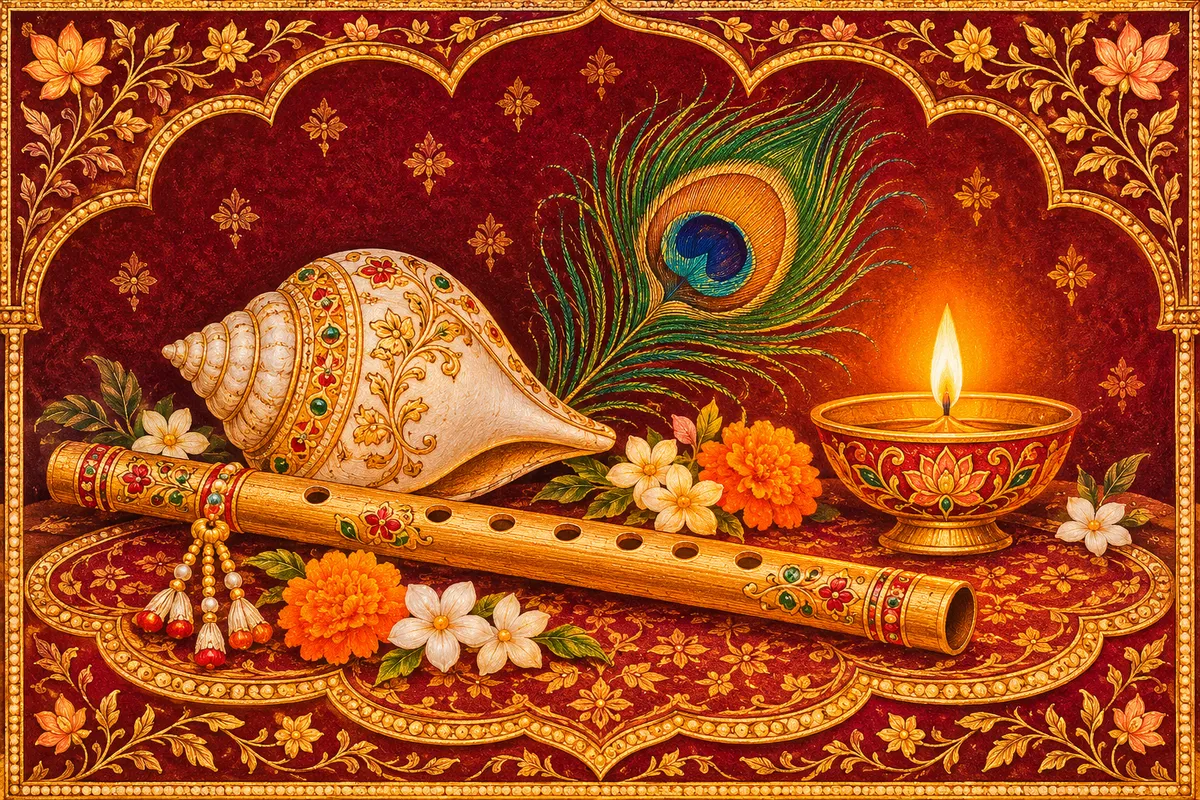
Ask three families and you might hear three stories. Regions remember different things, and every house has its own version. These four come up the most, and tradition says they all end the same way: light wins over darkness.
Krishna Defeats Narakasura
Tradition says Narakasura was a mighty king who tormented the devas and kept many women captive. Krishna, with Satyabhama by his side, defeated him and set them free. People lit lamps and bathed to celebrate. That bath is what we repeat today.
Kali Chaudas: The Night Before
Some regions worship Goddess Kali around this tithi. The night before Choti Diwali is often called Kali Chaudas, and in 2026 that's the night of 7 November. If your family keeps it, you already know how, so go by your own custom.
Yama Deepam: A Small Lamp for Protection
Many homes put out a small lamp for Yama so that no untimely sorrow walks into the house. Some families do it on Dhanteras, others on Choti Diwali. Just do what your elders do. They've been doing it far longer than any of us.
Roop Chaudas: The Beauty and Self-Care Ritual
The day also goes by Roop Chaudas. Think ubtan on the face, a long warm bath, clean clothes and a bit of time for yourself before Diwali night gets loud. Nothing complicated about it, and that's rather nice.
Choti Diwali 2026 Muhurat: Abhyang Snan Time and Tithi
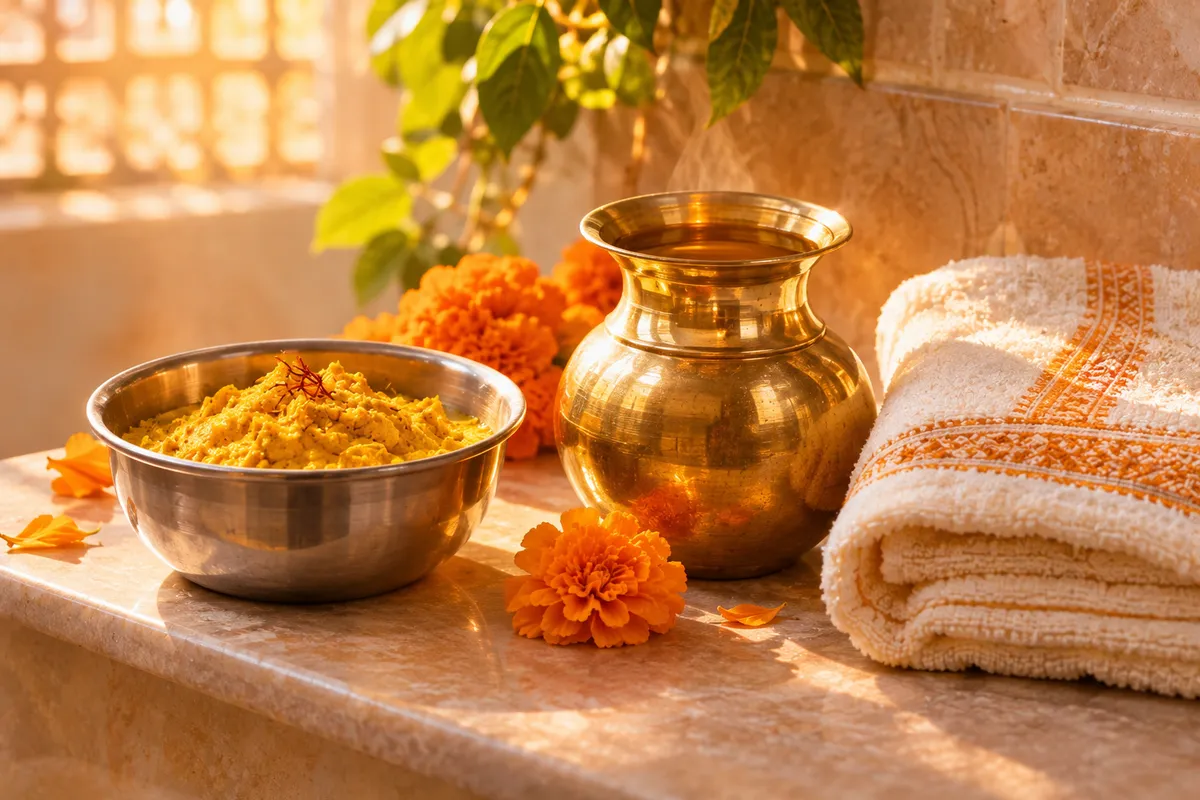
The bath is the one thing with a clock on it. It happens before sunrise, while Chaturdashi is still running. The table has the tithi and the New Delhi timings, and the note under it explains why a few calendars say 7 November.
Event | Timing (IST) |
|---|---|
Chaturdashi begins | 10:48 AM, 7 November |
Chaturdashi ends | 11:28 AM, 8 November |
Abhyang snan, New Delhi | About 5:36 AM to 6:37 AM, 8 November |
Kali Chaudas (where observed) | Night of 7 November |
Evening diyas | After sunset on 8 November |
Diwali Lakshmi Puja | Evening of 8 November |
Which date? A few calendars show Choti Diwali on 7 November, since Chaturdashi starts that morning and Kali Chaudas is kept that night. Indian calendars go by the tithi at sunrise, which puts the snan on 8 November. That's the date used here.
Running Late for the Snan? Read This
It happens, especially when there are guests. Chaturdashi lasts until 11:28 AM, and plenty of families still do the ubtan bath after sunrise. Ask your pandit ji if you want to be sure, or go by your family's habit. Don't stress over it.
Who Is Worshipped on Choti Diwali? Deities and Aartis
Krishna is the main deity of the day, though a few others get a mention depending on where you live. The table shows who, when, what each one stands for and the aarti to sing. You'll find more on our deities page.
Deity | When | What they stand for | Aarti |
|---|---|---|---|
Lord Krishna | Morning of 8 November | Victory of good over evil | |
Goddess Kali | Night of 7 November, where observed | Strength and protection from fear | |
Yama | Evening lamp | Safety and long life | A simple lamp is enough |
Lord Hanuman | In some regions, on this day | Courage and strength | |
Lord Ganesha | Start of every puja | A smooth beginning |
Choti Diwali Puja Vidhi at Home: 11 Easy Steps
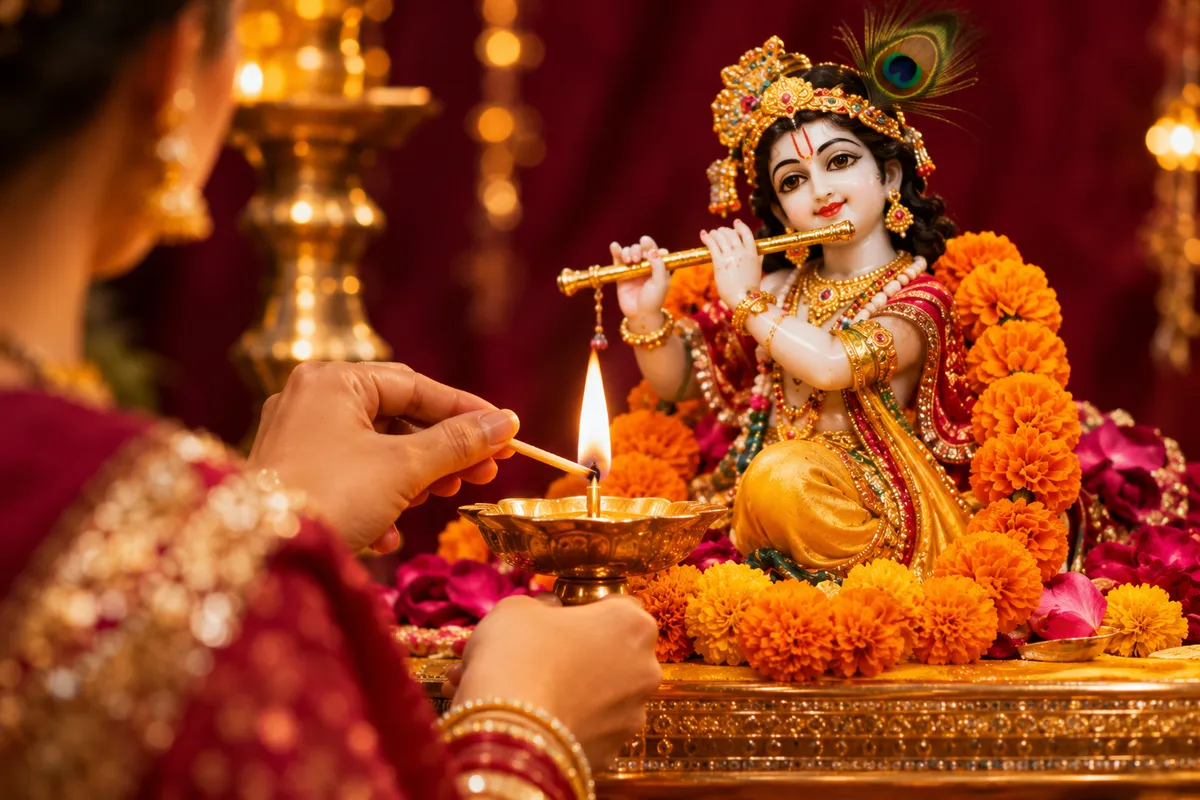
Every house does this a little differently, so use these steps as a rough guide and follow your own family's way. In short: get up early, oil and ubtan, bath, a quick prayer to Krishna, and diyas once the sun has set.
Get up early. Keep the oil, ubtan, towel and clean clothes ready the night before, so you aren't hunting for them in the dark.
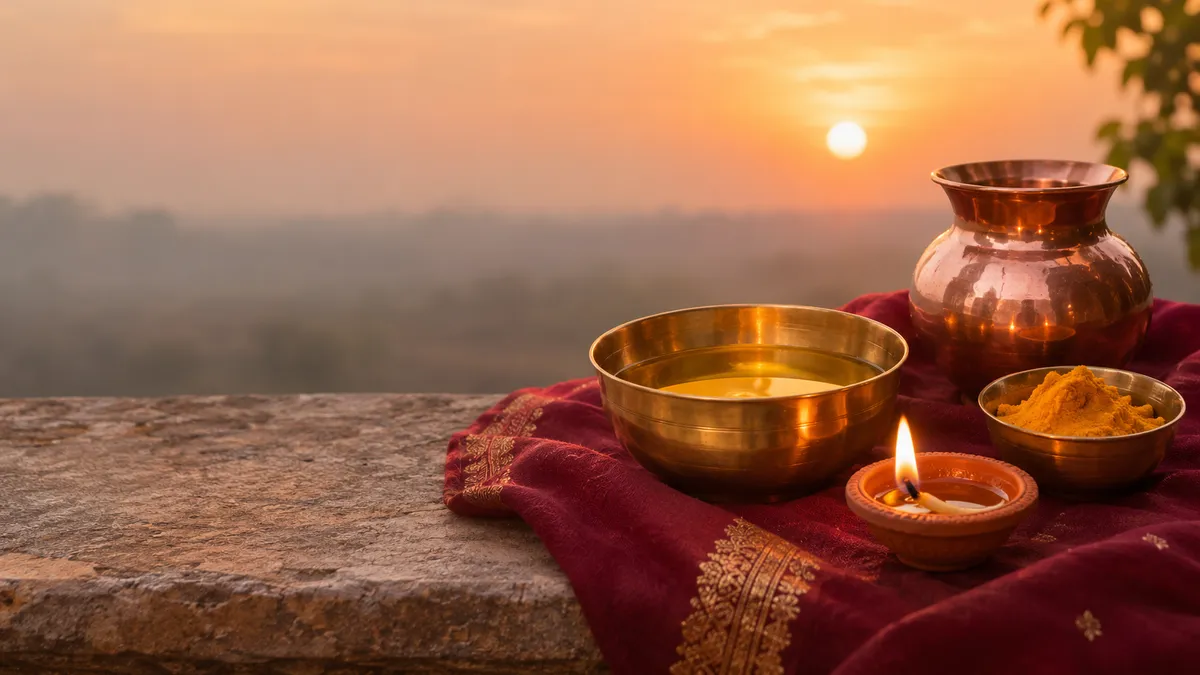
Warm the oil. Sesame or mustard. Touch a drop to your wrist first. It should be warm, never hot.
Massage the oil in gently, from head to toe.
Apply ubtan. Besan, haldi and a splash of milk or water, mixed into a paste.
Bathe before sunrise with warm water.
Dress in fresh clothes. New if you have them, clean if you don't.
Light a diya in the puja corner, bow to Krishna, and offer a flower and something sweet.
Sing or chant. Even a short aarti is enough.
In the evening, sweep the entrance, make a rangoli and put out the diyas.
After sunset, light the lamps. That includes one for Yama if your family does it.
Pass the sweets around. Family first, then the neighbours.
Puja Samagri Checklist: What to Keep Ready
Get everything together the night before and the morning stays calm. Most of this is already sitting in your kitchen or puja corner. This is what you need for the oil bath, the Krishna puja and the evening lamps.
Sesame or mustard oil, slightly warmed
Besan and haldi for ubtan
A clean towel and fresh clothes
Clay diyas, ghee or oil, cotton wicks
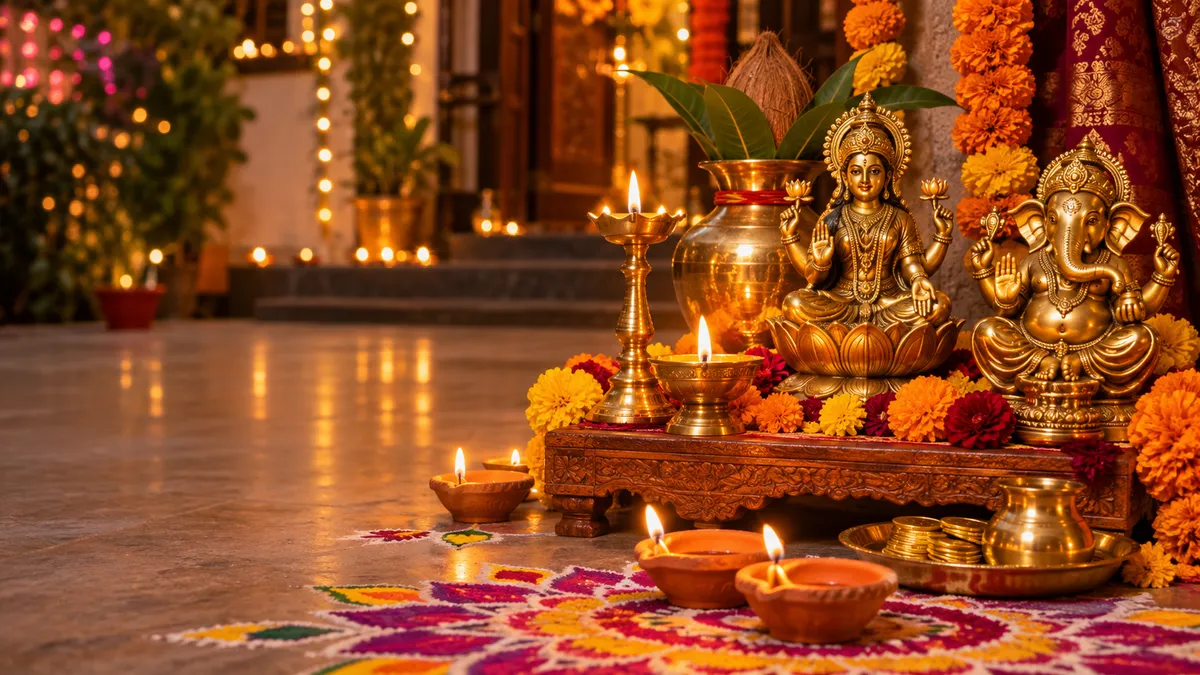
A picture or idol of Lord Krishna
Fresh flowers, roli and rice
Sweets for prasad (poha-based ones in some homes)
Matchbox and a steel tray for the lit diyas
How to Prepare Your Home: A Day-by-Day Plan
A bit of planning saves the morning. The table walks you from the deep clean a few days ahead to lighting the lamps after sunset on 8 November, right before Lakshmi Puja. Tick things off as you go and you'll be fine.
When | What to do |
|---|---|
A few days before | Finish the deep cleaning, wash curtains and mop the floors. |
Evening of 7 November | Keep oil, ubtan and clothes ready. Set an alarm. |
Before sunrise, 8 November | Take the abhyang snan. |
Morning | Do a short Krishna puja and have the first mithai of the day. |
Late afternoon | Make the rangoli and arrange the diyas. |
After sunset | Light the lamps, then get ready for Lakshmi Puja. |
Choti Diwali Rangoli Ideas: Simple Designs for Your Doorstep
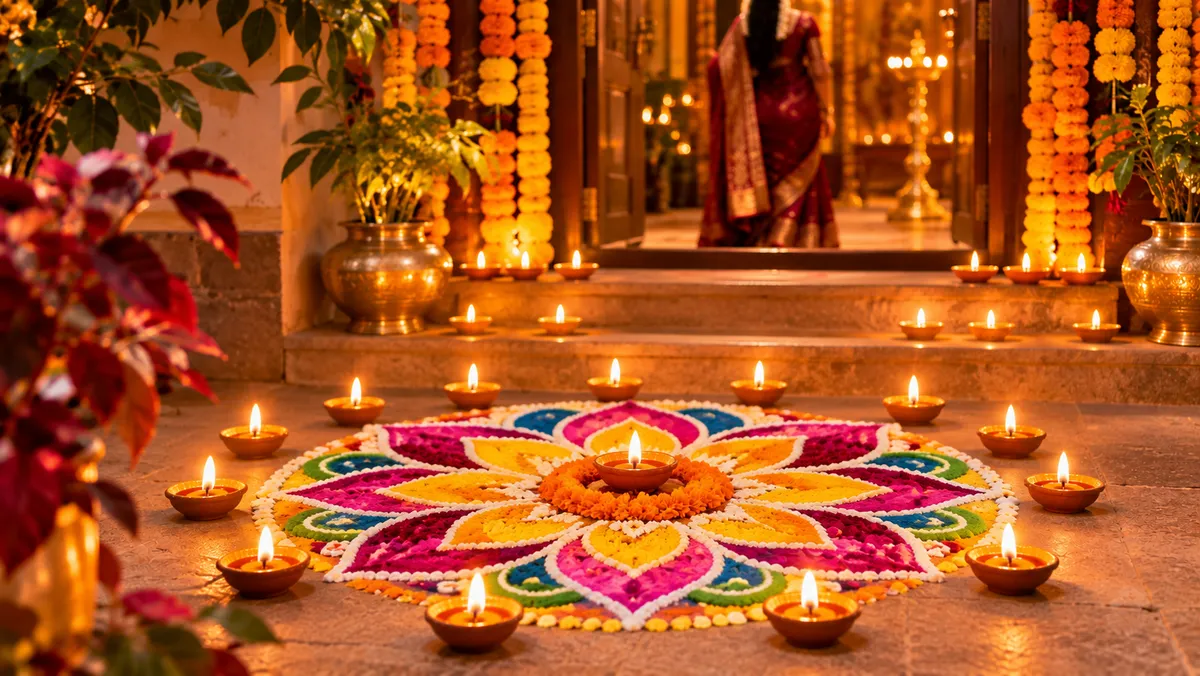
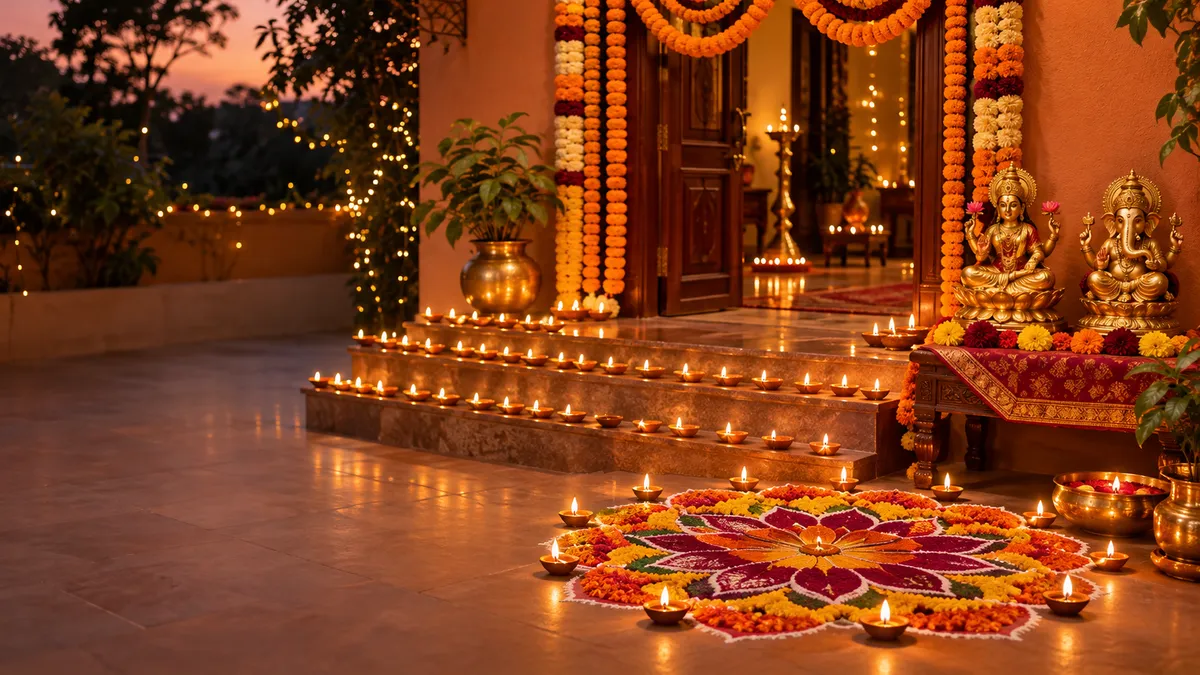
Rangoli is the first thing guests notice at your door. On Choti Diwali it's usually made in the late afternoon, before the diyas come out. You don't need any artistic skill. A few simple patterns, some flowers and a little patience are plenty.
Flower rangoli: marigold and rose petals laid out in a circle, with a diya in the middle. Bright, fresh and easy on the environment.
Rice-flour designs: dots joined by simple lines, much like the kolam you see in South Indian homes.
Diya ring: a plain outline with a ring of small diyas sitting inside it.
Lotus pattern: a simple lotus is a popular Diwali design, and it's easier than it looks.
Natural colours: haldi for yellow, kumkum for red, a pinch of rice flour for white.
Clean and dry the spot first, or the colours won't hold. Finish the rangoli before sunset, and keep diyas away from loose dupattas and curtains. Wipe off stray colour powder afterwards, since it gets slippery. Kids usually love helping with this one.
Traditions, Safety and Eco-Friendly Tips
Choti Diwali looks different in different states, but safety and eco habits matter everywhere. Skim the regional notes, keep the lamps where they can't tip over, and use the do's and don'ts table below as a last-minute check.
Maharashtra: families get up before dawn for the oil bath, then settle in with faral, the Diwali snacks.
Goa: tall Narakasura effigies are often burned in the early hours.
South India: this is often the main Diwali morning, with an oil bath at dawn.
Gujarat and Rajasthan: you'll hear Kali Chaudas and Roop Chaudas more than Choti Diwali.
Safety: keep diyas away from curtains, dupattas and kids. Never leave a lit lamp alone.
Eco tip: clay diyas, flower rangoli and natural colours are easy swaps.
Noise: go light on crackers. Elders, babies and pets will thank you.
Choti Diwali Do's and Don'ts at a Glance
Small habits make the morning safer and calmer. Check the oil temperature, put lamps on flat surfaces, and go with your family's customs. The table puts the do's and don'ts side by side so you can scan it in a few seconds.
Do | Don't |
|---|---|
Test the oil temperature before use | Use very hot oil |
Light diyas on a steady, fire-safe surface | Leave a lamp burning alone |
Check your own city's snan time | Copy a timing from another city |
Follow your family's custom | Argue about regional differences |
Clean up diya oil from the floor | Leave slippery spots near the door |
Start Choti Diwali 2026 With a Warm Bath and a Small Lamp
Choti Diwali is the quiet start to Diwali night. A warm oil bath, a few fresh flowers and a diya at the door are all it takes. Nothing grand is needed, and an unhurried morning like that is what makes the day feel special.
When the morning of 8 November comes, give yourself and the family a few quiet minutes. If it feels right, end the day with a few rounds of Naam Jaap.
Thinking of visiting a mandir this week? You can browse temple darshan on the app, or read our festival guides and the complete Diwali 2026 guide.
Get the Mobile Mandir app on the App Store or Google Play.
Happy Choti Diwali from all of us at Mobile Mandir.
Frequently asked questions
These are the questions people ask most about Choti Diwali 2026, from the date and snan time to Kali Chaudas, Roop Chaudas and how this day differs from the main Diwali night. The answers are short on purpose.
It's on Sunday, 8 November 2026 in India. The Chaturdashi tithi starts at 10:48 AM on 7 November and ends at 11:28 AM on 8 November (IST). The oil bath is done early that Sunday, before the sun is up. Do check your local panchang.
Yes, both fall on 8 November this year. The bath and Krishna puja happen in the early morning while Chaturdashi is on. Lakshmi Puja is that evening, once Amavasya has started. So it's a quiet morning followed by a bright night.
About 5:36 AM to 6:37 AM on 8 November in New Delhi, all before sunrise. Other cities can be a few minutes off either way, so check your own panchang for the exact slot. Try to be out of the bathroom before the sun comes up.
The name comes from Narakasura, the demon, and Chaturdashi, the fourteenth tithi. Tradition says Lord Krishna defeated him on this day. The oil bath and the lamps are how families remember that win every year.
Krishna, mainly. Depending on the region, people also remember Goddess Kali, Yama and Lord Hanuman, and every puja starts with Ganesha. Families have their own ways, so do what your elders do and you'll be fine.
Kali Chaudas is the same Chaturdashi, observed at night in some regions, mostly for Goddess Kali. In 2026 that's the night of 7 November, one night before the Choti Diwali morning bath in India. Many families keep it with a short prayer and a lamp.
It's another name for the same day, with the focus on ubtan, a warm bath and fresh clothes before Diwali night. In many homes people say Roop Chaudas far more often than Narak Chaturdashi. It's a gentle, feel-good ritual.
Families differ. Some light the Yama lamp on Dhanteras, others on Choti Diwali evening. If your family has a habit, follow it. If not, one small lamp outside the door is enough. There's no wrong answer here.
Choti Diwali falls on Chaturdashi and is about Krishna's victory over Narakasura and the early bath. Diwali falls on Amavasya, when Lakshmi Puja happens in the evening with lamps and prayers. This year both are on 8 November.
Yes, absolutely. A clean spot, a lit diya, a picture of Krishna and a sincere prayer are enough. A pandit ji can guide you if you want, but the oil bath and a short puja are easy to do at home. Keep it simple and unhurried.