Diwali hasn't started yet. No rangoli, no diyas, no sweets frying in the kitchen. But in cowsheds and courtyards across India, something small is already happening. A mother is washing a calf's feet. Someone is knotting marigolds around a cow's horns. A plate of food goes out to the animal that's kept the household going for years.
This is Govatsa Dwadashi, and in 2026 it's on Thursday, 5 November.
You might know it as Vasu Baras, Vagh Baras or Nandini Vrat, and wonder if they're all the same day. Mostly, yes. I'll untangle that below, along with the exact tithi, how to find the right puja time for your city, the full vidhi, the old stories behind it, what families eat that day, and the questions people keep asking every year.
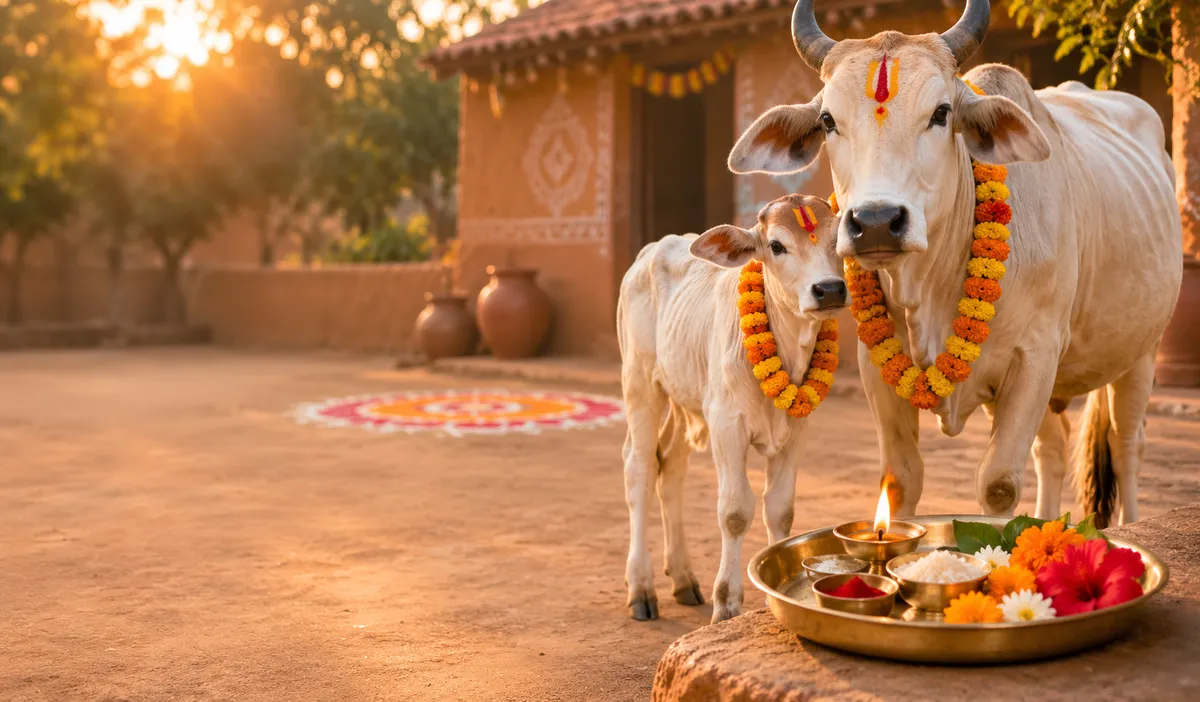
Cow and calf, dressed up and ready for the evening puja.
Govatsa Dwadashi 2026 at a Glance
Date | Thursday, 5 November 2026 |
|---|---|
Dwadashi tithi | About 10:35 AM on 5 November to 10:30 AM on 6 November (IST, per popular panchangs; check yours) |
Best puja time | Pradosh Kaal, the early evening after sunset, when cows come home from grazing |
Also called | Vasu Baras (Maharashtra), Vagh Baras (Gujarat), Nandini Vrat |
Who is worshipped | The cow and her calf, standing in for Kamadhenu and Nandini |
What comes next | Dhanteras on 6 November, Lakshmi Puja on 8 November |
What Is Govatsa Dwadashi?
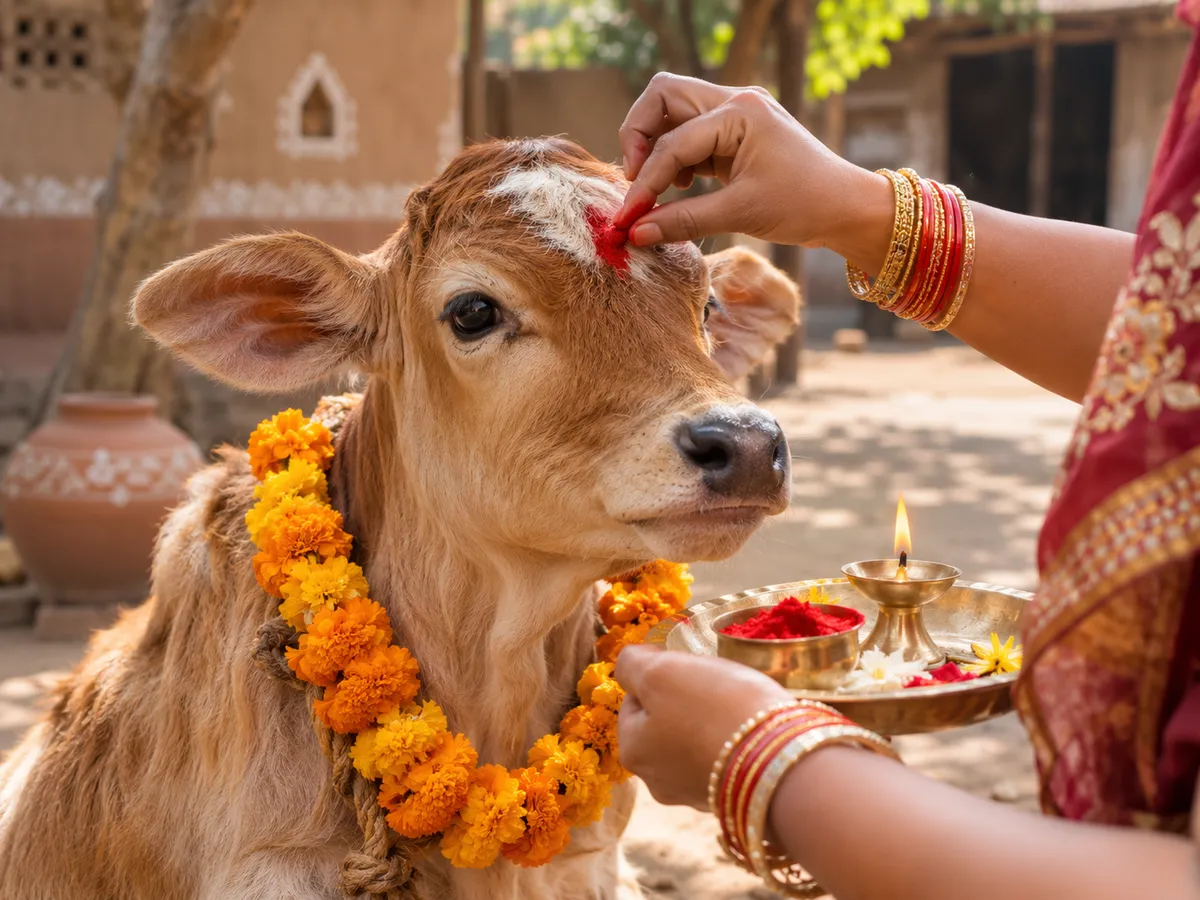
The name says it all. Go is cow, vatsa is calf, Dwadashi is the twelfth day of the lunar fortnight. People bathe the cow and calf, dress them up, worship them and feed them something special.
It falls on the Dwadashi of Krishna Paksha, the dark half of the month, in Ashwin or Kartika depending on which calendar your family follows. So it lands in October one year and November the next. Last year it was 17 October. This year Diwali is late, so it's 5 November.
In many Maharashtrian homes this isn't a minor ritual at all. It's the real first day of Diwali.
Haldi and kumkum on the forehead is where most families begin.
Govatsa Dwadashi 2026 Date, Tithi and Puja Time
The date is simple: Thursday, 5 November 2026. The timing needs a little more care.
How the tithi works
Dwadashi begins late morning on 5 November and runs till late morning on 6 November. But the puja happens in the evening, so what matters is which day has Dwadashi during Pradosh Kaal, the stretch right after sunset. This year, that's the 5th.
Finding the right muhurat for your city
Open three websites and you'll probably see three different windows. Don't panic. Pradosh Kaal depends on sunset, and sunset isn't the same in Delhi, Pune and Ahmedabad. One site might show roughly 4:55 PM to 7:35 PM. Another shows about 5:33 PM to 8:10 PM. Both can be right, for different cities.
Check the Pradosh Kaal muhurat for your city on a trusted panchang like Drik Panchang, or just ask your family priest.
If your cow comes back from grazing at a regular hour, plenty of families simply do the puja then.
Can't hit the exact window? Do it in the early evening of the 5th. The intention matters more than the minute.
One thing to watch: a few calendars list the festival on 6 November. If your regional panchang does, go with your local tradition.
Where it sits in the Diwali 2026 calendar
Date | Day | Festival |
|---|---|---|
5 November 2026 | Thursday | Govatsa Dwadashi / Vasu Baras |
6 November 2026 | Friday | Dhanteras |
8 November 2026 | Sunday | Lakshmi Puja (Diwali) |
Dates follow Drik Panchang and widely reported festival calendars; small regional differences are possible. More festival guides are on the Mobile Mandir festivals blog.
Vasu Baras, Vagh Baras, Nandini Vrat: Same Festival?
This is where people get stuck, so here's the quick sort.
Vasu Baras: the Marathi name. Baras comes from Dwadashi. In Maharashtra it kicks off Diwali.
Vagh Baras: the Gujarati name, also tied to the start of Diwali there.
Nandini Vrat: the fast dedicated to Nandini, sage Vasishtha's divine cow. You'll hear this one in the south and in parts of the north.
Guru Dwadashi: used in some regions, and linked with Dattatreya devotion.
Bachh Baras: the tricky one. It's a very similar cow-and-calf festival celebrated in parts of Rajasthan, Uttar Pradesh and Haryana, but usually in Bhadrapada, not at Diwali. In 2026 it fell on 7 September. Same spirit, different date.
So if your grandmother says "Bachh Baras" and the calendar says "Govatsa Dwadashi," you're both right. You're just talking about different times of the year.
The Stories Behind the Festival
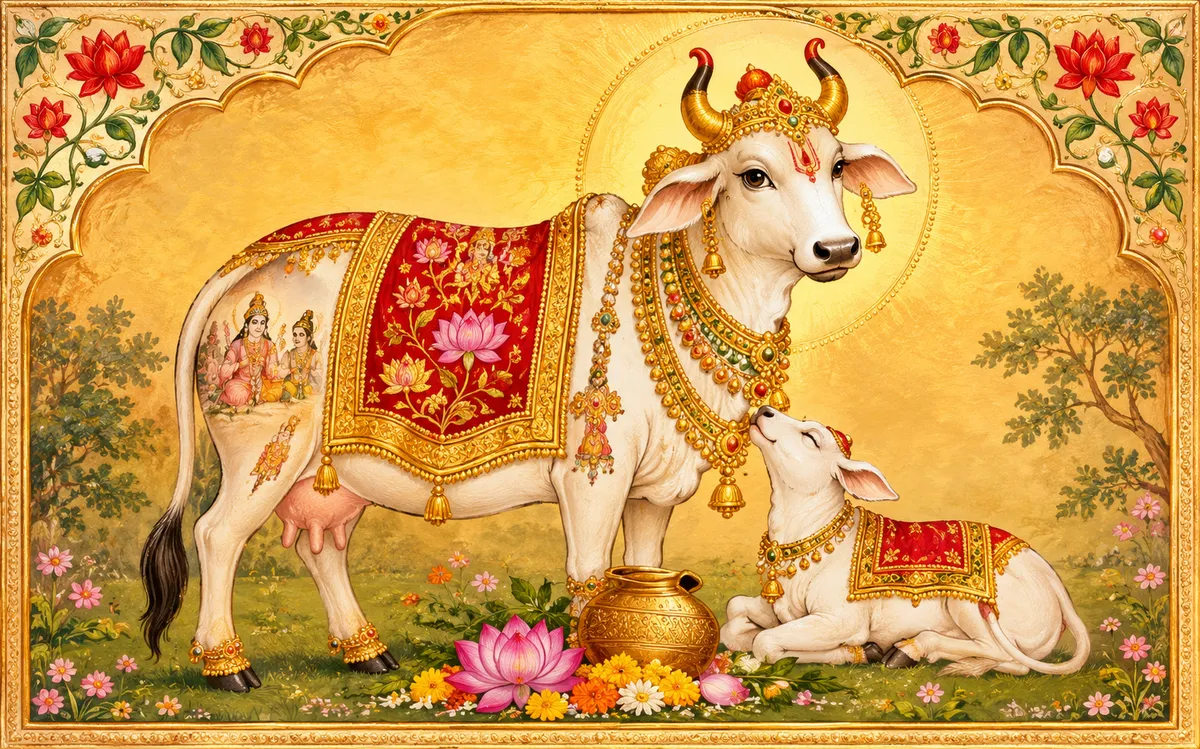
There isn't one origin story here. A few different threads of tradition run into each other, which is probably why the festival feels so deeply rooted.
Kamadhenu and the churning of the ocean
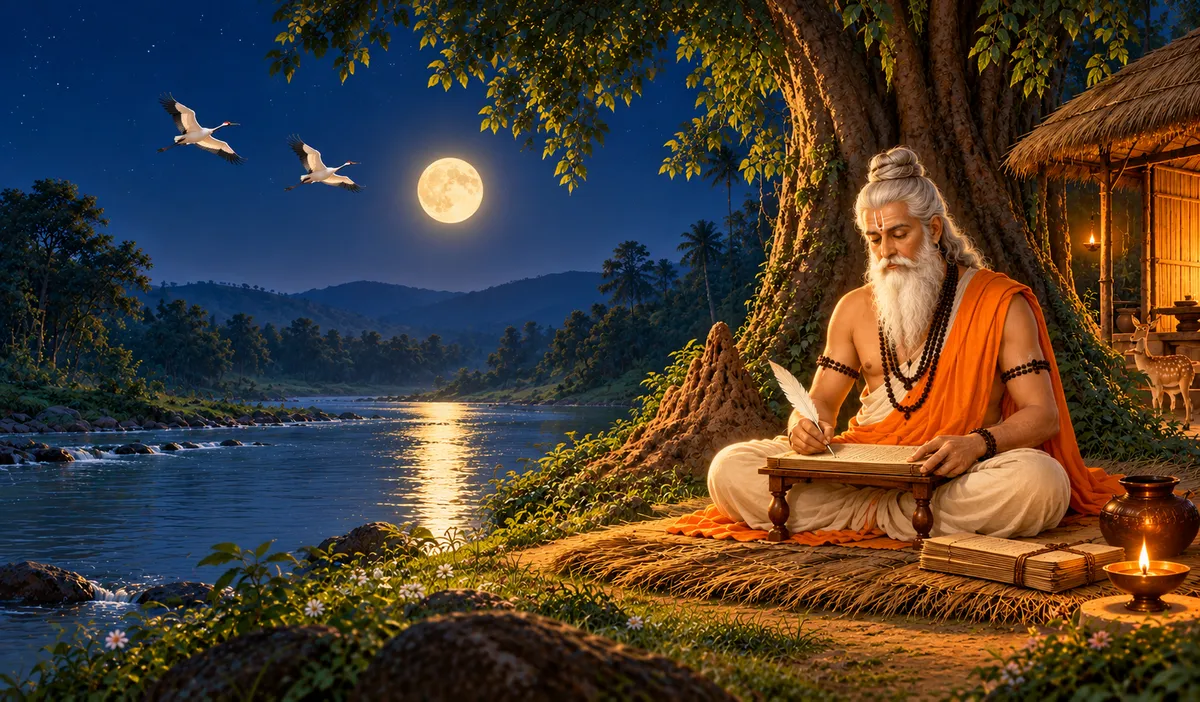
When the gods and demons churned the cosmic ocean (the Samudra Manthan), Kamadhenu came out of it. She's also called Surabhi, the cow who grants wishes. Tradition calls her the mother of all cows and a source of plenty. Honouring a cow on this day is a way of honouring that first gift.
Nandini and sage Vasishtha
Nandini, Kamadhenu's daughter, lived in Vasishtha's ashram and could produce whatever the household needed. The stories around her are about loyalty, self-control and what happens when people get greedy. That's where the name Nandini Vrat comes from. Devotees fast and pray to her for their children and their homes.
Krishna, the cowherd
Krishna and cattle go together. Govinda and Gopala literally mean the one who protects cows. Plenty of families connect the festival to his years in Vrindavan, and to Govardhan Puja, which comes just days later and remembers him lifting a hill to shelter his people and their herds. If you want to read more about each deity, the God section of Mobile Mandir is a good start.
A link to Dhruva
One tradition says King Uttanapada and his wife Suniti first observed this fast, and were blessed with their son Dhruva afterwards. That's one reason the vrat is tied to children's wellbeing.
Each region leans on a different story. The feeling underneath is the same everywhere: thanks to an animal that gives a lot and asks for very little.
Kamadhenu as traditional Indian art often shows her.
Why the Cow Matters So Much
The spiritual side
In Hindu belief the cow stands for motherhood, nourishment and non-violence. She gives milk and wants nothing back, which is why people call her Gau Mata. Worshipping her isn't really about turning an animal into a god. It's about saying thank you.
The everyday side
For generations, village homes ran on cattle: milk, ghee and curd, dung cakes for fuel, help in the fields, natural fertiliser. That's why a cow-and-calf festival sits so close to harvest time. India still has a huge cattle population. The 20th Livestock Census (2019) counted roughly 192 million cattle, so a lot of families still live alongside them.
What it teaches
Before you celebrate your own good fortune, stop and thank whoever made it possible. That works just as well in a high-rise flat as on a farm.
Govatsa Dwadashi Puja Vidhi: Step by Step
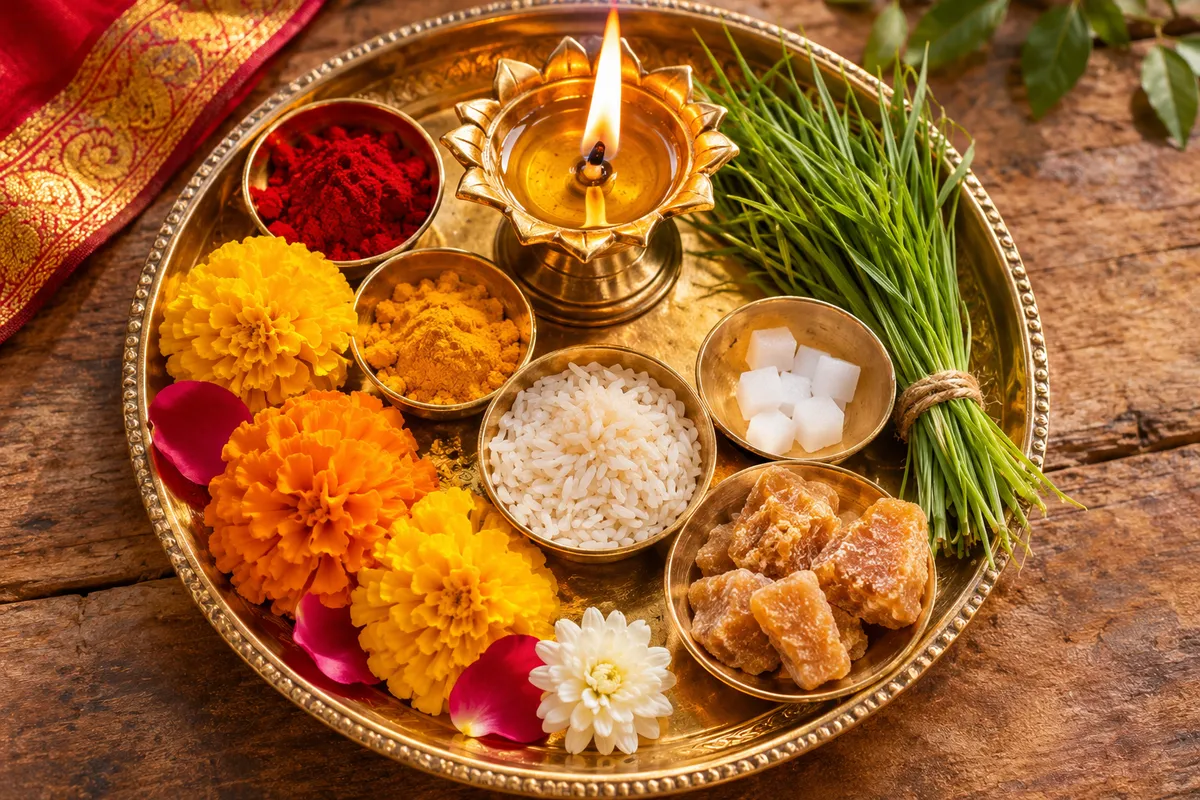
Every family does this a little differently, so treat what follows as a common outline, not a rulebook. If your family has its own way, stick to it.
Get everything on the thali before the evening begins.
What you'll need (puja samagri)
A cow and calf, or a clay or silver idol, or a clean picture if there's no live cow nearby
Water for washing and a clean cloth
Haldi, kumkum and akshata (whole rice)
Fresh flowers and a garland
A diya, incense and camphor
Moong, jaggery and fresh green fodder
Wheat items or other grains for the cow, as your tradition says
A small thali for the aarti
The steps
Start in the morning. Get up early, bathe, tidy the house. If you're fasting, take a sankalp, a quiet promise to keep the vrat sincerely.
Wash the cow and calf. In the evening, give them a gentle wash if it's safe to. Even washing their feet counts.
Dress them up. Haldi and kumkum on the forehead, a garland, and a cloth or ribbon on the horns if the animal doesn't mind.
Light the diya and incense. Set the thali in front of them and light the lamp.
Feed them. Grains, wheat items, green fodder, jaggery. In many homes the cow eats before the family does.
Do the aarti. Move the lamp in slow circles and sing or recite a prayer to Kamadhenu, Nandini or Krishna (you'll find aartis and bhajans with lyrics on Mobile Mandir).
Walk around and bow. Usually once or three times, hands folded.
Pray for the family. Mothers often ask for their children's health and long life.
Share the prasad. Then the family sits down to a simple meal, keeping the food customs below in mind.
Fresh fodder and the evening aarti, at dusk.
Be careful around the animals
Not used to cattle? Stay calm and move slowly. Come at the cow from the side, never from behind, keep an eye on kids, and let the owner tell you what's okay. A crowded cow can startle quickly. Treating the animal with respect is part of the puja too.
Fasting and Food Customs on Vasu Baras
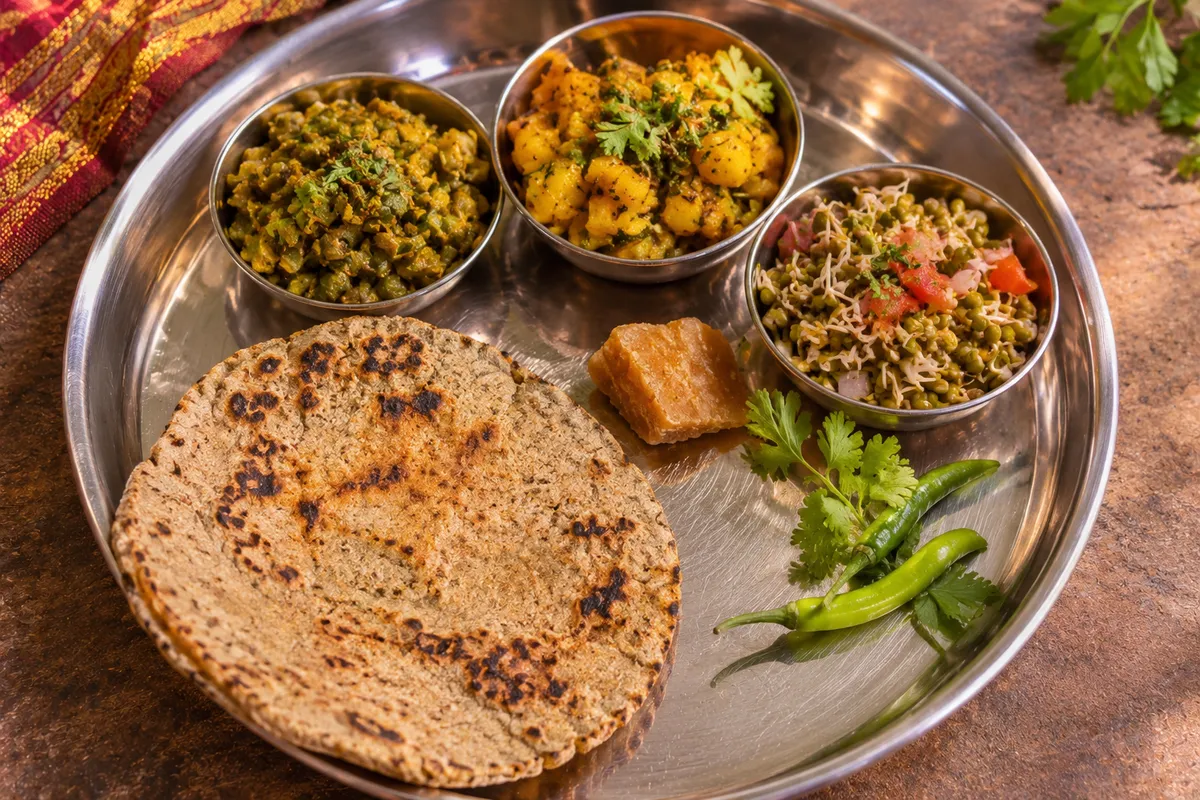
Food is where this festival gets most interesting, and where families disagree the most.
What many families skip
In several traditions people avoid wheat and cow's milk products on this day, out of respect for the cow and calf. Some also don't cut vegetables with a knife. It varies a lot, so don't assume your neighbour's rules match yours.
What many families eat
Bajra or jowar bhakri
A mixed vegetable made from whatever's in season
Sprouted or whole moong
Plain, lightly spiced food, nothing deep-fried
What the cow gets
Depending on local custom: wheat items, grain, green fodder and jaggery. Keep it fresh and clean. Please skip packaged food, brightly coloured sweets, anything in plastic, and anything salty or spicy. It can make the animal sick.
A simple Vasu Baras thali: bhakri, vegetables and moong.
Who Keeps the Vrat, and Why
Traditionally it's mothers who fast, praying for their children and the household. Many families treat it as a day to say thanks for their kids' health. But nobody is shut out. Men, children and grandparents all join the puja, and anyone who respects cows can take part.
How Govatsa Dwadashi Is Celebrated Across India
Maharashtra
This is Vasu Baras, the opening day of Diwali. Women dress the cows and calves, draw rangoli in the courtyard and cook the traditional meal. City families without a cow often worship a picture or a clay figure instead.
Gujarat
Here it's Vagh Baras, and it also starts the Diwali season. Families visit cattle sheds or gaushalas with food and prayers.
Karnataka, Andhra Pradesh and Telangana
Mostly known as Nandini Vrata, with the focus on Nandini herself. Families pray in the evening and offer fresh fodder and traditional sweets.
North India
In parts of the north, cow-and-calf worship around Diwali goes by Govatsa Dwadashi or Govamsa Puja, while Bachh Baras covers a different date in some regions. Songs and women's gatherings are common.
Want the version your own region follows? Ask the eldest woman in your family. What she remembers rarely makes it online.
No Cow? You Can Still Celebrate
This is a real problem for city families and for anyone living abroad. The good news: the festival doesn't need a cow in your backyard.
Worship an image or idol. A clay figure or a framed picture of a cow and calf is widely accepted.
Visit a gaushala. Many welcome visitors on this day. Go in the evening, take fresh fodder, and ask the caretakers what's okay to feed.
Donate or book a seva. Supporting a reputable cow shelter or sponsoring fodder is a good alternative. If you're far from home, you can book Gau Seva on Mobile Mandir, a paid seva done by verified partners and confirmed with video proof.
Feed a cow near you. If there's one in your neighbourhood, offer fresh greens or a little jaggery.
Tell the kids the story. Nandini, Kamadhenu, Krishna. That's how traditions get passed on, not through the ritual alone.
A gaushala visit is an easy way to celebrate without owning a cow.
Common Mistakes to Avoid
Mixing it up with Bachh Baras. Related, but usually on different dates.
Using another city's muhurat. Pradosh Kaal follows your local sunset.
Feeding the wrong things. No packaged, spicy or plastic-wrapped food for the animals.
Ignoring family custom. If your family has its own food or fasting rule, follow it.
Turning it into a photo shoot. Keep the animal calm and comfortable first.
Quick Tips for Govatsa Dwadashi 2026
Before the day comes
Mark 5 November and check your city's evening muhurat the day before.
Have the puja samagri ready by afternoon so the evening isn't a rush.
Buy green fodder and jaggery early. Shops near gaushalas can sell out on the day.
Planning the meal? Build it around millet and moong if you follow the traditional rules.
Dhanteras is the very next day (6 November), so get your home and shopping list sorted early.
Take your elders' blessings, then enjoy the evening.
Start Diwali With a Thank You
Govatsa Dwadashi asks for something simple: before the celebrating starts, say thanks. In 2026 that moment is Thursday, 5 November, a day before Dhanteras and three days before Lakshmi Puja. Do the full puja in a village courtyard, light a lamp before a small idol in a flat, or just feed a cow on your street. Any of those keeps an old, kind tradition going.
So here's what to do next. Check your city's muhurat, get your samagri ready, and send this guide to the relative who keeps asking when Govatsa Dwadashi 2026 is. And if your family has a special recipe, song or habit for Vasu Baras, write it down this year. End the evening with a few rounds of Naam Jaap on a digital counter if you like. Those little details are what's worth handing down.
Wishing you a calm, grateful Govatsa Dwadashi evening.
Want daily devotion on your phone? Try temple darshan, aarti and bhajan and Naam Jaap, or download the Mobile Mandir app from the App Store or Google Play.
From all of us at Mobile Mandir, Happy Govatsa Dwadashi to you and your family.
Frequently Asked Questions (FAQs)
Quick answers to the questions people ask most about Govatsa Dwadashi 2026, from the date and puja time to food rules and fasting.
Thursday, 5 November 2026. The Dwadashi tithi starts late morning that day, and the puja is done in the evening during Pradosh Kaal.
Early evening, during Pradosh Kaal, which starts after sunset. The exact window changes by city, so check a local panchang. Websites differ slightly because they calculate for different places.
Yes. Vasu Baras is the Marathi name. In Gujarat it's Vagh Baras, and in several regions it's observed as Nandini Vrat.
In Maharashtra, yes. Many Marathi families treat Vasu Baras as day one. In the wider festival calendar it comes a day before Dhanteras.
Cows and calves, along with the divine cows Kamadhenu and Nandini. Many devotees also remember Krishna, the cowherd. You can read more about each deity in the God section of Mobile Mandir.
It depends on the family. Many avoid wheat and cow's milk products, and some don't cut vegetables with a knife. Others follow different rules, so go with your own tradition.
Usually wheat items, grains, fresh green fodder and jaggery. Avoid processed food, salty items and anything wrapped in plastic.
Yes. Worship an idol or picture, visit a gaushala, give fodder, or feed a cow in your neighbourhood. If you're far from home, you can also book Gau Seva on Mobile Mandir. The thankfulness is what counts.
They're close cousins, but Bachh Baras is usually held in a different month and region. In 2026, Bachh Baras was on 7 September and Govatsa Dwadashi is on 5 November.
Traditionally mothers, for their children's wellbeing. But anyone can.