A day before Chhath Puja, the smell of freshly fried thekua often fills the house. Someone is dissolving jaggery in water, someone is kneading dough, and the old wooden moulds have come out of storage. One person presses floral patterns into the dough while another watches the pan. Children hover nearby, hoping for a taste, but the prasad is kept aside for the puja.
For many families in Bihar and Purvanchal, this is a familiar part of preparing for Chhath. The significance of thekua in Chhath Puja goes beyond its taste. Families prepare it as a traditional offering to Surya Dev and Chhathi Maiya, following customs passed down through generations.
Some households make it with jaggery, others with sugar. Some add coconut; others prefer only fennel seeds. The recipe changes from kitchen to kitchen, but the care that goes into making it remains much the same.
What Is Thekua?
Thekua is a traditional sweet made mainly from whole wheat flour, jaggery or sugar, ghee, and fennel seeds. The dough is shaped by hand or pressed into a carved wooden mould before being fried slowly. A good thekua has a crisp outside and a satisfying bite, with the aroma of jaggery and fennel.
In parts of Bihar, Jharkhand, and eastern Uttar Pradesh, people also call it khajur or khajuriya. You can make it at other times of the year, but during Chhath it takes on a special role as prasad.
Why Is Thekua Important in Chhath Puja?
An Offering to Surya Dev and Chhathi Maiya
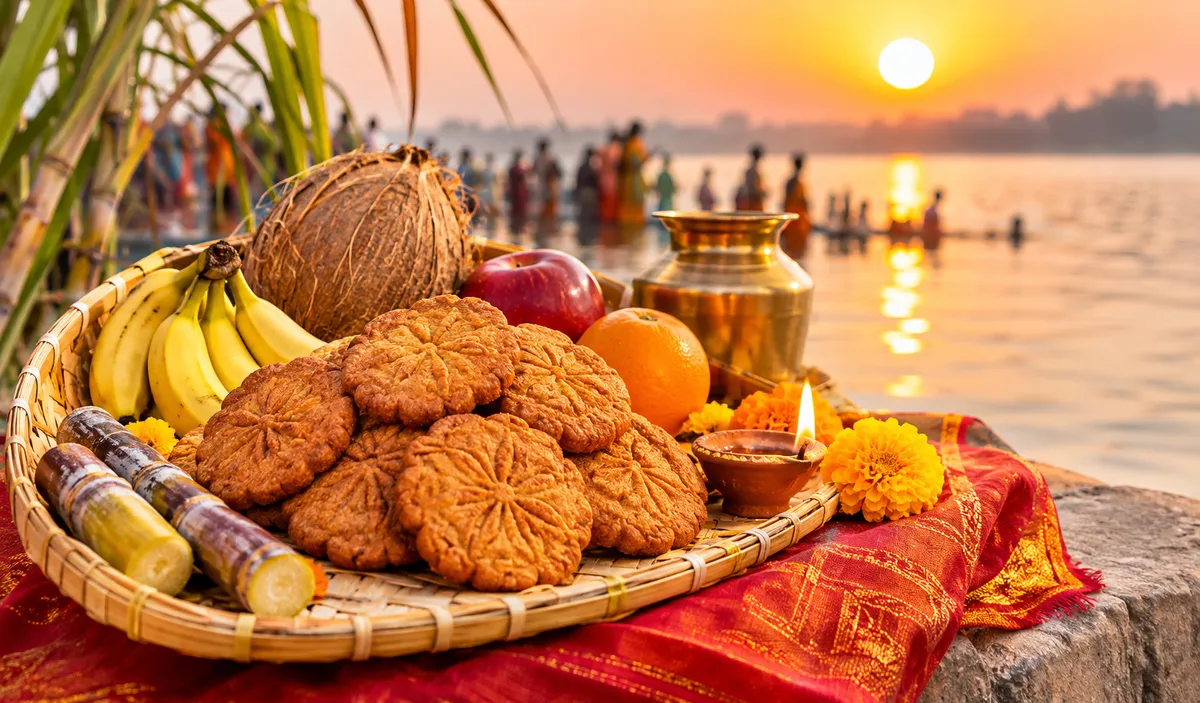
During Chhath Puja, families arrange thekua with fruit and other offerings in bamboo soops. They carry these offerings to the ghat for Sandhya Arghya in the evening and Usha Arghya the following morning. After the rituals, the prasad is shared with family and neighbours.
Wheat and jaggery come from the harvest, so some devotees also see thekua as a way to express gratitude for food and the natural world. This is a cultural interpretation, rather than a rule followed by every family.
Care and Cleanliness During Preparation
In many homes, the kitchen is cleaned before prasad preparation begins. Families may set aside particular utensils, sift the flour carefully, and keep the prepared sweets in a clean place. Another familiar custom is not tasting the prasad before it has been offered. The details vary by household and region.
A Recipe That Brings Everyone Together
Making a large batch of thekua takes time. One person kneads the dough, another shapes the pieces, and someone keeps an eye on the frying pan. Children may help press the patterns into the moulds. In between, stories come out: how much prasad was made last year, who owned the old mould, and how grandmother used to make her thekua.
When Is Thekua Prepared During Chhath Puja?
Chhath is observed over four days: Nahay Khay, Kharna, Sandhya Arghya, and Usha Arghya. Many families make thekua on the day of Sandhya Arghya, although some begin their preparations earlier.
Day | Main observance |
|---|---|
Day 1 | Nahay Khay and preparation |
Day 2 | Kharna and its traditional prasad |
Day 3 | Thekua preparation and evening Arghya |
Day 4 | Morning Arghya and breaking the fast |
For the complete festival schedule and rituals, see our existing Chhath Puja guide:
Chhath Puja date, muhurat, vidhi and samagri
Ingredients for Traditional Chhath Puja Thekua
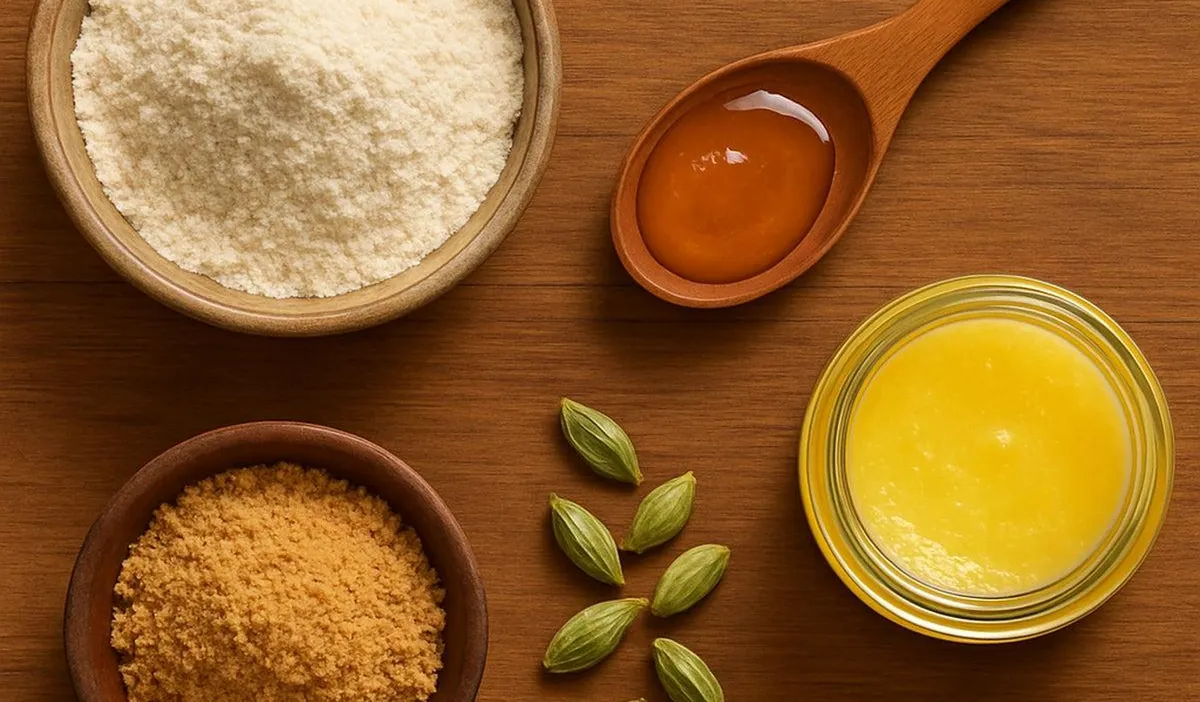
You don’t need a long shopping list to make thekua. The quantities below are an example for a home batch; your family recipe may be different.
Ingredient | Quantity |
|---|---|
Whole wheat flour | 500 g |
Jaggery | 200–250 g |
Ghee | For mixing into the dough and frying |
Fennel seeds | 1–2 tsp |
Cardamom | Optional |
Grated coconut | Optional |
Water | As needed |
Note
This recipe is just one example. The ingredients and preparation method may vary depending on family traditions and personal preferences.
How to Make Thekua: Step-by-Step Recipe
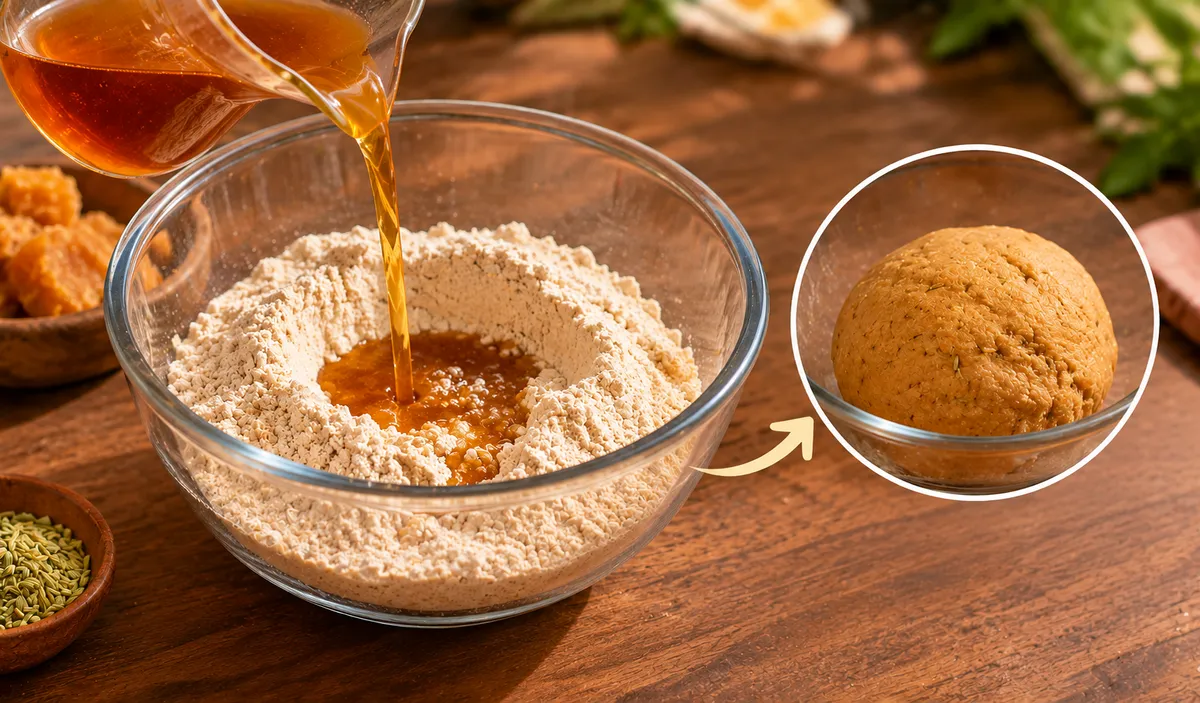
Prepare the jaggery water
Break the jaggery into small pieces and dissolve it in a little water. Warm the water gently if needed. Strain it to remove any grit.Mix the dry ingredients
Put the wheat flour in a clean bowl. Add fennel seeds, a little ghee, and optional cardamom or coconut. Rub everything together.Knead a firm dough
Add the jaggery water slowly. The dough should be firmer than ordinary roti dough. Too much water can make the pieces difficult to shape.Shape the thekua
Make small portions and flatten them. Press each one into a wooden mould for a floral pattern, or shape them by hand if you don’t have a mould.Fry slowly
Heat ghee or oil according to your family recipe. Fry over low to medium heat until the pieces are cooked through and golden. High heat can brown the outside before the centre cooks.Cool and store
Let the thekua cool completely, then keep it in a clean, dry container until it is time for the offering.
Kitchen tip
If your thekua breaks while frying, check whether the dough is too wet or isn’t holding together well. Adjust the next batch with a little dry flour if needed.
Can You Make Thekua with Sugar Instead of Jaggery?
Yes. Both versions are common. Jaggery usually gives thekua a deeper colour and a richer flavour. Sugar can produce a lighter result. Some families use jaggery because that is how their elders made it; others have always used sugar. Follow the custom you know at home.
What Other Prasad Is Offered During Chhath Puja?
Thekua is not the only offering in a Chhath soop. Families also arrange bananas, coconuts, sugarcane, water chestnuts, seasonal fruit, and sometimes kasar, a traditional preparation made from rice flour. The exact selection depends on the region, season, and household customs.
Why Are Bamboo Soops and Dauras Used?
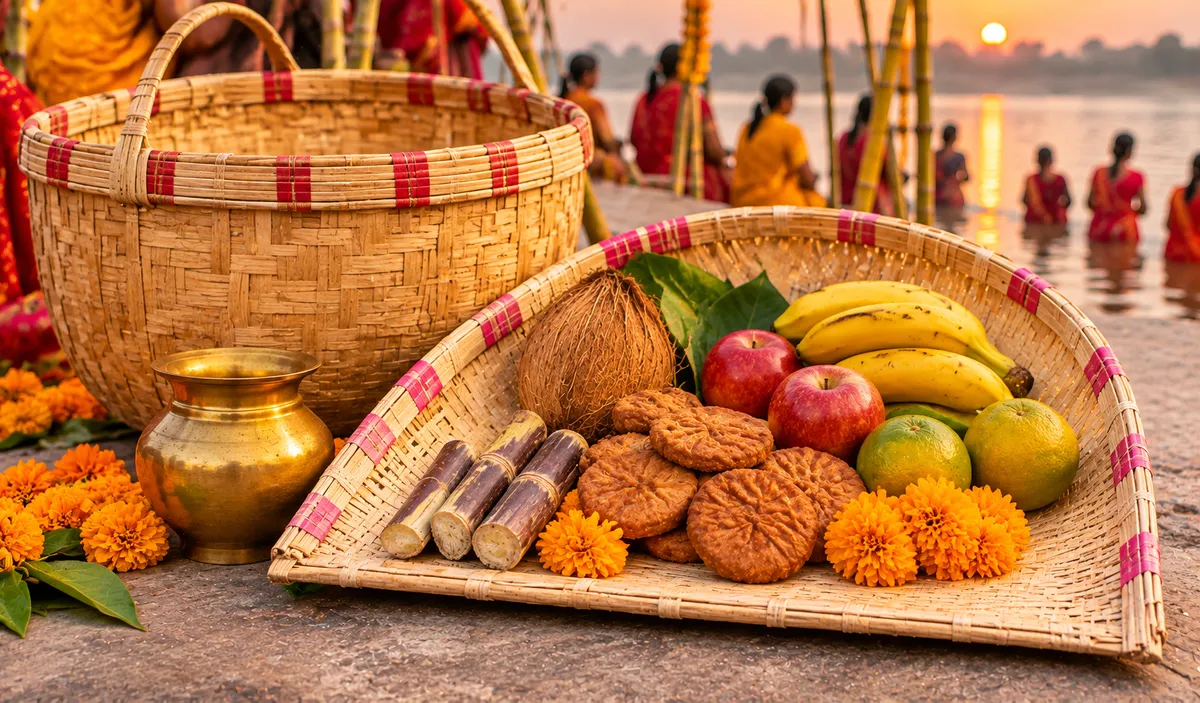
Bamboo soops and dauras are a familiar sight on the way to the ghat. A daura helps carry the offerings, while the soop is used to arrange fruit, thekua, and other items during Arghya. Some families buy new bamboo items each year; others carefully clean and reuse what they have. These objects remain a recognisable part of Chhath traditions.
Why Do Families Share Thekua After Chhath Puja?
Once the morning Arghya is complete, families share prasad at home and with relatives and neighbours. Some save a portion for loved ones who couldn’t attend. For people living far from Bihar or Purvanchal, a box of homemade thekua can bring back memories of home, the ghat, and family gatherings.
How Is Thekua Connected with Chhathi Maiya?
Chhathi Maiya is worshipped as Devi Shashthi in Hindu traditions. Many devotees associate her with the well-being of children and families. Thekua is one of the best-known offerings made during her worship. Families also sing traditional songs and perform aarti.
You can read the prayer on Mobile Mandir: Chhathi Maiya Aarti
How Can You Take Part in Chhath When You Are Away from Home?
Work and travel don’t always allow people to return home for Chhath. Some join their families over a call, read the aarti, or pray according to their own tradition. Through Mobile Mandir App, devotees can also arrange for Jal and Arghya to be offered to Surya Dev on their behalf. Video proof is provided after the seva is completed.
Why the Tradition Still Matters
Even after Chhath ends, a few pieces of thekua may remain in a kitchen tin. Someone eats one with morning tea; someone packs a few for a relative. The sweet is simple, but the memories around it are not. That is why thekua remains so closely tied to Chhath Puja, family kitchens, and the traditions people carry with them wherever they live.
Frequently Asked Questions
Find answers to common questions about Thekua Prasad, its religious significance, traditional recipe, and importance in Chhath Puja.
Thekua is a traditional prasad offered during the worship of Surya Dev and Chhathi Maiya. It is one of the festival’s most recognisable foods.
No. Families make it with either jaggery or sugar, depending on their customs.
Many households prepare it on the day of Sandhya Arghya, though some begin earlier.
Yes. You can shape it by hand into round or oval pieces.
Well-fried, fully cooled thekua can last for several days in a clean, dry, airtight container. The actual shelf life depends on ingredients, weather, and storage. Discard it if you notice mould, moisture, or an unusual smell.