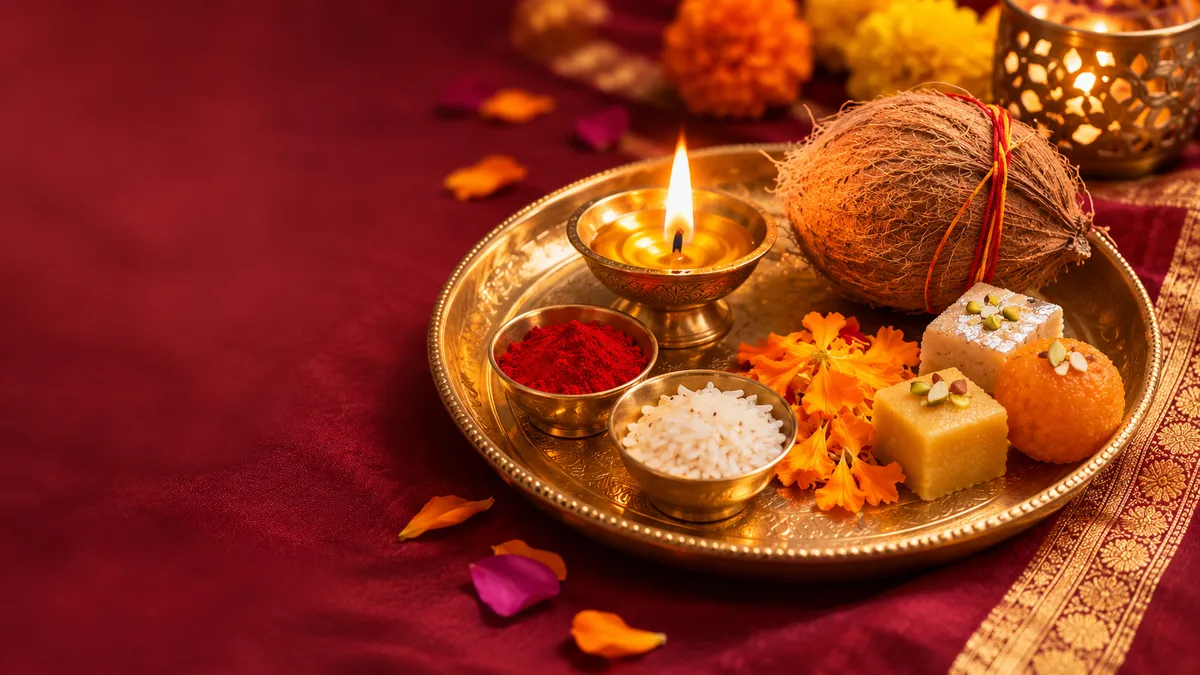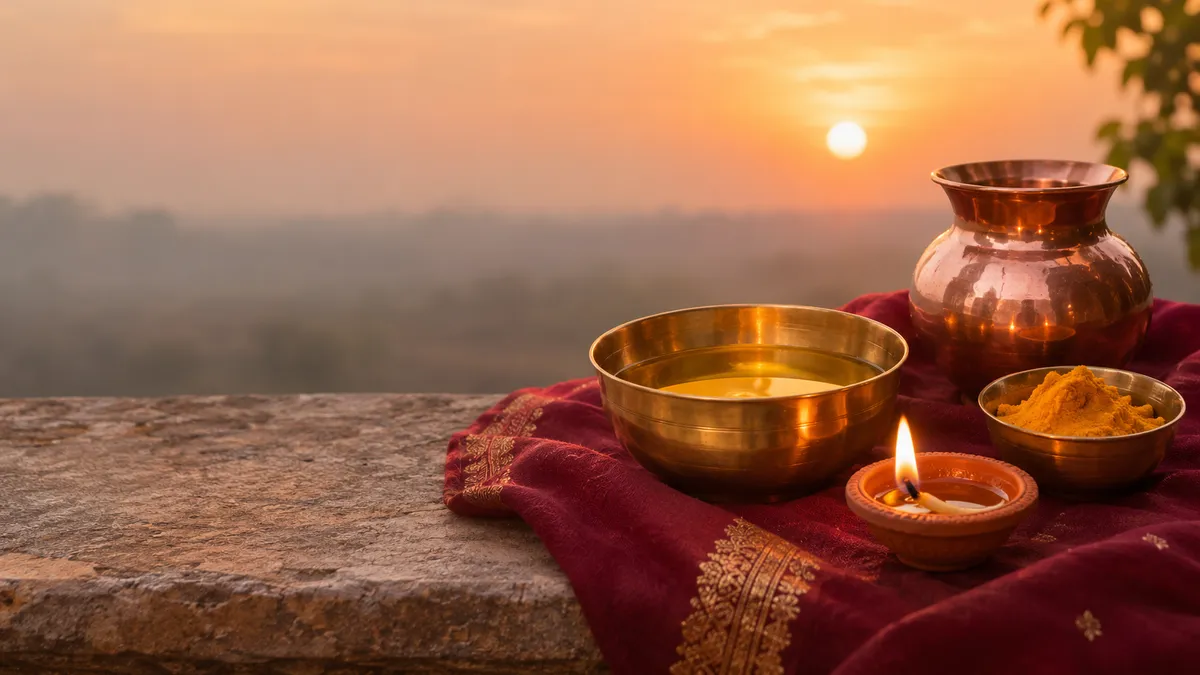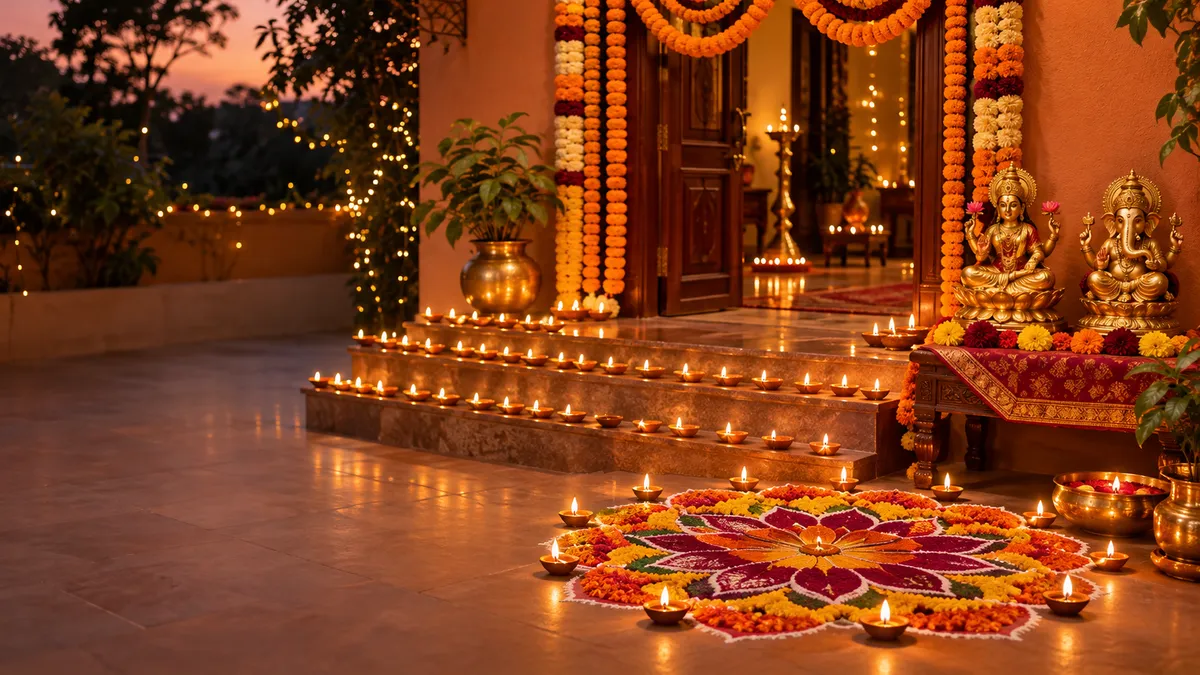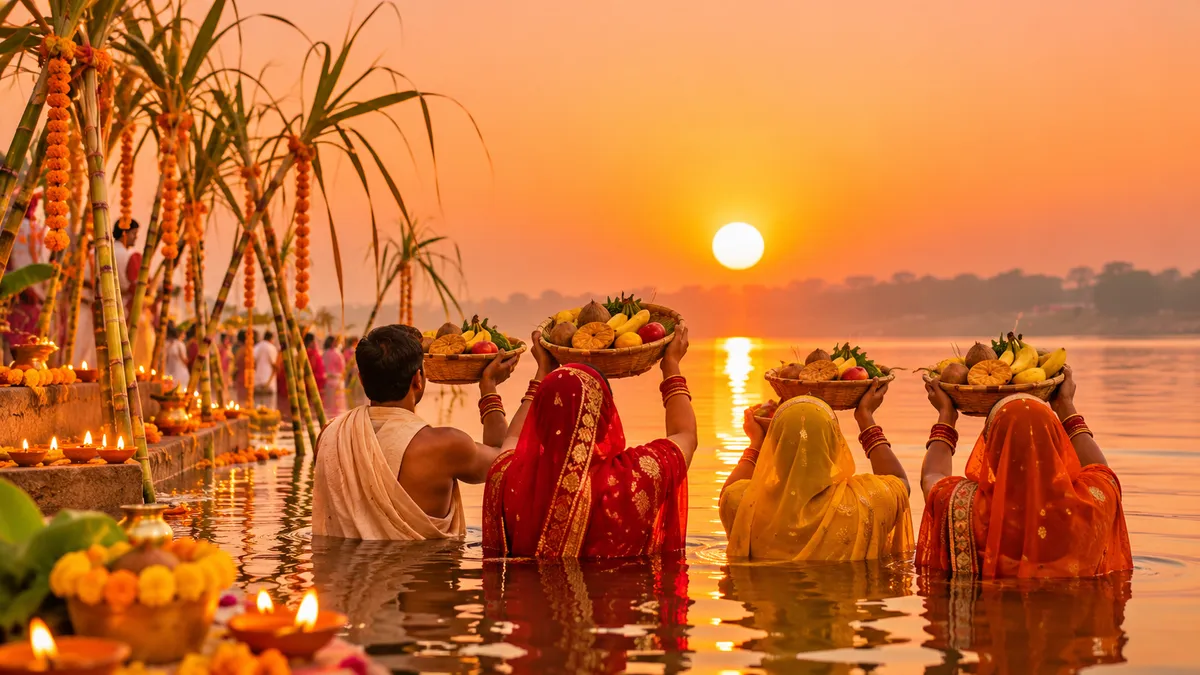
Ask anyone from Bihar, Jharkhand or eastern Uttar Pradesh what Chhath means to them and the answer comes slowly, because there is so much in it. A mother scrubbing the kitchen until it shines. A neighbour pressing thekua into a wooden mould. Bamboo baskets stacked by the door. And on one cold evening, a whole family walking to the water with fruit and sugarcane to thank the Sun.
This year Chhath Puja runs from Friday, 13 November to Monday, 16 November, with the main offering on Sunday, 15 November. Below you'll find the date, the four days one by one, arghya timings for fourteen cities, the vidhi, the samagri list and a few things worth knowing before you step into the water.
Chhath Puja 2026 at a Glance
Date | Friday, 13 November to Monday, 16 November 2026 |
|---|---|
Main day (Sandhya Arghya) | Sunday, 15 November 2026 |
Also known as | Chhath, Chhathi Puja, Dala Chhath, Surya Shashthi |
Hindu date | Kartik Shukla Chaturthi to Saptami |
Shashthi tithi (IST) | 11:24 PM on 14 November to 2:01 AM on 16 November |
Sandhya Arghya (Delhi) | Sunset, about 5:28 PM on 15 November |
Usha Arghya (Delhi) | Sunrise, about 6:44 AM on 16 November |
Fast | About 36 hours, without food or water |
Deities | Surya Dev and Chhathi Maiya |
Diwali (for reference) | Sunday, 8 November |
What Is Chhath Puja?
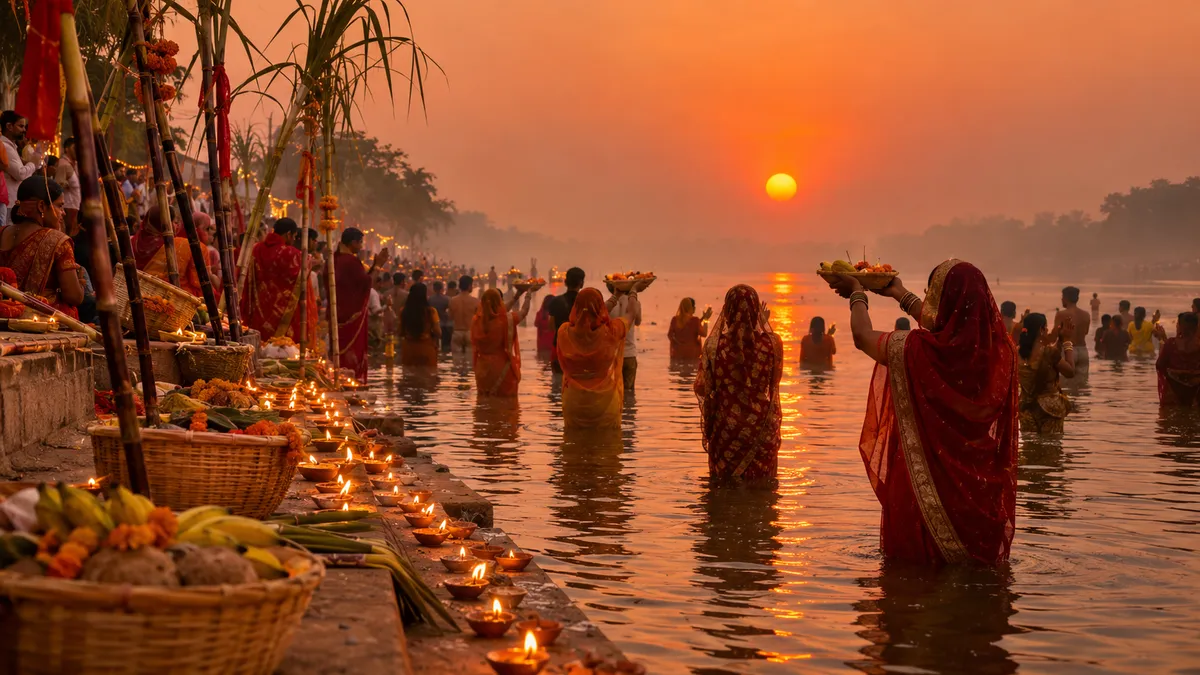
Chhath is a thank-you to the Sun. Families stand in water at sunset and again at sunrise, offer arghya, and pray for the health of their children and the whole household. Chhathi Maiya, who is closely linked with Shashthi Devi, is worshipped alongside Surya.
The name comes from chhath, the Hindi word for sixth. The main offering falls on the sixth tithi of Kartik Shukla Paksha, a few days after Diwali. Some families say Chhathi Puja, some say Dala Chhath after the bamboo basket (the dala) carried to the ghat.
Unlike most festivals, Chhath has no priest and no fixed mantra. The knowledge is passed down by watching your mother, your aunt or your neighbour do it. That is probably why it feels so personal in every home.
The Four Days of Chhath Puja 2026
Day | Date | What happens |
|---|---|---|
Nahay Khay | Friday, 13 November | Bath, a clean house, one simple meal |
Kharna | Saturday, 14 November | Fast through the day, prasad after sunset |
Sandhya Arghya | Sunday, 15 November | Offering to the setting Sun |
Usha Arghya | Monday, 16 November | Offering to the rising Sun, fast ends |
Day 1: Nahay Khay
The name means "bathe and eat". The person keeping the fast, called the vrati, bathes in a river or pond, or with clean water at home. The house is cleaned, starting with the kitchen. The one meal of the day is plain: rice, chana dal and a bottle gourd (lauki) curry, cooked without onion or garlic, with rock salt. From today the kitchen stays pure.
Day 2: Kharna
The vrati fasts through the day without water. After sunset, a pot of kheer goes on the stove, made from jaggery and rice, along with roti and a banana. It is offered first to Surya Dev and Chhathi Maiya, then the vrati eats. Neighbours and relatives are invited to take prasad. When this meal ends, the 36-hour fast without food or water begins.
Day 3: Sandhya Arghya
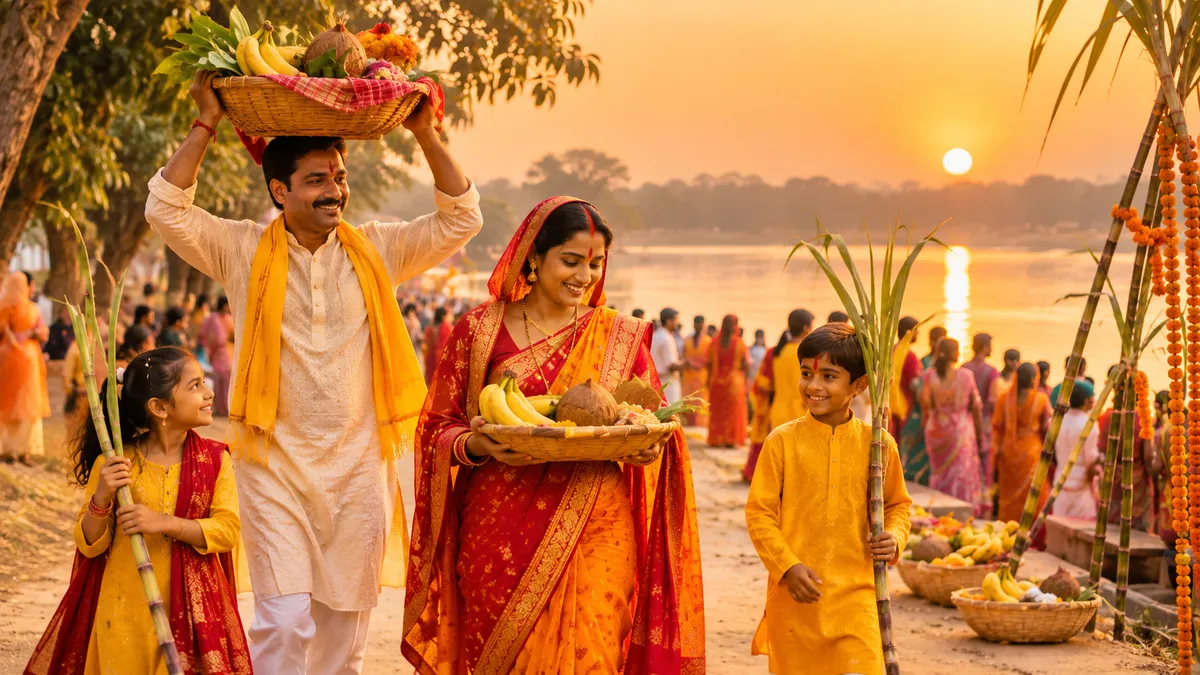
This is the main day. The morning goes into frying thekua and packing the offerings into the bamboo soop and daura. By afternoon the family heads to the ghat, often carrying the basket on their heads. At sunset the vrati stands in the water facing west and offers water and milk to the Sun while raising the soop. Many families light lamps under a canopy of sugarcane and sing Chhath songs late into the night.
Day 4: Usha Arghya
Before dawn the family is back at the ghat. The vrati stands in the water facing east and offers arghya as the Sun rises. After prayers and a round of prasad, the fast is broken, usually with a little ginger, water and prasad rather than a heavy meal.
Chhath Puja 2026 Arghya Timings for Major Cities
Arghya is offered when the Sun touches the horizon, so the time is simply your city's sunset on 15 November and sunrise on 16 November. These are not a separate muhurat. Families usually reach the ghat well before sunset, so use these times as the moment to be standing in the water, not the time to leave home.
City | Sandhya Arghya (sunset, 15 Nov) | Usha Arghya (sunrise, 16 Nov) |
|---|---|---|
New Delhi | 5:28 PM | 6:44 AM |
Chandigarh | 5:26 PM | 6:48 AM |
Jaipur | 5:36 PM | 6:48 AM |
Lucknow | 5:16 PM | 6:26 AM |
Varanasi | 5:10 PM | 6:16 AM |
Patna | 5:01 PM | 6:07 AM |
Ranchi | 5:04 PM | 6:03 AM |
Kolkata | 4:53 PM | 5:50 AM |
Ahmedabad | 5:55 PM | 6:58 AM |
Mumbai | 6:00 PM | 6:46 AM |
Pune | 5:57 PM | 6:43 AM |
Hyderabad | 5:40 PM | 6:21 AM |
Bengaluru | 5:50 PM | 6:19 AM |
Chennai | 5:39 PM | 6:08 AM |
Town not on the list? Look up your own sunset and sunrise in a local panchang. Times can differ by a minute or two between sources, and a ghat with tall trees or buildings nearby may lose the Sun a few minutes early.
Why Is the Main Day 15 November?
Sandhya Arghya follows the tithi at sunset. Shashthi begins late on Saturday night and runs until the early hours of Monday, so it is in effect at sunset on Sunday in every Indian city. Saturday's sunset belongs to Panchami (the Kharna evening) and Monday's to Saptami. That leaves Sunday, 15 November.
Stories Behind Chhath
Chhath is a folk observance, and no single text lays out all of it. These are the stories families tell, handed down from one generation to the next.
King Priyavrata and Shashthi Devi
A Purana tale tells of King Priyavrata, who had no child. He prayed to Shashthi Devi, the goddess who protects children, and after his prayers a son was born. Her worship on the sixth tithi is the root of many Chhath customs.
Karna in the River
Karna, the son of Surya in the Mahabharata, is said to have stood in the river every morning offering water to his father. Many families see Chhath as a continuation of that habit.
Draupadi and the Pandavas
Another account says Draupadi kept a Sun vrat when the Pandavas lost their kingdom, hoping to bring back what was lost. You will also hear a version linked to Sita in the Ramayana. Which one you hear usually depends on whose house you are sitting in.
Who Is Worshipped During Chhath?
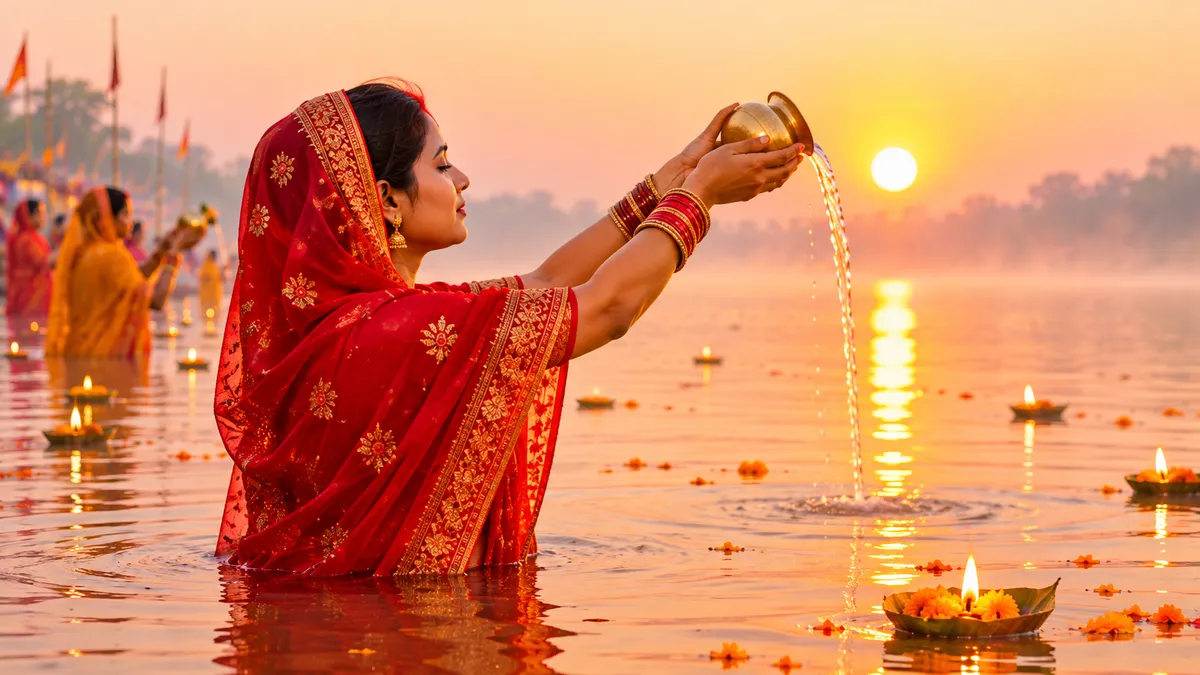
Surya Dev, the Sun, thanked for light, warmth and food.
Chhathi Maiya, prayed to for the health and long life of children and family.
Chhath Puja Samagri Checklist
Item | What it's for |
|---|---|
Bamboo soop and daura | Holds the offerings, raised during arghya |
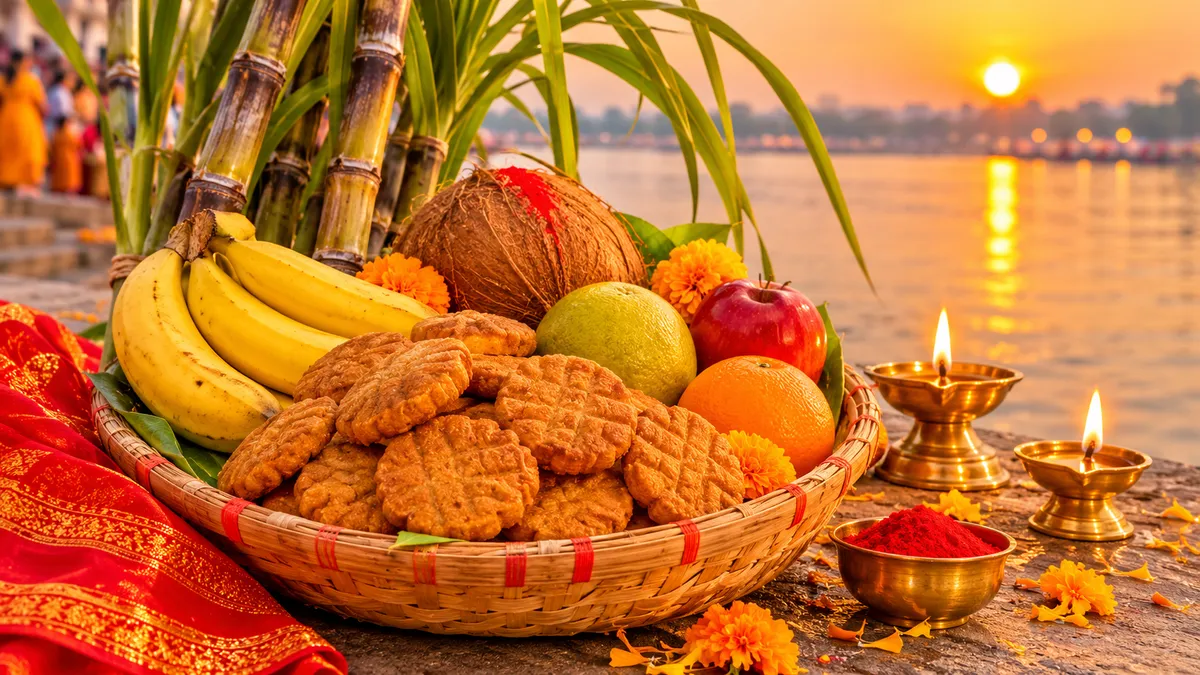
Thekua | The main prasad, made of wheat flour, jaggery and ghee |
Sugarcane with leaves | Offered at the ghat and used for the lamp canopy |
Bananas, coconut, sweet lime, seasonal fruit | Placed in the soop |
Diyas, ghee, wicks | For the ghat and the home mandir |
Lota, milk and water | For pouring arghya |
Sindoor, incense, camphor | For the puja |
New clothes and dry clothes | One set for the vrati, one for after the water |
Nothing on this list decides whether the vrat counts. Many families have used the same soop and lota for decades.
Chhath Puja Vidhi, Step by Step
Every family has its own way of doing things, and that's perfectly fine. If your house follows a different order, keep it. This is the common flow.
Clean the house. Scrub the kitchen before Nahay Khay and set aside vessels meant only for Chhath.
Nahay Khay. Bathe, put on clean clothes and eat the one simple meal.
Kharna. Fast through the day. After sunset, offer the kheer and roti, then eat. The 36-hour fast begins.
Prepare the prasad. Make thekua and pack the soop. Nobody tastes anything until the arghya is done.
Go to the ghat. Carry the daura, set out the sugarcane and light the lamps.
Sandhya Arghya. Stand in the water facing west and offer water and milk at sunset.
Night vigil. Light diyas under the sugarcane and sing Chhath songs.
Usha Arghya. Return before dawn, face east and offer arghya as the Sun rises.
Parana. Share the prasad and break the fast gently, with ginger and water first.
A Quick Word on Safety
Stay in shallow water, never go beyond waist depth and keep children by your side. Follow the barricades put up at the ghat. The fast is also hard on the body, so if you are pregnant, elderly, diabetic or on regular medicine, speak to your doctor first. A shorter or modified vrat is accepted in many families. If you feel dizzy or faint, break the fast and get help.
Prayers and Songs
There is no required mantra for Chhath. Families sing Chhath geet, folk songs in Bhojpuri, Maithili and Magahi, while preparing the offerings and at the ghat. If you want to say something quiet while offering arghya, a simple line is enough.
Lord Surya
ॐ सूर्याय नमः।
Salutations to Surya.
Prefer not to count rounds by hand? The Naam Jaap counter on Mobile Mandir will do it for you.
Can You Do Chhath at Home?
Yes. If there is no river nearby, a clean pond, a community tank, a rooftop drum or a large tub at home is widely accepted. The cleanliness rules stay the same. Plenty of families living in flats do exactly this, and many local Purvanchali groups arrange a shared pond for the community.
Ghat Etiquette: Do's and Don'ts
Do | Don't |
|---|---|
Go barefoot at the ghat | Wear leather shoes, belts or carry leather bags |
Walk around the offerings on the ground | Step over or touch another family's soop |
Arrive early and clean your spot | Show up at sunset and squeeze in |
Carry your waste back | Throw plastic, soap or thermocol into the water |
Follow the volunteers and barricades | Go into deep water |
Common Mistakes
Tasting the prasad early. Nothing is eaten until the arghya is complete.
Reaching the ghat at the last minute. The Sun sets fast and the crowd is heavy.
Using Delhi's time everywhere. Your own city's sunset and sunrise are the ones that count.
Forgetting warm clothes. The water is colder than the air, and November mornings are cold.
Breaking the fast with a heavy meal. Start with ginger and water.
Where Chhath Falls in the Festival Calendar
Day | Date |
|---|---|
Dhanteras | Friday, 6 November |
Diwali / Lakshmi Puja | Sunday, 8 November |
Govardhan Puja | Tuesday, 10 November |
Nahay Khay | Friday, 13 November |
Kharna | Saturday, 14 November |
Sandhya Arghya | Sunday, 15 November |
Usha Arghya | Monday, 16 November |
Chhath Puja Outside India
In the UK, the Gulf, Singapore, Nepal and Australia, the dates are the same as in India. In the USA and Canada, Shashthi ends before Sunday's local sunset, so some communities follow India's dates and others follow local sunset. Check with your local temple or samaj, who usually publish one calendar for everyone.
Prep Tips for the Four Days
Buy the soop, daura, sugarcane and fruit a few days before Nahay Khay. Prices climb closer to the day.
Scrub the kitchen before the first day and keep Chhath vessels separate.
Line up helpers early. Someone has to shape the thekua, carry the daura and watch the lamps.
Practise lifting a full soop. It is heavier than it looks.
Pack dry clothes and a warm shawl for after the water.
Ask an experienced family member to stand beside you the first time.
Let the Four Days Unfold Slowly
Chhath asks for patience more than money. A clean kitchen, a warm kheer, a basket carried to the water and a Sun going down on a family standing together. This year it begins on Friday, 13 November.
Check your city's sunset and sunrise, get the samagri ready ahead of time, and send this to the relative who asks you the date every year. If the evening feels right, close it with a few rounds of Naam Jaap.
For daily devotion, you can also explore temple darshan and aarti and bhajan, or get the app on the App Store or Google Play.
Happy Chhath Puja from all of us at Mobile Mandir.
Frequently Asked Questions
Quick answers to the most common questions about Chhath Puja 2026, covering the date, arghya timings, the 36-hour fast, samagri and more.
Chhath Puja 2026 begins on Friday, 13 November with Nahay Khay and ends on Monday, 16 November with Usha Arghya. The main day, Sandhya Arghya, is on Sunday, 15 November 2026.
The four days are Nahay Khay (13 November), Kharna (14 November), Sandhya Arghya (15 November) and Usha Arghya (16 November). They start with a bath and a simple meal, followed by a day-long fast, then offerings to the setting Sun and the rising Sun.
Arghya is offered at sunset, so the time depends on your city. In New Delhi it is about 5:28 PM, in Patna about 5:01 PM and in Mumbai about 6:00 PM. Reach the ghat well before sunset.
The fast lasts about 36 hours, without food or water. It begins after the Kharna meal on the evening of 14 November and ends after Usha Arghya on the morning of 16 November.
The main items are a bamboo soop and daura, thekua, sugarcane with leaves, bananas, coconut, sweet lime and other seasonal fruit, diyas, ghee, a lota with milk and water, sindoor, incense and camphor, plus a set of dry clothes for after the water.
Yes. If there is no river nearby, a clean pond, a community tank, a rooftop drum or a large tub at home is widely accepted. The cleanliness rules stay the same.