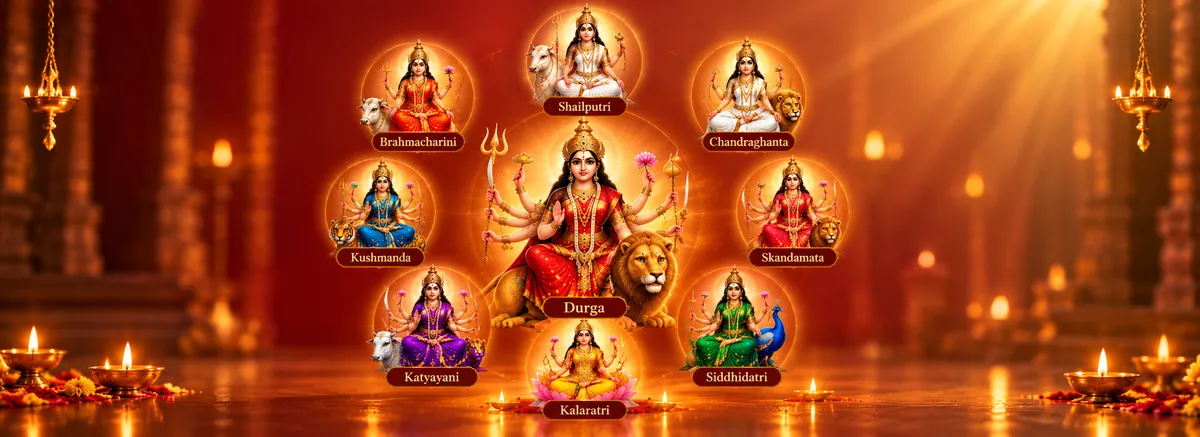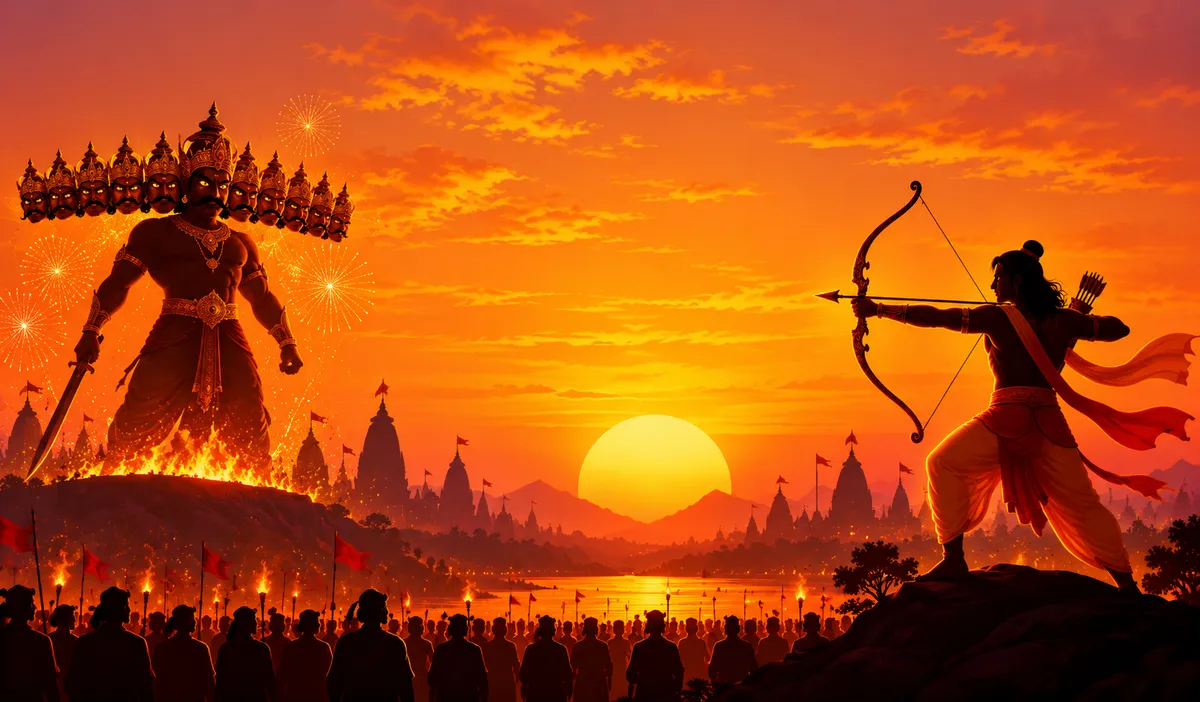
Dussehra, also called Vijayadashami, is the day we remember that truth wins over falsehood. It closes the nine nights of Sharad Navratri, and this year it arrives on a Tuesday. Here is everything you need: the date, the best time for puja, the story behind the festival, a simple home vidhi, and how Indians celebrate it far from home.
Dussehra 2026 at a glance
Festival date | Tuesday, 20 October 2026 |
Dashami tithi | Starts 12:50 PM on 20 Oct, ends 2:11 PM on 21 Oct |
Aparahna puja time | 1:14 PM to 3:32 PM |
Vijay Muhurat (Delhi) | About 2:00 PM to 2:43 PM |
Ravan Dahan | After sunset; one panchang lists 6:30 PM to 8:30 PM |
Panchangs differ by a few minutes, and timings shift by 10 to 30 minutes from city to city. Please confirm with your local panchang or pandit ji.
Why do we celebrate Dussehra?
Two great stories meet on this one day. Different regions remember different ones, but the message is the same.
Ram and Ravan
In the Ramayana, Ravan took Sita away to Lanka. After a long war, Lord Ram defeated him on the tenth day. In North India this is why we watch Ramlila and burn effigies of Ravan, Kumbhkaran and Meghnad.
Maa Durga and Mahishasur
The Devi Mahatmya tells how Maa Durga fought the demon Mahishasur for nine nights and won on the tenth. In Bengal and eastern India, Vijayadashami is the day of Durga Visarjan.
Vijay means victory, and the Vijay Muhurat is considered so auspicious that new work, a purchase or a child’s first lesson (Vidyarambh) started in it is believed to go well.
How is Dussehra celebrated in different states of India?
The festival has one message everywhere, but every state adds its own colour. Here is a simple guide.
State | How it is celebrated |
|---|---|
Uttar Pradesh | Ramlila plays are held in towns and cities, and effigies of Ravan are burnt in the evening. Ramnagar near Varanasi is known for its long, traditional Ramlila. |
Delhi | Large Ramlila grounds draw big crowds. The evening ends with the burning of Ravan, Kumbhkaran and Meghnad effigies. |
West Bengal | Durga Puja ends on Bijoya Dashami. Women play Sindoor Khela, the idols are immersed in water, and people share sweets and greetings. |
Karnataka | Mysuru Dasara is a ten-day royal festival. The Mysore Palace is lit up, and a grand procession (Jamboo Savari) is held on Vijayadashami. |
Himachal Pradesh | Kullu Dussehra begins on Vijayadashami and lasts about a week. Local deities are brought in a procession to honour Lord Raghunath. |
Gujarat | Nine nights of Garba and Dandiya lead up to Dussehra. Many families enjoy fafda and jalebi on the day. |
Maharashtra | People worship the Shami tree and give each other apta leaves, called “sona” (gold), as a wish for prosperity. |
Tamil Nadu | Homes display Golu, a set of dolls, during Navratri. On Vijayadashami, tools and books are worshipped and children begin learning. |
Kerala | Vidyarambham is the main ritual. Young children write their first letters, often with a finger on rice or sand. |
Andhra Pradesh | Vijayawada’s Kanaka Durga Temple holds large celebrations, and many families worship the Shami tree. |
Telangana | Women celebrate Bathukamma, a festival of stacked flowers, before Dussehra. On the day, people worship the Jammi (Shami) tree. |
Chhattisgarh | Bastar Dussehra lasts around 75 days. It honours the local goddess Danteshwari and does not centre on burning Ravan. |
Rajasthan | The Kota Dussehra Mela is a big fair with cultural events and tall effigies of Ravan, Kumbhkaran and Meghnad. |
Dussehra puja vidhi at home
This is a simple, common method. Your family or regional tradition may add or change steps, so follow what your elders do.
Samagri you will need
Roli, akshat (rice), flowers, dhoop, a diya, fruits, mithai, Shami or mango leaves, and your books, tools or vehicle keys for the shastra puja.
Step by step
Bathe and take sankalp. Wear clean clothes, then clean the puja space and sprinkle a little Ganga jal.
Worship Maa Aparajita and Shri Ram. Offer roli, akshat, flowers, dhoop, a diya and naivedya during the Aparahna time.
Shami puja. Worship a Shami tree if you can. Light a diya under it and walk around it. Exchanging Shami leaves is like gifting “gold”.
Shastra and Ayudha puja. Clean your tools, books and vehicle, apply tilak and offer thanks for the means of your livelihood.
Saraswati puja. Many families begin a young child’s learning on this day.
Aarti and prasad. Do Ram ji’s aarti, read from the Ramcharitmanas if you wish, and share prasad.
Ravan Dahan. In the evening, watch the effigies burn with your family.
Do’s and don’ts
Do
Start new work, buy something auspicious or begin studies in the Vijay Muhurat.
Worship tools, books and vehicles with gratitude.
Keep a Shami leaf safely at home and share jawara with elders and children.
Touch elders’ feet and take their Vijaya blessings.
Immerse the Navratri idol and kalash respectfully. A pot of water at home is fine.
Don’t
Leave small children alone in the crowd or near the fireworks.
Play with weapons or fire celebratory shots during shastra puja.
Throw jawara or puja material in the garbage.
Eat heavy, fried food right after breaking your fast.
Put out the akhand jyoti before the Dashami puja is done.
How Dussehra is celebrated abroad
Millions of Indians live overseas, and they keep the festival alive through temples, cultural associations and their own homes. The date still follows the Dashami tithi, so it is 20 October in the USA, Canada, the UK and Europe. In eastern Australia and New Zealand, it falls on 21 October because of the time difference.

A real example: Dallas, USA
The Radha Krishna Temple of Dallas listed a Dussehra cultural programme and Ravan Dahan from 6:00 PM to 8:00 PM on 20 October, followed by Garba and Dandiya from 8:00 PM to 9:00 PM. Plans can change, so check the temple’s website before you go.
Weekend celebrations
Most people work on a Tuesday, so many community events are held on the nearest weekend. That is why Ravan Dahan in places like New Jersey and the Bay Area often happens before the actual Dussehra date. Where fire rules are strict, organisers use a smaller or symbolic effigy.
One festival, many flavours
USA and UK: Ramlila, bhajans, community feasts, Bengali Durga Puja pandals and Gujarati Garba nights.
South Indian families: Ayudha Puja, with books and tools arranged and worshipped.
UAE: Widely celebrated, though large public events need permits.
Mauritius: About two thirds of the population is of Indian origin, so the festival is deeply rooted there.
Australia and New Zealand: Hindu councils and Indian associations hold melas and Ravan Dahan events, such as Adelaide’s on 7 November.
No temple nearby? Celebrate at home
Many families abroad simply do a small puja at home. Set up a diya and a picture of Ram or Durga, clean your books or laptop bag for Ayudha puja, cook a festive meal, and join a Ramlila or aarti online with relatives in India. What matters most is sincerity, not the size of the celebration.
Frequently asked questions
When is Dussehra in 2026?
Dussehra is on Tuesday, 20 October 2026. The Dashami tithi starts at 12:50 PM on 20 October and ends at 2:11 PM on 21 October.
What is the best time for Dussehra puja?
The best time is the afternoon, from 1:14 PM to 3:32 PM. The Vijay Muhurat is about 2:00 PM to 2:43 PM in Delhi. Timings change a little from city to city, so check your local panchang.
Why do we celebrate Dussehra?
Dussehra shows that good wins over evil. In North India, people remember Lord Ram defeating Ravan. In eastern India, people remember Maa Durga defeating Mahishasur.
What is the difference between Navratri and Dussehra?
Navratri is nine nights of worship of Maa Durga. Dussehra is the tenth day, right after Navratri ends.
What is Shami puja?
People worship the Shami tree, light a diya under it and walk around it. They also give Shami leaves to each other as a symbol of gold and good luck.
Is Dussehra on the same date abroad?
Mostly, yes. It is on 20 October in the USA, Canada, the UK and Europe. In eastern Australia and New Zealand, it is on 21 October. Many community events are held on the nearest weekend.
Can I do Dussehra puja at home without a pandit?
Yes. You can do a simple puja with a diya, flowers, prasad and the aarti of Ram ji or Maa Durga. Follow your family’s tradition.
Final thoughts
Dussehra reminds us to defeat the “Ravan” inside us, such as anger, greed and ego. It does not matter where you celebrate. You can watch a Ramlila in India, visit a temple abroad, or light one diya at home. The meaning is the same.
This year, take a few quiet minutes during the Vijay Muhurat. Thank your elders, your teachers and the work that feeds your family. Then start something good.