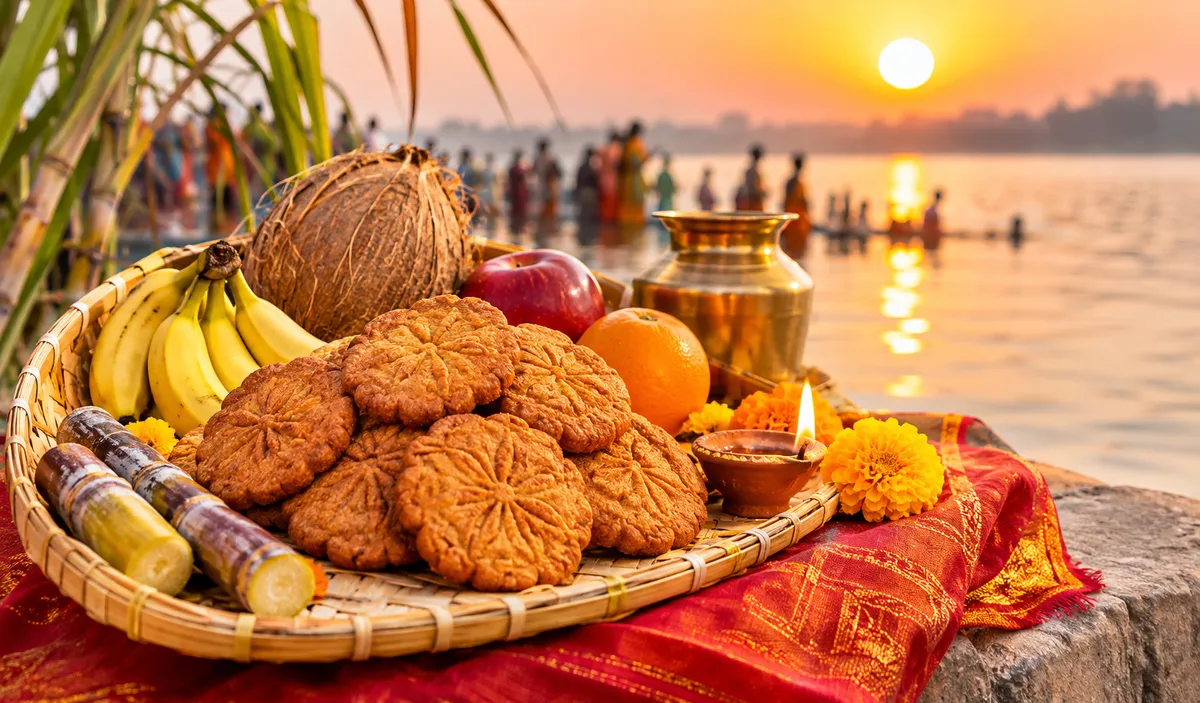
It's the evening of Dev Uthani Ekadashi. A small Tulsi pot sits in the middle of the angan, draped in a bright red chunri. Someone ties sugarcane stalks around it. A child runs in with marigolds. An aunt hums a wedding song. Nobody has sent an invitation, yet the whole street seems to know there's a wedding tonight. This is Tulsi Vivah. And this year, many families are asking one thing: is it on the 20th or the 21st?
Mark Saturday, 21 November 2026 on your calendar. That's when Tulsi is wedded to Shaligram (Lord Vishnu), in the evening around sunset. Dev Uthani Ekadashi comes a day earlier, on Friday the 20th. That's the short answer. Below, you'll find the muhurat, the samagri, the full puja vidhi, the katha and the mistakes to avoid.
Tulsi Vivah 2026 at a Glance
The key details sit in this table. A quick glance now saves you from searching later.
What | Details |
|---|---|
Tulsi Vivah date | Saturday, 21 November 2026 |
Dev Uthani Ekadashi | Friday, 20 November 2026 |
Dwadashi begins | 21 November, about 6:31 AM |
Dwadashi ends | 22 November, about 4:56 AM |
Best time for the wedding | Evening, around sunset |
Bride and groom | Tulsi plant and Shaligram (or a Vishnu idol) |
Follow your family tradition
Timings shift by a few minutes between cities. Customs also differ from home to home. When your pandit ji or elders suggest something else, go with their word.
20 or 21 November? Why People Get Confused
A tithi doesn't start at midnight like a calendar date. It can begin at 7 AM and end at 6 AM the next day. That's the whole reason for the confusion.
Ekadashi: This tithi covers Friday, 20 November, and ends just before Saturday's sunrise.
Dwadashi: This one begins at roughly 6:31 AM on Saturday.
The custom: The wedding belongs to the twelfth day of Kartik's bright fortnight.
The answer: Dwadashi is already running when the sun rises on the 21st. That makes Saturday the main day for most homes.
A few households and temples hold the ceremony a day early, on Ekadashi evening. That's a local habit, and it's fine. In some places it moves to Kartik Purnima instead. Do what your family has always done.
What Is Tulsi Vivah?
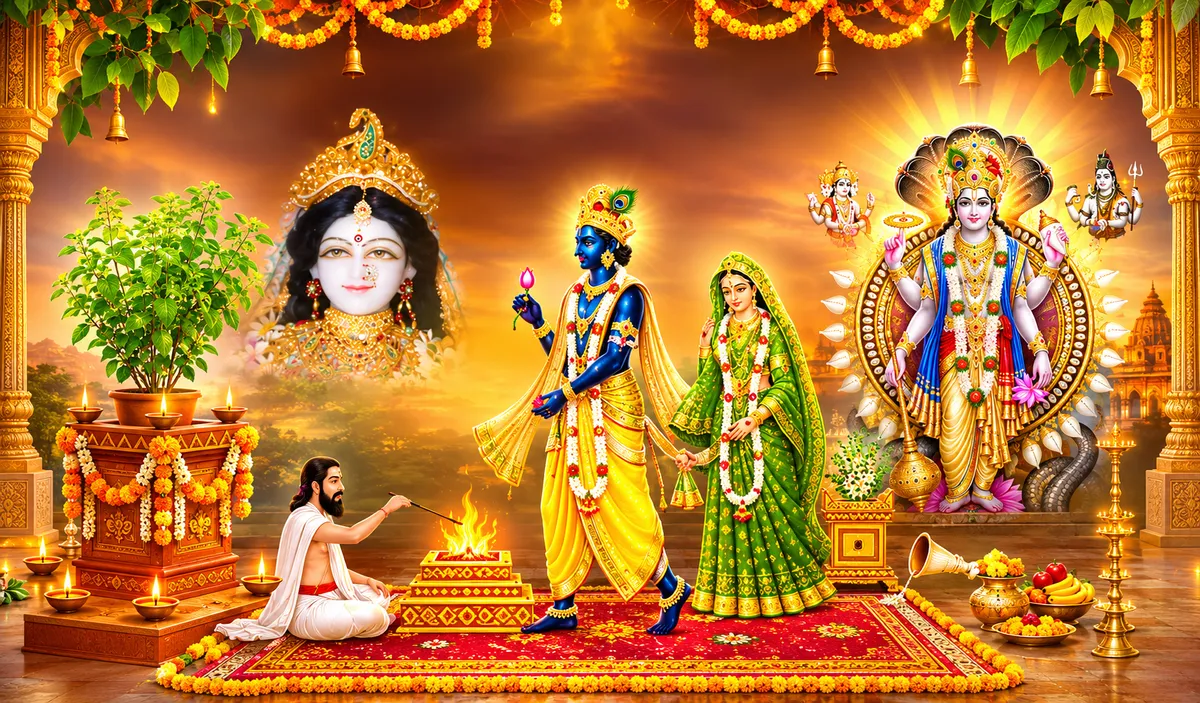
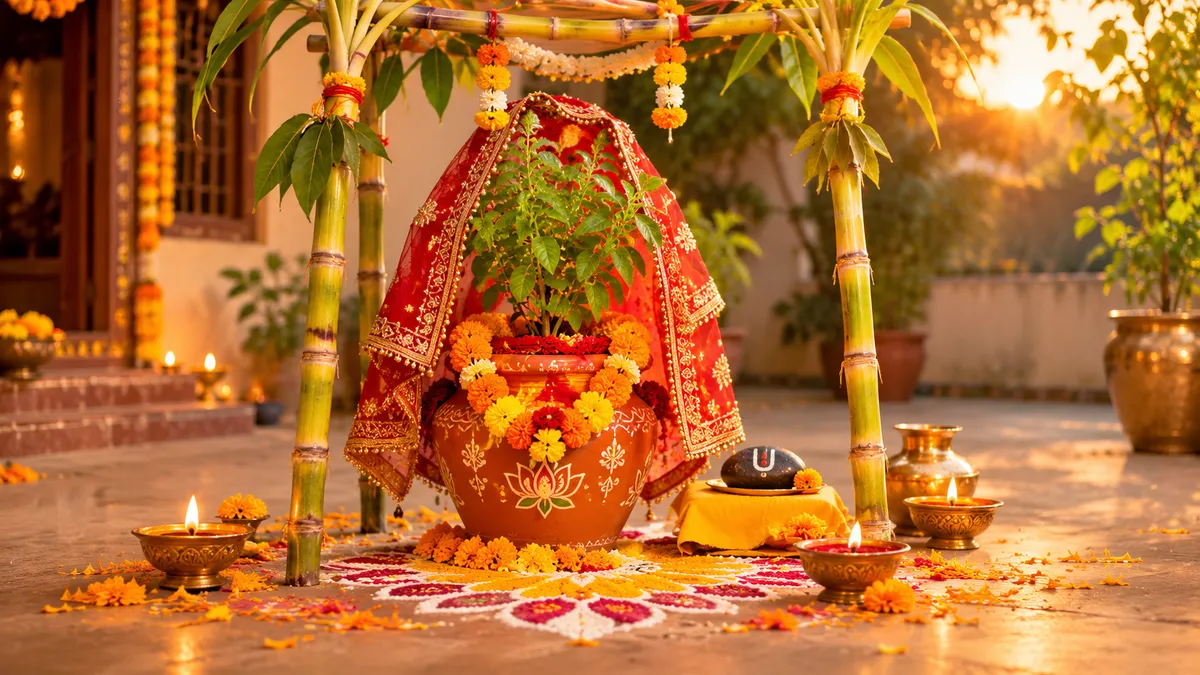
Tulsi Vivah is a symbolic wedding. The bride is the Tulsi plant, whom devotees treat as Lakshmi herself. The groom is Shaligram, a sacred black stone that represents Lord Vishnu.
Families dress the plant like a bride. They build a small mandap from sugarcane. They sing, light diyas and share prasad. It feels like a real wedding, only gentler.
The festival also marks the start of the Hindu wedding season. After Tulsi Vivah, many families begin fixing dates for real weddings. That's one reason the day feels so cheerful.
The Story Behind Tulsi Vivah
Every region tells this katha a little differently. This is the version most people grow up hearing.
Vrinda and Jalandhar. Vrinda was a devoted follower of Lord Vishnu. She married Jalandhar, a powerful asura. Her faithful vow protected him in battle, so no one could defeat him.
The devas ask for help. Jalandhar's power frightened the devas. They went to Lord Vishnu for a way out.
The vow breaks. In the tale, Vishnu came to Vrinda looking just like her husband. Her vow was broken, and Jalandhar lost his shield. He fell in the war.
The curse. The truth shattered Vrinda. In her pain, she wished that Vishnu turn into a stone. That's how Shaligram came to be, the smooth black stone people mostly find in the Gandaki river.
The promise. Vrinda ended her life. Soon after, a small green plant sprouted at that very spot. Vishnu called it Tulsi and vowed to take her as his bride. He also declared that any bhog meant for him must carry a Tulsi leaf.
We celebrate that vow every year. Some read the tale as a lesson about faith and forgiveness. Others just like the idea that Vishnu never forgot Vrinda.
Why Is It Done After Dev Uthani Ekadashi?
Tradition says Lord Vishnu rests on Devshayani Ekadashi and stays asleep for four months. Those months are called Chaturmas. Most families hold off on weddings and other big celebrations until it ends.
Vishnu wakes on Dev Uthani Ekadashi, and Tulsi is the first bride he welcomes. So think of Tulsi Vivah as a celebration for his return. It also tells families that good work can begin again. Many homes ring bells and sing wake-up songs first. The wedding comes next.
What People Get Wrong About Tulsi Vivah
What you hear | What tradition says |
|---|---|
It only works if the muhurat is exact to the minute. | Do it close to the evening window. Sincerity matters more than the minute. |
You need a pandit ji and a big setup. | A simple home puja with devotion is widely accepted. |
Only married women can take part. | Anyone can join. Families, kids and neighbours all take part. |
You must own a real Shaligram. | Many families use a small Vishnu or Krishna idol or picture. |
It needs costly items. | Most of the samagri is simple and easy to find. |
Why Do People Perform Tulsi Vivah?
Different families have different reasons. These are the ones we hear most often.
A happy married life. Many couples do the ceremony together. They pray for harmony at home.
Kanyadaan punya. A common belief is that a family without a daughter can receive the blessing of kanyadaan by giving Tulsi away in marriage.
Peace and prosperity. Many people feel Lakshmi lives in the Tulsi at home. Honouring her with a sincere heart is believed to invite good fortune.
The joy of it. Kids dress up the plant. Neighbours drop by. Everyone eats sweets.
Tulsi Vivah 2026 Shubh Muhurat
Evening is the favoured time for the wedding. Three slots are worth knowing for Saturday. Panchangs differ by a few minutes, so confirm yours.
Muhurat | Time |
|---|---|
Godhuli Muhurat | Around sunset. Most panchangs show it between 5:13 PM and 5:52 PM. |
Pradosh Kaal | Starts about 5:25 PM and runs for a couple of hours after sunset. |
Abhijit Muhurat | About 11:46 AM to 12:28 PM, if you can't do an evening puja. |
How to pick your time
Start your puja a little before sunset. That way the main wedding rituals fall in the Godhuli or early Pradosh window. Sunset time differs in each city, so use your local panchang for the exact minutes.
What to Keep Ready for Tulsi Vivah
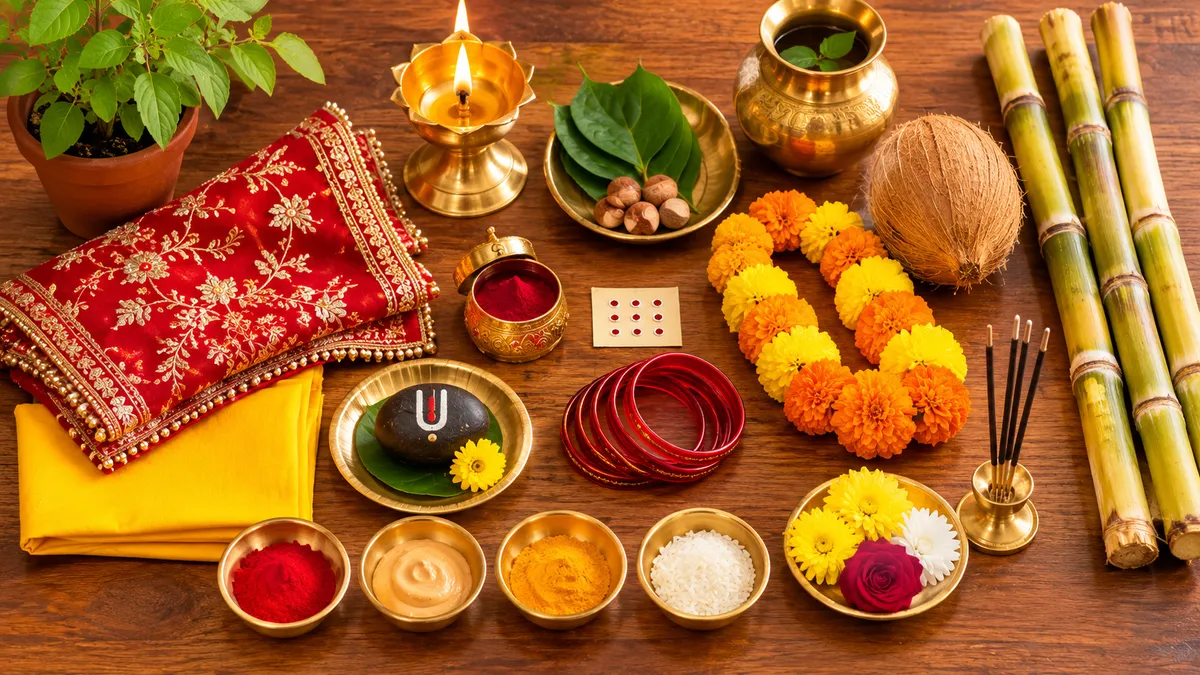
Collect everything a day early and keep it together. The evening will feel much calmer.
Your Tulsi Vivah puja kit | |
|---|---|
Tulsi plant | Shaligram |
Red chunri or saree | Yellow cloth |
Sugarcane sticks | Roli, chandan, haldi |
Akshat and flowers | Fruits and sweets |
Coconut, paan, supari | Diya and incense |
Suhag items | Kalash with water |
Missing something?
If something is hard to find, use what you have. Tulsi Vivah is about devotion, not a shopping list.
Prepare the day before
Clean the space. Wash the area around the plant. Draw a small rangoli if you like.
Water the plant gently. Do it in the morning. Many families avoid plucking leaves on Ekadashi, so pluck any you need a day earlier.
Set up the mandap. Tie the sugarcane around the pot. Top it with a cloth or marigolds.
Keep the clothes ready. Fold the chunri and yellow cloth near the puja plate.
Charge your phone. You'll want photos.
How to Do Tulsi Vivah Puja: Short and Full
Pick the version that suits your evening. Both carry the same bhav.
The 10-minute puja
Wear clean clothes and light a diya near Tulsi.
Dress Tulsi in the chunri and place Shaligram next to her.
Offer tilak, akshat and flowers to both.
Chant ॐ नमो भगवते वासुदेवाय 11 times.
Do the aarti and share prasad.
The full vidhi (30 to 45 minutes)
Bathe and dress. Wear clean or traditional clothes.
Clean the puja space. Wipe the area and place a small chowki next to the plant.
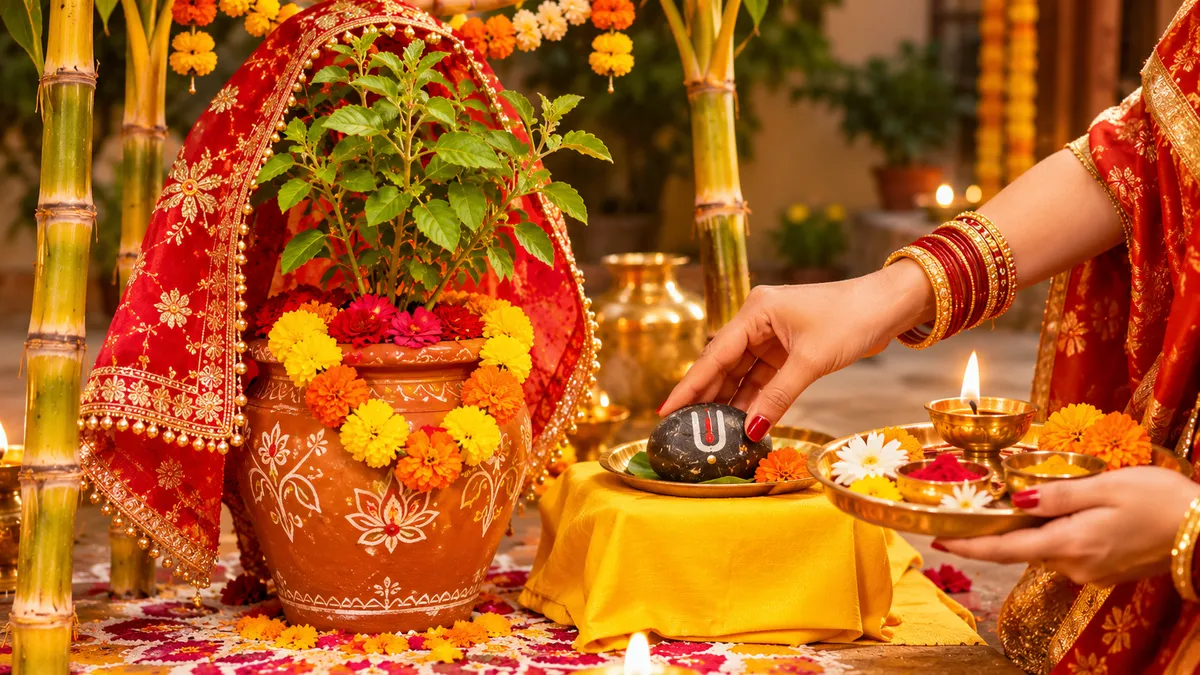
Dress Tulsi as a bride. Wrap the pot in the red chunri. Add bangles, bindi and a little sindoor. Put a garland around the plant.
Place Shaligram. Keep him on a clean cloth near Tulsi. Offer water and, if you like, panchamrit. Dress him in yellow cloth.
Light the diya and incense. Start with a prayer to Lord Ganesha, as in any ritual.
Take your sankalp. Fold your hands and quietly say what you're praying for. Keep it simple.
Offer tilak and items. Offer roli, chandan, haldi, akshat and flowers to both. Add fruit and sweets.
Perform the wedding. Take Shaligram gently in your hands and walk him around Tulsi seven times. Or tie a thread between the two. This is the part kids love.
Sing mangal geet. Wedding songs and bhajans are welcome. Clapping is welcome too.
Do the aarti. Wave the aarti plate before Tulsi and Shaligram. Everyone can join. You'll find Vishnu ji's aarti on Mobile Mandir.
Share prasad. Give some to everyone, including neighbours.
Take blessings. Bow before Tulsi and ask for her grace.
Mantras You Can Chant
How to chant
Short and steady works best. Your focus matters more than the number of rounds. Wording can vary between traditions, so if your pandit ji taught you another version, chant that one.
ॐ नमो भगवते वासुदेवाय।
Chant it at least 11 times. Go up to 108 if you like.
Tulsi prayer
वृन्दायै तुलसीदेव्यै प्रियायै केशवस्य च ।
विष्णुभक्तिप्रदे देवि सत्यवत्यै नमो नमः ॥
Say it slowly during the puja. Don't want to count on your fingers? Use the Naam Jaap counter in the app. It keeps count for you.
What to Do, Based on Your Situation
Not everyone has a courtyard or a Shaligram. Here are a few common cases, each with a simple fix.
Your situation | What you can do |
|---|---|
No Shaligram | Use a small Vishnu or Krishna idol, or a framed picture. |
Living in a flat | A balcony pot is enough. Tie the sugarcane around it. |
No pandit ji | Follow the steps above. Many families do the puja themselves. |
Travelling that day | Do a short puja at a nearby temple. |
No Tulsi plant at all | Take part through Tulsi Seva on Mobile Mandir. |
Fasting and Food on Tulsi Vivah
Many people fast on Dev Uthani Ekadashi and break the fast on Dwadashi. Others keep a light fast on the wedding day. Rules vary a lot, so follow your family.
If you're fasting, keep food simple. Fruits, milk, makhana and sabudana are common.
Many families avoid grains, onion and garlic on these days.
After the puja, share prasad. Kheer, halwa and sugarcane treats are popular.
If you have health issues, don't push yourself. Devotion doesn't ask you to harm your body.
Do's and Don'ts
Tips, not strict rules
Customs differ from home to home. Leave out anything that doesn't suit your family.
Do
Use a healthy plant. Water it well a few days before.
Start with a prayer to Ganesha.
Take your time. Even five quiet minutes of prayer is good.
Invite neighbours and share prasad.
Keep watering Tulsi daily after the wedding.
Don't
Pluck Tulsi leaves on Ekadashi, if your family follows that custom.
Rush the ritual like a checklist.
Worry if you forget a step. Most families have their own version anyway.
Take a loan or overspend on decoration.
Skip cleaning the space before you start.
A Simple Tulsi Vivah Routine
Think of the day in four parts. That keeps the puja light, and everything fits in.
Morning: take a bath and put on clean clothes. Water the plant gently.
Daytime: keep your samagri ready. Build the mandap.
Evening: do the wedding in the Godhuli or early Pradosh window. Finish with aarti and prasad.
Night: chant the Vishnu mantra for a few minutes. Then rest.
Can't Do the Ritual at Home? Join a Seva
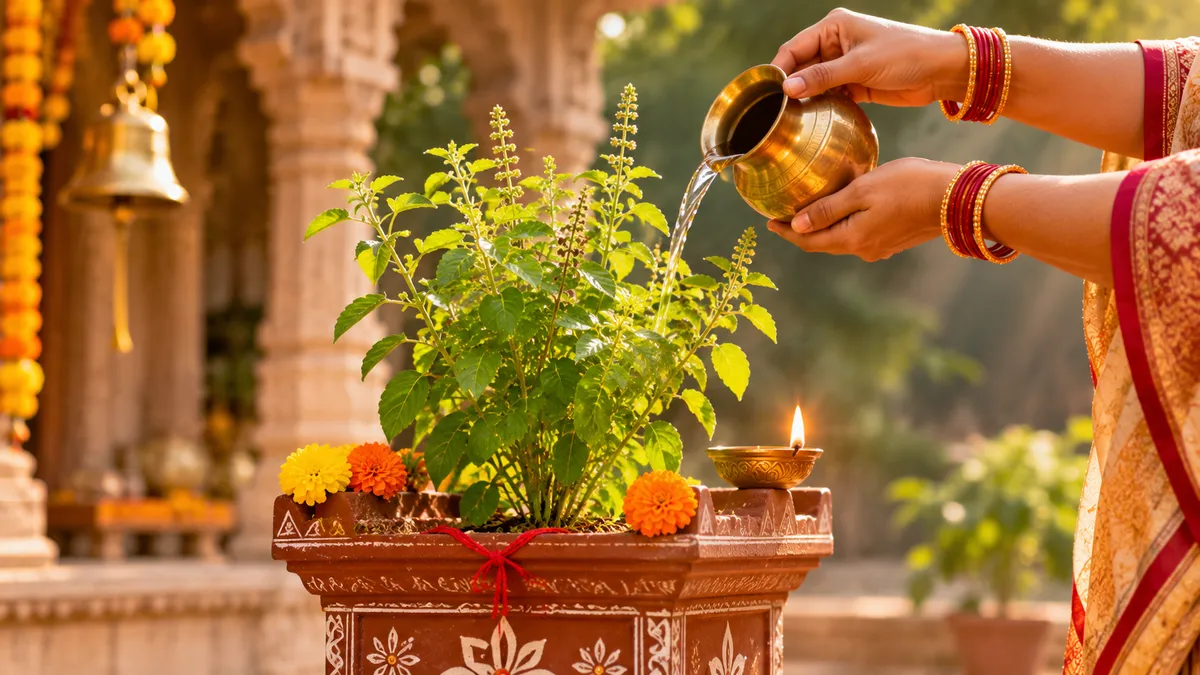
Life gets busy. Some people live far from family. Some work late. Some don't have a Tulsi plant at all. You can still take part. Visit the Tulsi Seva page on Mobile Mandir and offer your seva from wherever you are.
If you love plant worship, you may also like our guide on trees and plants worshipped in India. And for a Peepal offering, try Peepal Seva.
Make It Your Own
Tulsi Vivah is one of the sweetest festivals of the year. It's small, homely and full of colour. Mark Saturday, 21 November on your calendar. Plan the puja for the evening. Keep your samagri ready a day before. The right muhurat helps and the right items help. But what matters most is how you sit in front of Tulsi and Shaligram. Be calm. Be grateful. Mean it.
Curious about other deities? Browse our deities page. You can also download the Mobile Mandir app on the App Store or Google Play.
Happy Tulsi Vivah, from all of us at Mobile Mandir.
Frequently Asked Questions
Short answers to the questions readers ask us the most.
Tulsi Vivah is on Saturday, 21 November 2026. Dev Uthani Ekadashi is the day before, on Friday, 20 November.
Some families do. The main tithi is Dwadashi, which starts on the morning of 21 November. If your family tradition is Ekadashi evening, follow that.
The evening, around sunset. That's the Godhuli and Pradosh window. Check your city's panchang for exact minutes.
Tulsi is married to Shaligram, who represents Lord Vishnu.
Yes. Anyone can take part. Many people join the celebration with their family.
Yes. A simple home puja with devotion is widely accepted. If you want a full ritual, ask a pandit for guidance.
Don't stress. Do the puja as close to the window as you can. Sincerity counts more than the exact minute.
Keep it where it was. Water it daily, as you always do. Share the prasad with everyone.