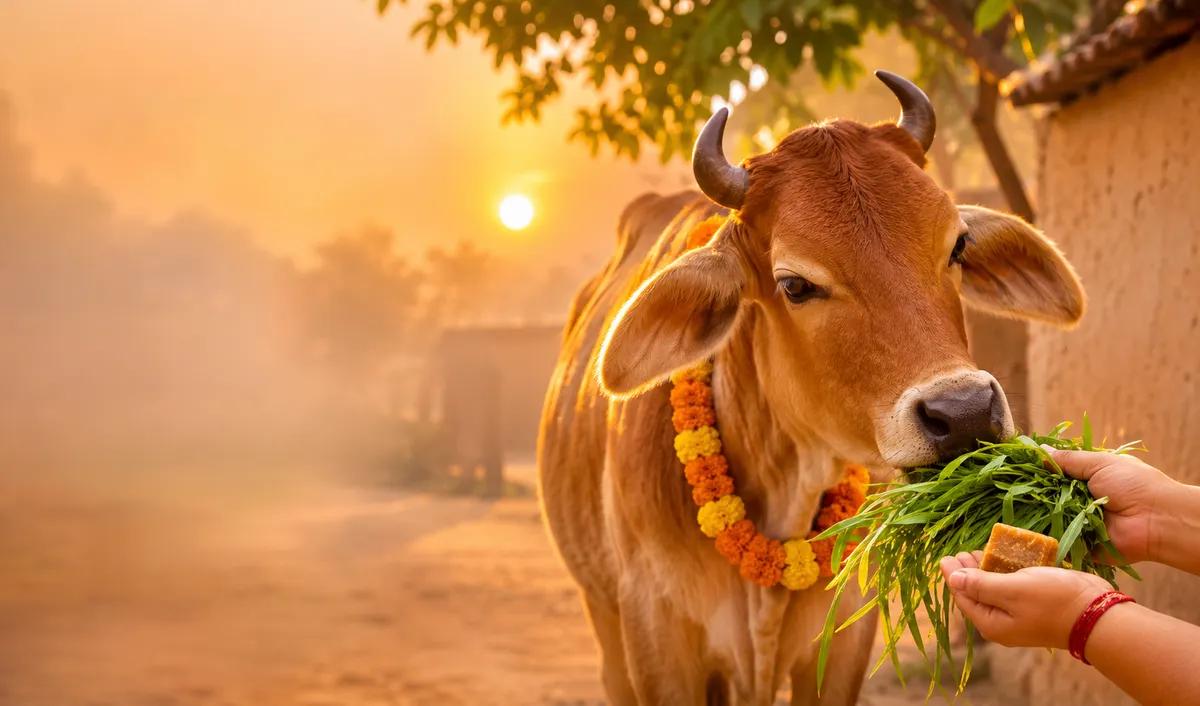
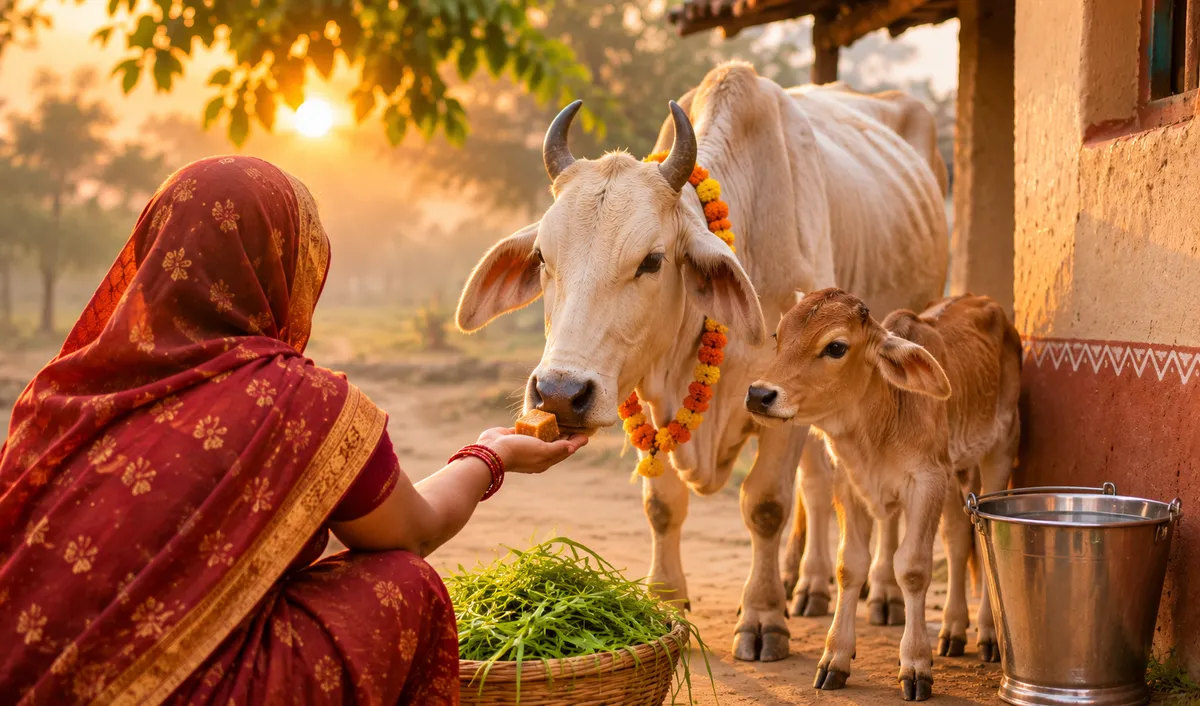
Six in the morning, just outside a small town. A scooter pulls up and a man unloads a bundle of green fodder. A woman breaks off a piece of jaggery for an old cow who can barely see. A boy tries to hold a calf that won't stand still. Nobody makes a speech. This is Gau Seva, and it's older than most of our festivals.
Gau Seva in India means looking after cows with food, clean water, shelter, medical care and respect. For centuries it was a family habit. Today it also runs through gaushalas, volunteers and seva you can arrange online. This guide covers what Gau Seva means, why the cow holds such a place in our tradition, how gaushalas began, and how you can take part, even from a flat in a big city.
Gau Seva at a Glance
If you only have a minute, this box has most of the answer.
What is it? | Looking after cows with food, water, shelter and respect |
|---|---|
Who can do it? | Anyone. A family, a student, a shopkeeper, or someone in another city |
Where does it happen? | At home, at temples, in gaushalas and through verified online seva |
What does it cost? | A handful of fodder costs almost nothing. Other ways cost what you choose to give |
Time it takes | About 5 minutes to feed a cow, or a few hours as a volunteer |
Popular days | Gopashtami, Govardhan Puja, Govatsa Dwadashi, Makar Sankranti and Amavasya |
What Is Gau Seva in India?
Break the word in two. Gau is the cow. Seva is service done without expecting anything back. Together they mean caring for cows as a duty of the heart.
In practice it's wider than feeding. It includes giving shelter to a cow nobody wants, paying a vet when a calf is sick, and sitting beside an old cow who can't get up.
For a long time this was a household job. Almost every village home kept a cow, and she ate before the family did. The first roti of the day often went to her. Plenty of homes still set one aside, even in cities.
What has changed is the need. A cow that stops giving milk, or gets hurt, often ends up on the road. That's why gaushalas, trusts and volunteers now carry a big share of the work, and why Gau Seva has become a community effort and not only a family one.
The Three Sides of Gau Seva
People come to it for different reasons. Most reasons fall into three groups, and they usually overlap.
Side | What it looks like |
|---|---|
Spiritual | Caring for a living creature becomes a form of worship. Many people say feeding a cow feels like making an offering |
Social | You take responsibility for animals that depend on people and cannot speak for themselves |
Practical | Real needs get met: fodder, clean water, a roof, medicine and a dry place to rest |
Faith alone doesn't pay a vet's bill, and a fodder shed doesn't fill itself. Good Gau Seva has all three: you feel something, you take responsibility, and you do the work.
Why Does the Cow Hold a Special Place in Indian Tradition?
Different families will give you different answers, but a few ideas keep coming up.
The cow as a mother. People say Gau Mata and mean it. A cow gives milk, and milk feeds children. Across Hindu traditions she stands for nourishment, generosity and patience.
Texts and stories. Vedic literature praises the cow as a giver of wealth and calls her aghnya, which is often explained as one who should not be harmed. The Puranas tell of Kamadhenu, the cow who grants wishes. Krishna is Gopala, the cowherd, and Govinda. His childhood in Vrindavan is full of cows, calves and the people who tended them.
Farm life. Think of what a cow meant to a village. Milk to drink. Bullocks to plough. Dung for fuel and for the soil. A family with a cow had a little security, and respect grew alongside usefulness over many centuries.
Ahimsa. Non-violence is a big idea in Indian thought, and many traditions see the cow as a gentle animal and a symbol of it. Looking after her is one way to practise it.
Not every community has seen the cow in exactly the same way, and views differ across India. The thread of care and compassion runs through most of them.
A Short History of Gaushalas
A gaushala is a shelter where cows are fed and looked after. Many are run by temples, trusts and communities, and many house cows that are old, sick, injured or abandoned. Nobody can say when the first one began, because the tradition grew slowly.
Ancient texts such as the Arthashastra mention an officer in charge of cattle, so organised care is old. Over the centuries temples, monasteries and wealthy patrons kept and fed cattle. In parts of western India, pinjrapoles looked after old and sick animals, a tradition tied to the idea of non-violence.
Things became more organised in the later 1800s, when cow-protection groups called Gaurakshini Sabhas began forming in north India, with the Arya Samaj among the best known. They raised funds, rescued cattle and set up gaushalas. In the 20th century, leaders such as Gandhi and Vinoba Bhave spoke of cow care as service that needs real upkeep and management, not only respect in words.
Period | What happened |
|---|---|
Ancient India | Cattle sat at the centre of farming life, and ancient texts mention an officer for cattle |
Medieval period | Temples, monasteries and merchant communities supported cattle shelters, including pinjrapoles in western India |
Late 1800s | Cow-protection groups such as the Gaurakshini Sabhas raised funds and set up gaushalas |
20th century | Gandhi and Vinoba Bhave linked cow care with service, non-violence and sound management |
Today | Trusts, temples, NGOs and volunteers run gaushalas, with some state and central support |
Article 48 of the Constitution, one of the Directive Principles, asks the state to work on preserving and improving cattle breeds. The 20th Livestock Census (2019) counted about 192 million cattle in India. Wikipedia has a longer note on the goshala tradition if you'd like to read further.
Why Gaushalas Still Need Support
Looking after a cow costs money every day. Fodder, water, medicine, bedding, labour and electricity add up. A gaushala may shelter hundreds of animals, and many of them are old or ill and bring in nothing.
You can see the other side on any highway. Abandoned and injured cows wander the road, eat plastic from garbage heaps and get hurt in accidents. A well-run gaushala gives them a safe place, but it only works if people keep helping.
Why People Find Gau Seva Meaningful
Ask regular givers why they keep going and the answers are rarely grand. They talk about small, steady things.
It slows you down. You can't rush a cow while she eats. You wait and watch. For a few minutes the phone and the to-do list don't matter, and many people call it the calmest part of their day.
Giving feels real. When you give fodder, you often see where it went. That's different from a number on a bank statement.
Care spreads. People who look after one animal start noticing thirsty street dogs, birds in summer and hurt animals on the road.
It links you to home. Many of us grew up hearing about the first roti for the cow. Doing it today, even in a city flat, ties you to that memory.
And the main point: a cow with clean water, enough fodder and timely treatment lives a better and longer life. Everything else comes after that.
Ways to Do Gau Seva
You don't need to be rich, and you don't need to live near a gaushala. Pick what fits your life.
Way to help | What it involves |
|---|---|
Feed a cow near home | Give fresh green fodder or a small piece of jaggery |
Give supplies | Fodder, medicines or cleaning items. Ask the gaushala what it needs first |
Support a gaushala directly | A regular contribution to a registered trust helps it plan ahead |
Pay for medical care | Help cover treatment for an injured or sick cow |
Volunteer | Spend a few hours feeding, cleaning or sorting supplies |
Book seva online | Gau Seva through verified partners, with video proof. Details below |
Spread the word | Tell family and friends how to care for cows properly |
If you feed a cow yourself, feed her right
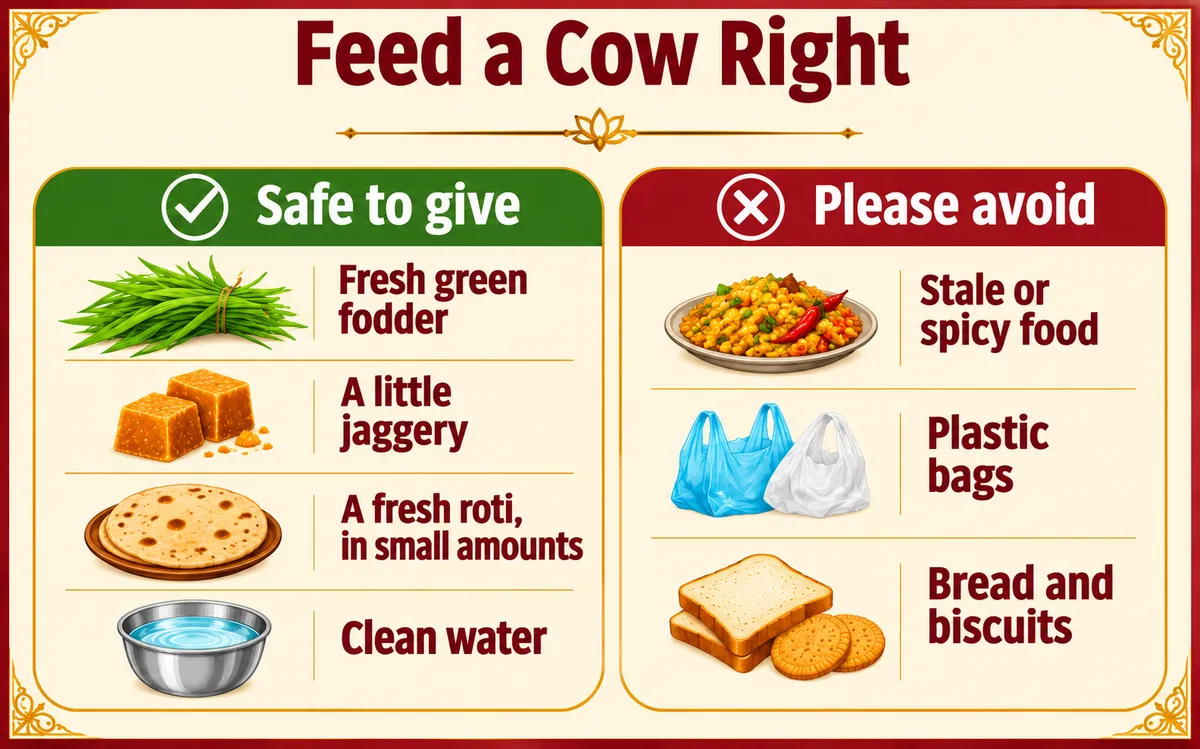
Good intentions can still hurt. The wrong food makes cows sick. Keep this simple guide in mind.
Safe to give | Please avoid |
|---|---|
Fresh green fodder | Stale, spicy or spoiled food |
A little jaggery | Food handed over in plastic bags, since cows often swallow the plastic too |
A fresh roti, in small amounts | Large amounts of bread, biscuits or other processed food |
Clean drinking water nearby | Approaching an unfamiliar cow from behind |
Summer needs extra care, so keep water close by when it's hot.
How to Choose a Genuine Gaushala
Giving online is easy, so a few minutes of checking is wise. Ask these questions:
Is it a registered trust, and does it share its registration details?
Can you see photos, updates or reports about the animals?
Does it explain how donations are used?
Does payment go to the trust's own account and not to a person's?
If you live nearby, can you visit and see it yourself?
Does it tell you what it actually needs? Good gaushalas usually do.
Be careful with anyone who pushes you to give quickly or won't answer questions. A genuine organisation won't mind being asked. And if you can't find out who runs it, where the cows are or how your money is used, give somewhere else.
Special Days for Gau Seva
Any day works. A few days carry extra meaning for many families.
Gopashtami: on Kartik Shukla Ashtami, cows are decorated and worshipped in memory of Krishna the cowherd.
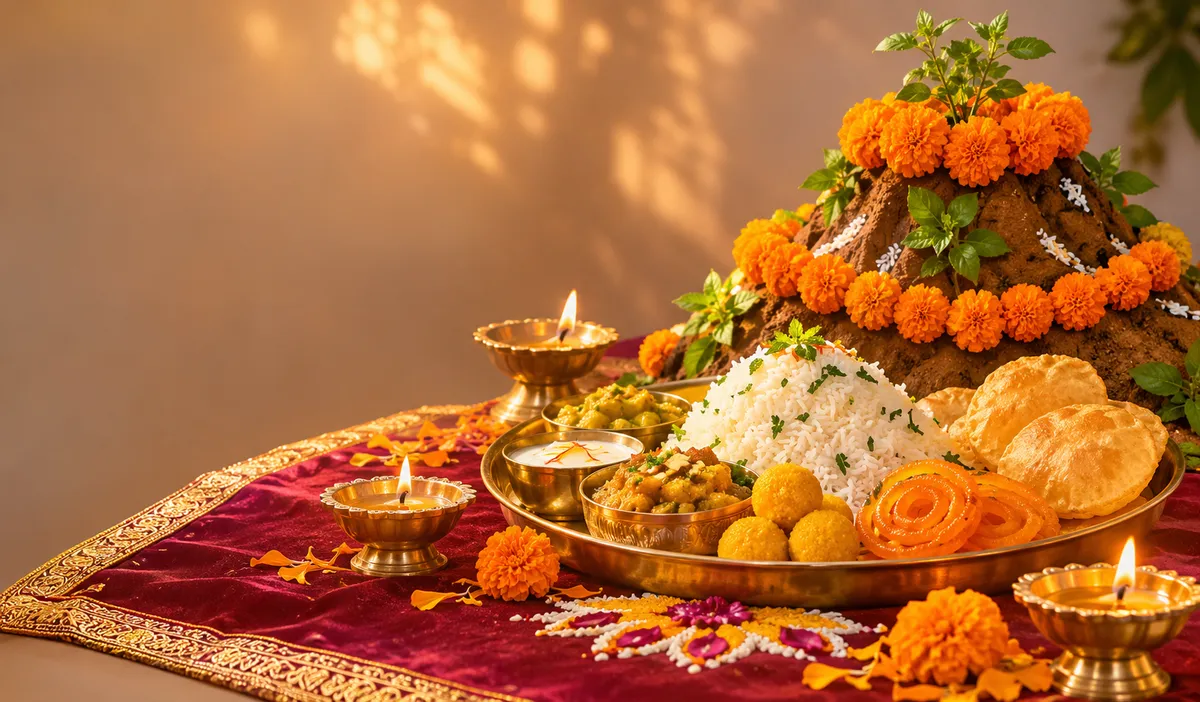
Govardhan Puja and Annakut: the day after Diwali, when many homes and temples offer food and honour cows. It's part of the five days in our Diwali 2026 guide.
Govatsa Dwadashi: a day to honour the cow and her calf, just before Dhanteras.
Makar Sankranti: a popular day to give fodder and jaggery to cows.
Amavasya: many people feed cows on new moon days as a form of daan.
A birthday, an anniversary or a family milestone works too. Plenty of families mark such days by feeding cows.
Gau Seva With Children
Kids take to this faster than adults. A child who feeds a calf once will talk about it for weeks. A few simple ideas help the habit stick:
Let them offer the fodder themselves, with you standing close.
Show them how to approach a cow calmly, from the front or the side.
Tell them the stories: Kamadhenu, Gopala, the first roti.
Teach them what not to feed. It's a good small lesson in responsibility.
Let them pick one day a month to give a little from their pocket money.
Always stay beside young children around cattle. Even gentle cows get startled.
Common Doubts About Gau Seva
What people sometimes think | What helps in practice |
|---|---|
Only wealthy people can do Gau Seva. | A handful of fodder counts. Any amount helps. |
You have to visit a gaushala. | You can feed a cow near home or arrange seva online. |
Any leftover food is fine. | Spoiled, spicy or plastic-wrapped food can harm a cow. |
Worship is enough. | Respect matters most when it becomes food, water and medical care. |
Old cows aren't worth the cost. | Old and sick cows need the most care, and that is the heart of Gau Seva. |
Gau Seva Through Mobile Mandir
Not everyone lives near a gaushala, and not everyone has hours to volunteer. On Mobile Mandir you can arrange Gau Seva through verified partners who carry it out and share video proof.
To be clear about what it is: it's a paid seva, not a donation, and it doesn't come with an 80G receipt. Read the details on the Gau Seva page before you book.
For the devotional side at home, you can sing an aarti, visit a temple through temple darshan or keep count of prayers with the Naam Jaap counter.
Gau Seva in India: Small, Steady, Enough
You don't have to fix everything. Feed a cow this week. Set aside a little each month. Send this guide to someone who keeps asking where to start. Gau Seva in India has lasted this long because ordinary people kept doing small things on ordinary mornings.
You can read more in our festivals section or browse all blogs. Get aartis, bhajans and temple darshan in one place by downloading Mobile Mandir on the App Store or Google Play.
Frequently asked questions
These are the questions people ask most about Gau Seva in India, from what it means and what to feed a cow to choosing a gaushala and whether seva on Mobile Mandir is a donation.
It's the practice of looking after cows: feeding them, giving water and shelter, treating them when they're unwell and keeping them safe.
Feed a cow near your home with fresh green fodder or a little jaggery. You can also support a trusted gaushala or arrange seva online.
Yes. You can give your time, spread the word or help carry supplies. Ask a gaushala what it needs before sending anything.
Fresh green fodder, a little jaggery and a fresh roti in small amounts. Avoid stale, spicy or spoiled food, and never give food in a plastic bag.
It's a shelter for cattle with fodder, a roof and medical care. Most residents are old, sick, injured or abandoned animals.
Check that it's a registered trust, shares updates and photos, explains how money is used and takes payment into the trust's own account. Visit if you can.
Any day works. Many families choose Gopashtami, Govardhan Puja, Govatsa Dwadashi, Makar Sankranti and Amavasya.
No. It's a paid seva carried out by verified partners, with video proof. It isn't a donation and there is no 80G receipt.
Yes. A small amount given regularly helps a gaushala plan its fodder and medical costs.