Karwa Chauth is coming up, and if you're keeping the vrat for the first time, you probably have a hundred small questions. What time do I eat sargi? Can I really not drink water? When will the moon actually show up? Who do I even pray to?
Don't worry. We've put all of it in one place, in plain language, the way you'd ask your mummy or dadi.
The short version
Married women fast from sunrise till they see the moon. They pray for their husband's long life and good health.
It comes a week or so before Diwali, on Kartik Krishna Chaturthi.
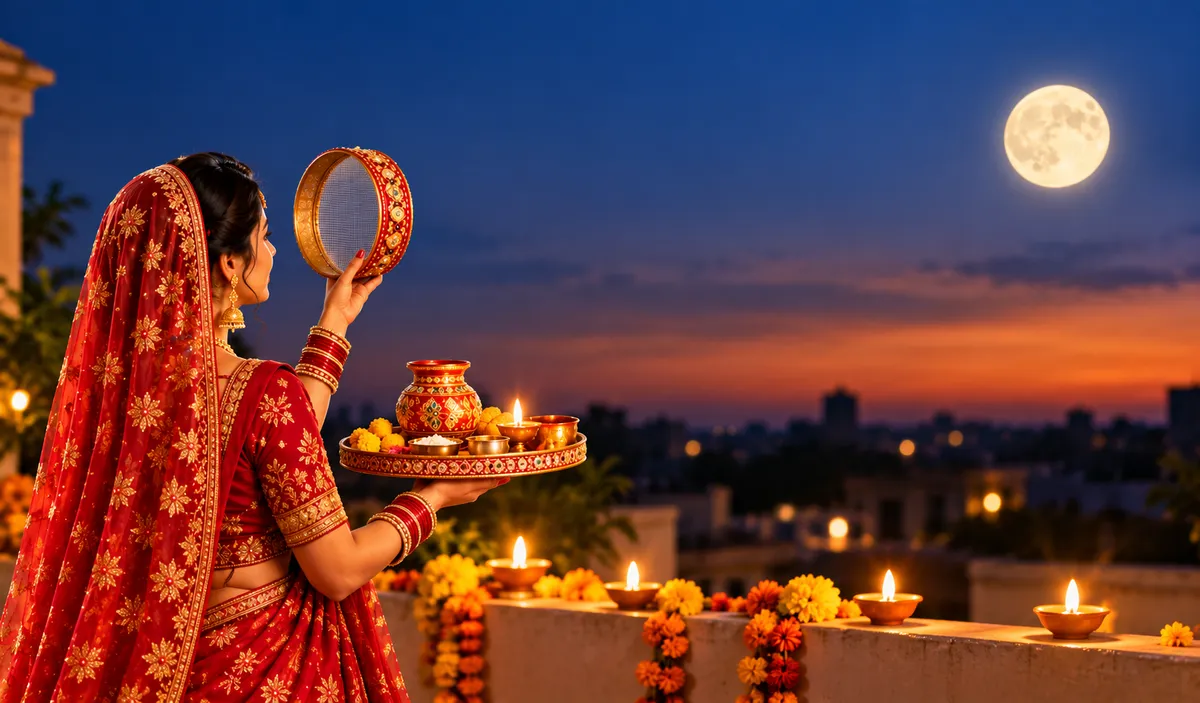
You eat sargi before sunrise, and you open the fast after seeing the chaand through a chhalni.
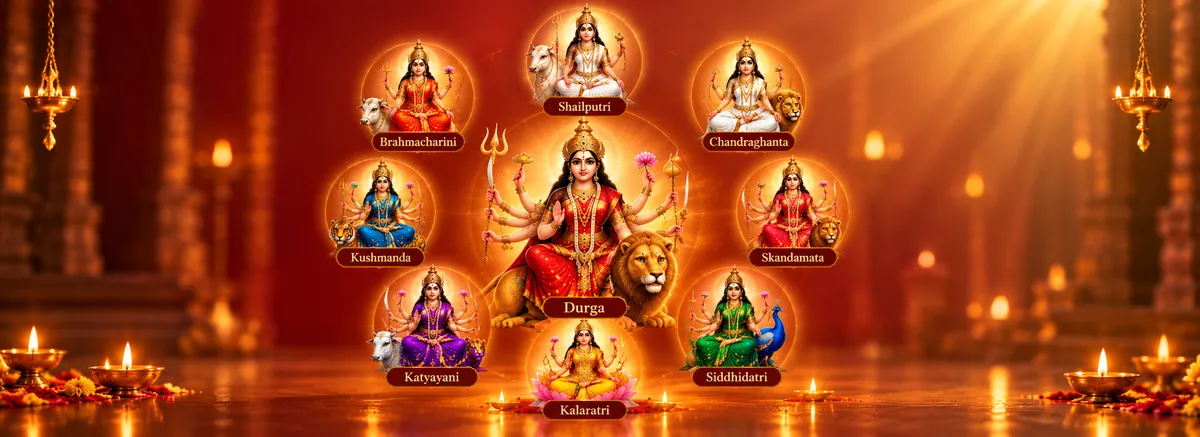
Karwa Mata (Maa Gauri) is the main devi. Shiv ji and Ganesh ji are part of the puja too.
Most families hear the Veervati katha.
This year some panchangs say 28 October and some say 29. Ask your pandit ji or check a local panchang, and don't go by one website.
What exactly is Karwa Chauth?
A karwa is a small mitti ka lota with a spout. Chauth just means the fourth day after the full moon. The karwa goes in the puja thali, and you use its water when you offer arghya to the moon in the evening.
The fast is usually nirjala, which means no food and no water the whole day. But it's not all hard work. There's mehendi the night before, new bangles, a nice suit or saree, and a lot of women sitting together, laughing and gossiping while they wait for the puja.
Why do women keep it?
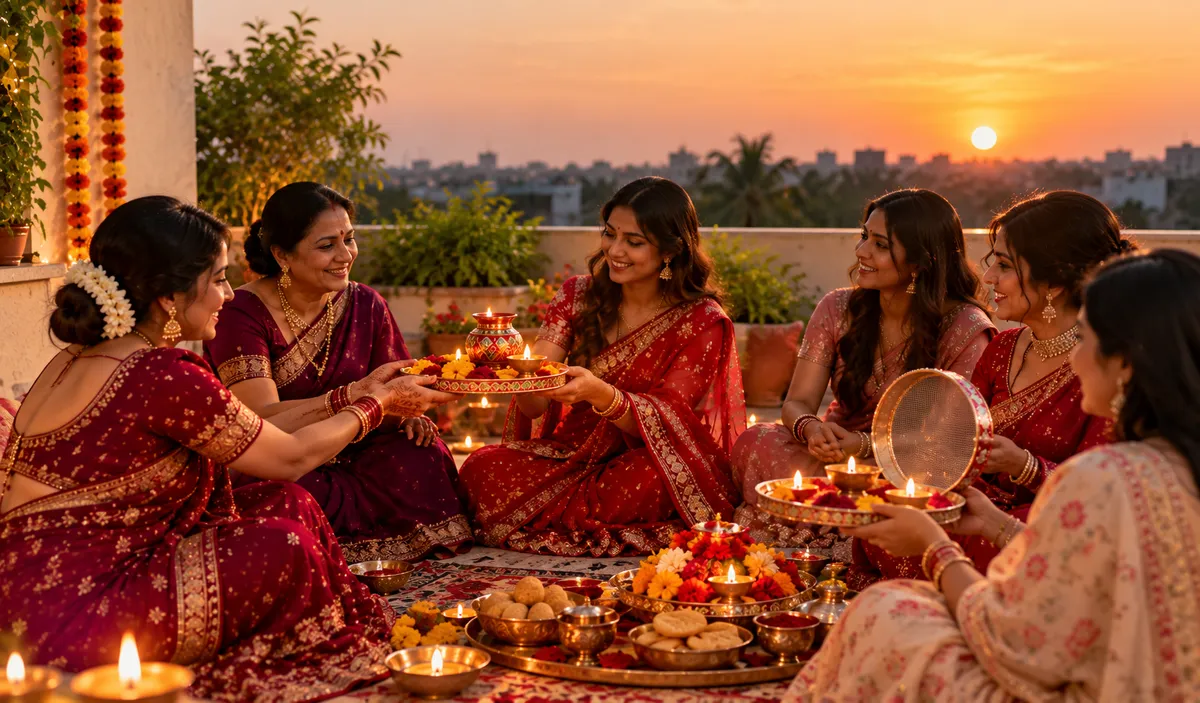
Mostly out of love and faith. You're praying that your husband stays healthy and the marriage stays happy. There are old stories behind it too, of Veervati, Karwa, Savitri and Draupadi, all of whom stood by their husbands in tough times.
A lot of people also say the evening puja was a way for new brides to make friends in their sasural. It's why you'll hear about "dharam behen" in Punjabi homes. Whatever the real reason, that feeling of sitting together is still the best part.
Karwa Chauth 2026 at a glance
Date | 28 October (Wednesday) or 29 October (Thursday), depending on the panchang |
Sargi | Before sunrise |
Puja time (Delhi) | Roughly 5:38 PM to 6:57 PM |
Moonrise (Delhi) | Roughly 8:15 PM |
Timings change by a few minutes between panchangs, and the moon can rise 15 to 45 minutes earlier or later depending on your city. Gurugram and NCR are close to Delhi. Still, ask your local pandit ji once.
Who do we pray to?
Devi / Dev | Why |
|---|---|
Karwa Mata (Gauri/Parvati) | She's the main one. Parvati did tapasya to get Shiv ji as her husband, so she stands for a long, happy marriage. |
Shiv ji | He and Parvati are the ideal couple in our stories. |
Ganesh ji | Every puja starts with him, and Chaturthi is his tithi too. |
Kartikeya | He's part of the Shiv family. Some homes include him, some don't. |
Chandra Dev (the moon) | You offer water to the moon, and only after that do you open the fast. |
How it changes from place to place
Where | What's special |
|---|---|
Punjab | Sargi from the saas is a big thing. The evening puja is done in a group and the thalis go round in a circle. |
Haryana and Delhi NCR | Mehendi, dressing up, and puja get-togethers in homes and societies. |
Uttar Pradesh | Katha, Karwa Mata puja, and seeing the moon through the chhalni. |
Rajasthan | Gauri puja and community gatherings, though every family has its own way. |
Your family might do things a little differently. That's normal. Follow your elders.
What you'll need for the puja
A karwa with lid, diya, ghee, roli, haldi, chawal, phool, agarbatti, mithai, fruits, mathri, a chhalni, sindoor, bindi, bangles, a photo of Karwa Mata, and a small lota of water for the moon.
How the day goes
Sargi, before sunrise. Fruits, dry fruits, mathri, sweets, coconut water. Add a bit of paneer or curd too, so you don't feel weak by noon.
Sankalp. Have a bath and tell yourself (and Bhagwan) that you're keeping the vrat.
The fast. Take it easy. Rest in the afternoon, stay out of the sun, play some bhajans.
Get ready. Red, maroon, pink, any bright colour is fine.
Puja and katha. Fill the karwa, light the diya, pray to Karwa Mata and the Shiv family, and listen to the katha. The thalis are passed around seven times.
Chaand. See the moon through the chhalni, offer water, and then look at your husband through the same chhalni.
Open the fast. Your husband gives you water and the first bite. Eat slowly.
The Karwa Chauth Katha
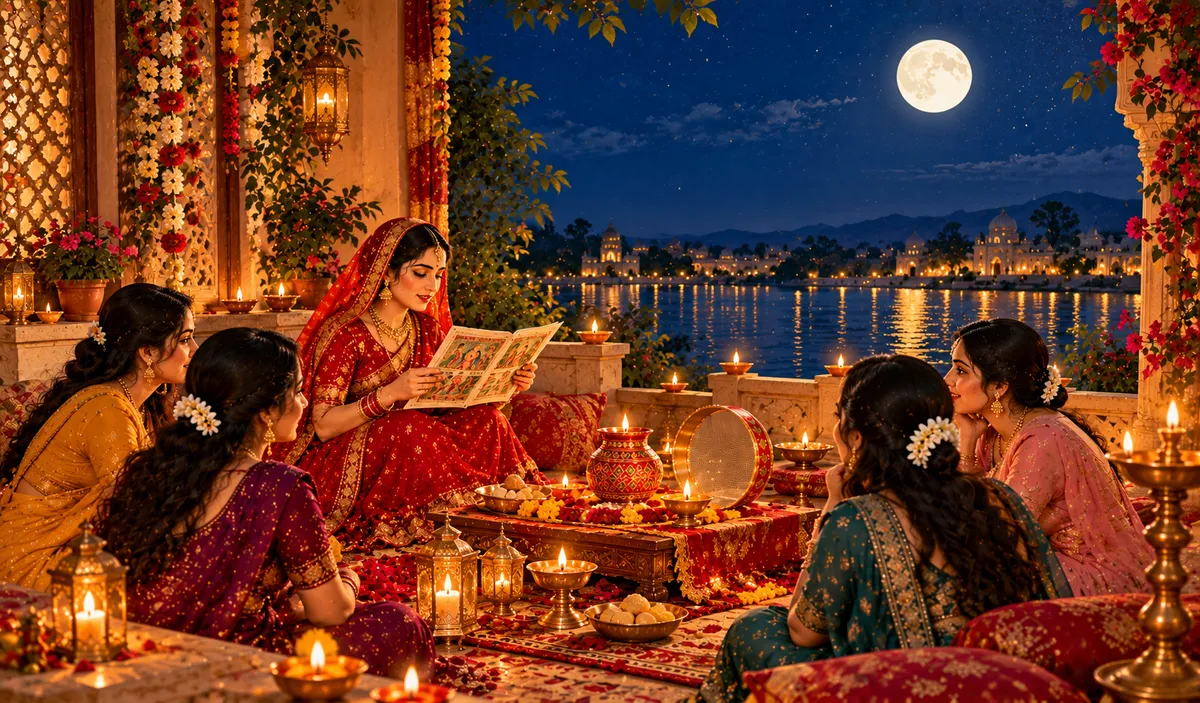
Veervati's story
Veervati was a queen with seven bhais who loved her a lot. It was her first Karwa Chauth after marriage, and she was at her maike. By evening she was so tired and thirsty that she could barely sit. Her brothers couldn't see her like that, so they lit a diya behind a tree and told her the chaand had come out.
She believed them and opened her fast. Right then she got news that her husband had fallen seriously ill. Maa Parvati told her the vrat had been broken before the real moonrise. So Veervati kept it again, this time with complete shraddha, and her husband got better. That's the reason elders say wait for the actual moon.
Karwa's story
Karwa's husband was pulled into a river by a magarmach. She tied it up with a kaccha dhaaga and went to Yamraj, asking for her husband's life. A lot of people say the festival is named after her.
Savitri and Draupadi
In some homes you'll also hear about Savitri, who followed Yamraj to get Satyavan back, and about Draupadi, who kept this vrat when Shri Krishna advised her during the Pandavas' bad time. Different families tell it differently, so listen to whichever one your house follows.
What to do
Eat sargi before sunrise. This one matters.
Keep the thali ready the night before.
Wear something bright.
Sit through the whole katha.
Open the fast only after you've actually seen the moon.
Take blessings from elders, especially your saas.
What most families avoid
Sargi after sunrise.
Sleeping in the afternoon, if your family follows that.
Scissors, needles, stitching and cutting on this day.
Black and white clothes.
Fighting or getting angry.
Leaving the puja in the middle.
Take care of yourself
Drink plenty of water and coconut water in the morning.
Don't eat too much fried or very sweet stuff in sargi, because it makes you thirsty faster.
Rest in the afternoon. Leave the heavy work for someone else if you can.
If you feel dizzy or very weak, stop and sit down. Don't push.
Pregnant, diabetic, on regular medicines, or have a heart, kidney or BP problem? Please ask your doctor first. A fast with fruits and water is also fine. It doesn't make your prayers any less.
Karwa Chauth these days
It's changed a bit. A lot of husbands now fast with their wives. Some unmarried girls and fiancées keep it too. And families living abroad join the puja on a video call. The rituals are the same, it's just a bit more relaxed now.
Last words
There's no one perfect way to do Karwa Chauth. In some homes it's pure shraddha, in some it's a tradition nobody wants to break, and in some it's mostly about dressing up and eating together at night. All of that is fine. Do it your family's way, and listen to your body.
Before the day comes
Check the date and moonrise time for your city.
Get the sargi and thali ready the night before.
Sit for the katha, and wait for the real moon.
Not feeling well? Keep a lighter vrat. Nobody is keeping score.
Take your elders' blessings, then enjoy the evening.
From all of us at Mobile Mandir, Happy Karwa Chauth to you and your family.
Frequently Asked Questions
Still confused about timings, water, or what to do if clouds hide the moon? Here are quick answers to the questions we get asked the most about Karwa Chauth.
A fast married women keep from sunrise till moonrise for their husband's long life and good health.
Late October. Some panchangs say 28th, some say 29th. Check with your local pandit ji or temple.
In Delhi, puja is around 5:38 to 6:57 PM and the moon comes out around 8:15 PM. NCR is close to this. Check your own city on the day.
The meal you eat before sunrise, usually given by your saas, before the fast starts.
In the traditional nirjala vrat, no. If you have a health issue, talk to your doctor. Many people keep a softer version with water or fruits.
Yes, it's up to you, and many do.
Many families go by the moonrise time in the panchang or what the pandit ji says. Ask your elders what your family does.
Customs differ. Many elders say your intention matters most. Your family pandit ji can tell you what to do.
Water or nariyal paani first. Then something light, like dal, sabzi or khichdi. Mithai can come after that.
No. It's about faith and family tradition, and nobody should force you.