It's just before the puja. The thali is being arranged, and somebody in the house asks the same old question: what else do we offer to Mata, did we forget something?
What should you offer to Goddess Lakshmi? The short answer: a lotus or rose, a whole coconut, a simple bhog like kheer or makhana with batasha, kumkum and akshat, and a ghee diya. Everything else depends on your budget and your family's custom.
This guide gives the reason behind each offering, so you can choose with understanding instead of by rote. Dhanteras and Diwali are close, so there's also a table by occasion in the middle.
What to Offer to Goddess Lakshmi: The Full List at a Glance
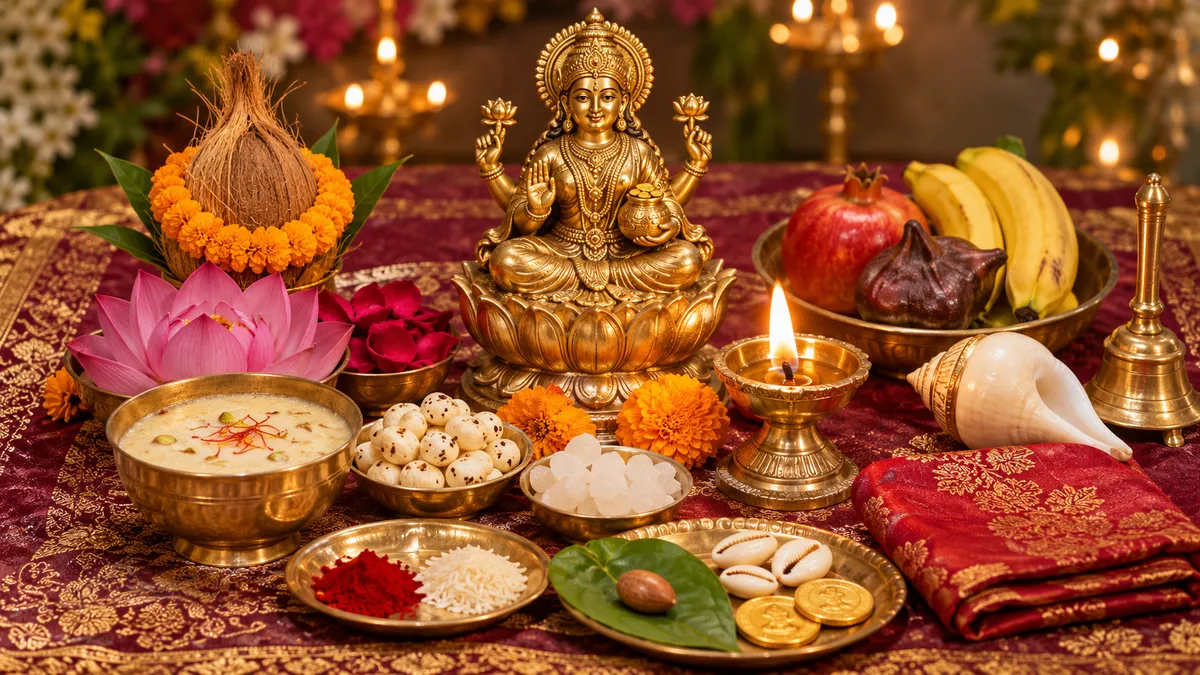
Let's look at the whole picture first. These are eight things homes offer most often, why each is considered dear to her, and one small tip. You don't have to gather everything. Pick what's easy to find and fresh. Save the table for later.
Offering | Why it is considered dear | Small tip |
|---|---|---|
Lotus flower | Lakshmi sits on a lotus, so it is seen as her favourite flower | Take a fresh, open flower. If you can't find one, a rose is fine |
Rose or marigold | Commonly offered when lotus isn't available | Buy fresh flowers in the morning |
Shriphal (coconut) | "Shri" means Lakshmi, which is why the coconut is called shriphal | Use a whole coconut with its tuft |
Makhana | Made from lotus seeds, so linked with the lotus | Roast lightly in a little ghee |
Batasha or mishri | A plain white sweet offering | A small handful is enough |
Kheer | A white, home-made sweet bhog | Add a few strands of saffron |
Singhara | A seasonal fruit often kept in the bhog around Diwali | Wash and clean it before offering |
Ghee diya | Light is considered auspicious and dispels darkness | Cow ghee is ideal. Otherwise use what you have |
Devotion Over Items: Read This First
Seeing a long list makes some people panic that they have to arrange everything. You don't. In tradition the offering is a symbol of devotion, so whatever is easy to get, fresh and clean is the right choice, and nothing more is needed.
Elders usually say the same. If all you have today is a single flower and a diya, offer them with your full heart. You can read a short background on the goddess on Wikipedia.
Flowers: Lotus, Rose and Marigold
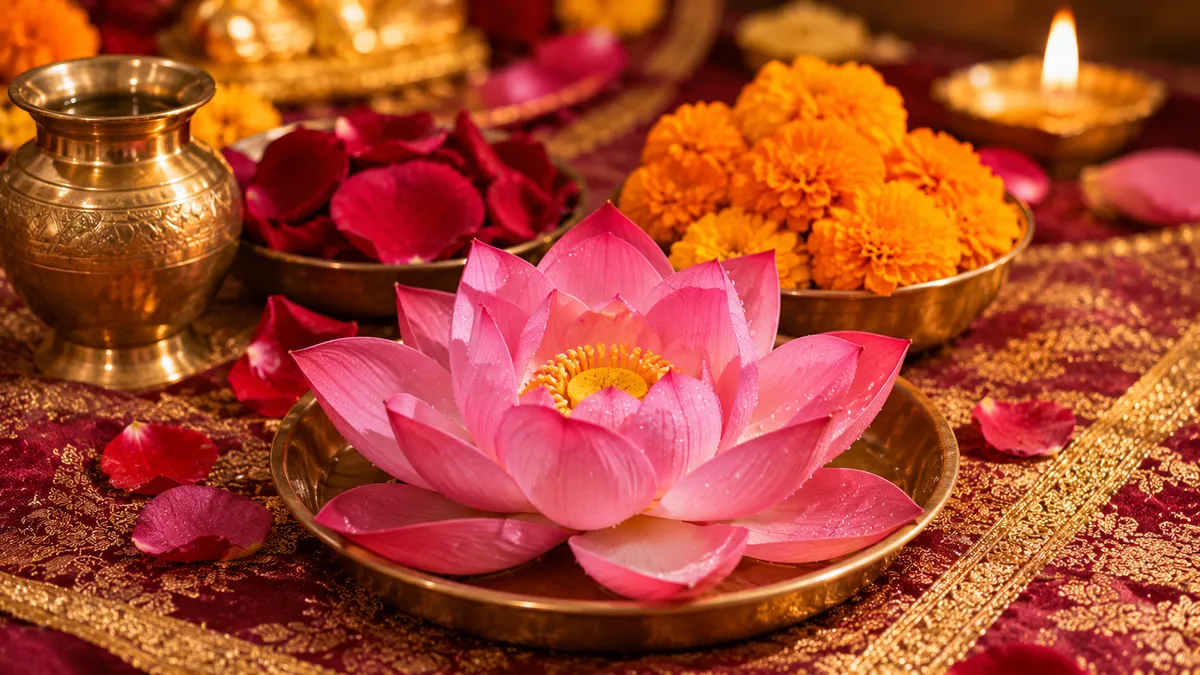
Flowers are the first offering and the easiest one. One of Lakshmi's names is Padma, the one on the lotus, which is why the lotus is the first choice. If it's not available, a rose or marigold works. Here are a few things worth knowing when you buy them.
Check freshness. Take open, fresh flowers, not wilted or torn ones.
Don't smell them first. Smelling a flower before offering it is not considered right.
Plan ahead on festival days. Lotus is scarce when markets are crowded, so buy a day before or early in the morning and keep it in cool water.
Making a garland? String the flowers only a few hours before the puja so they don't dry out.
Fruits and Dry Fruits: Shriphal, Singhara, Pomegranate
Among fruits, the shriphal comes first. Singhara, pomegranate and banana are also placed on the bhog plate. Whatever you take, it should be fresh, well washed and free of cuts or marks. Each item below has one short tip.
Shriphal: offer it whole. After the puja you can break it and share it as prasad.
Singhara: comes in at the start of winter, so it's fresh around Diwali.
Pomegranate, banana: keep whichever is easy to get.
Makhana and dry fruits: you can also decorate the bhog with dry fruits. Keep them clean and fresh.
Bhog and Sweets: Kheer, Makhana, Batasha
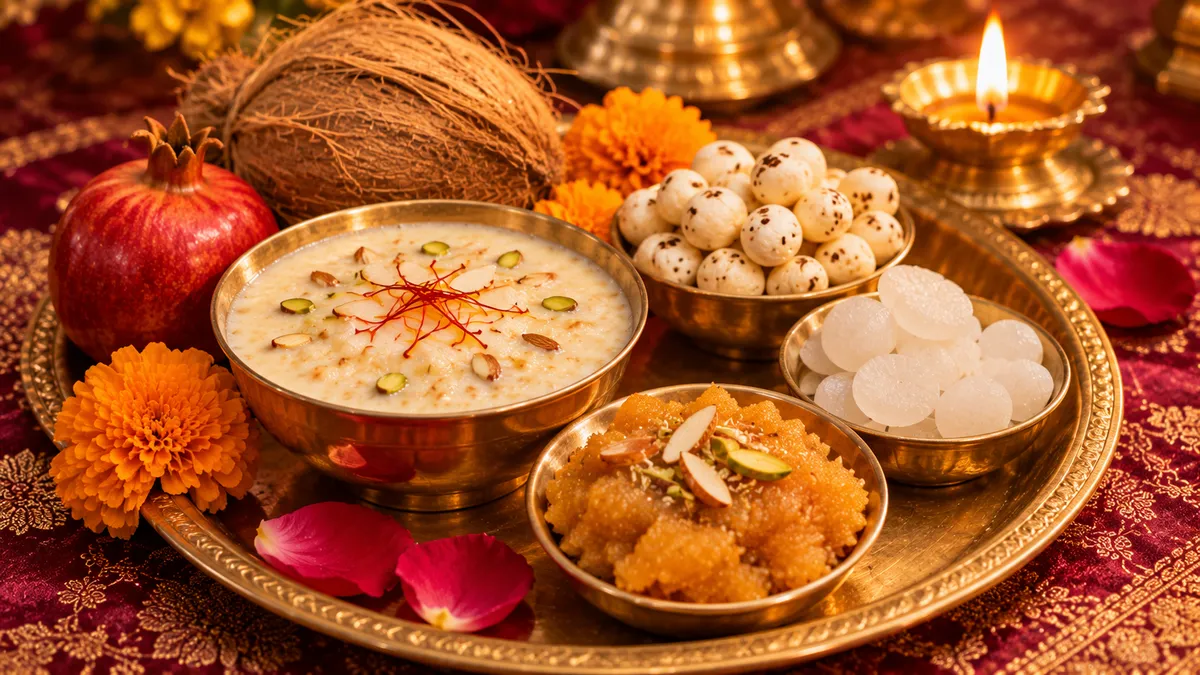
In sweets, simple works best. White or saffron-coloured things like kheer, batasha, mishri and halwa are commonly offered. If it's made at home, so much the better. Here are some easy options you can mix and match.
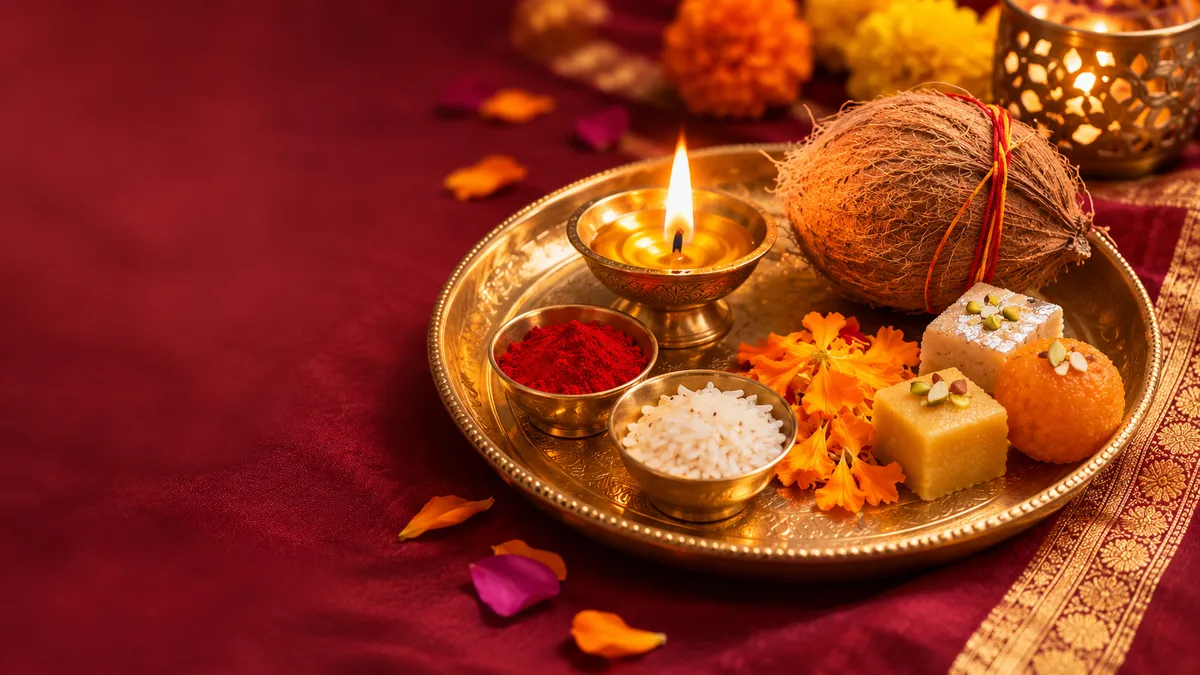
Kheer: milk, rice and a little sugar. Add a few strands of saffron and keep the sweetness low so everyone enjoys the prasad.
Makhana: roast lightly in ghee and offer. You can also add it to the kheer.
Batasha or mishri: the simplest bhog. Buy fresh and clean ones.
Halwa: suji halwa is a fixture of Lakshmi puja in many homes.
Keep in mind: make the bhog on the day of the puja and keep it covered so the prasad stays fresh.
Puja Samagri: Kumkum, Akshat, Perfume and Cloth
Besides flowers and bhog, a few small things are also offered, and people forget them often. So here they are in one table, with what each is for and how to offer it. Even here, a little goes a long way.
Item | What it is for | How to offer |
|---|---|---|
Kumkum and haldi | Tilak and auspiciousness | Apply tilak to the Mata, then to your own forehead |
Akshat (whole rice) | A symbol of completeness and prosperity | Use whole grains, not broken ones |
Perfume (itr) | An offering of fragrance | A drop or two of rose, kewda or sandalwood |
Cloth or chunri | Adornment | A clean red, pink or yellow cloth |
Cowrie and a coin | Considered auspicious | Keep on the chowki, then in the cash box or safe after puja |
Betel leaf and supari | A traditional part of puja | Wash the leaf and offer it with a supari |
Gangajal | For purification | Sprinkle a little, or mix it into the water |
Diya, Ghee and Shankh: Offering Light
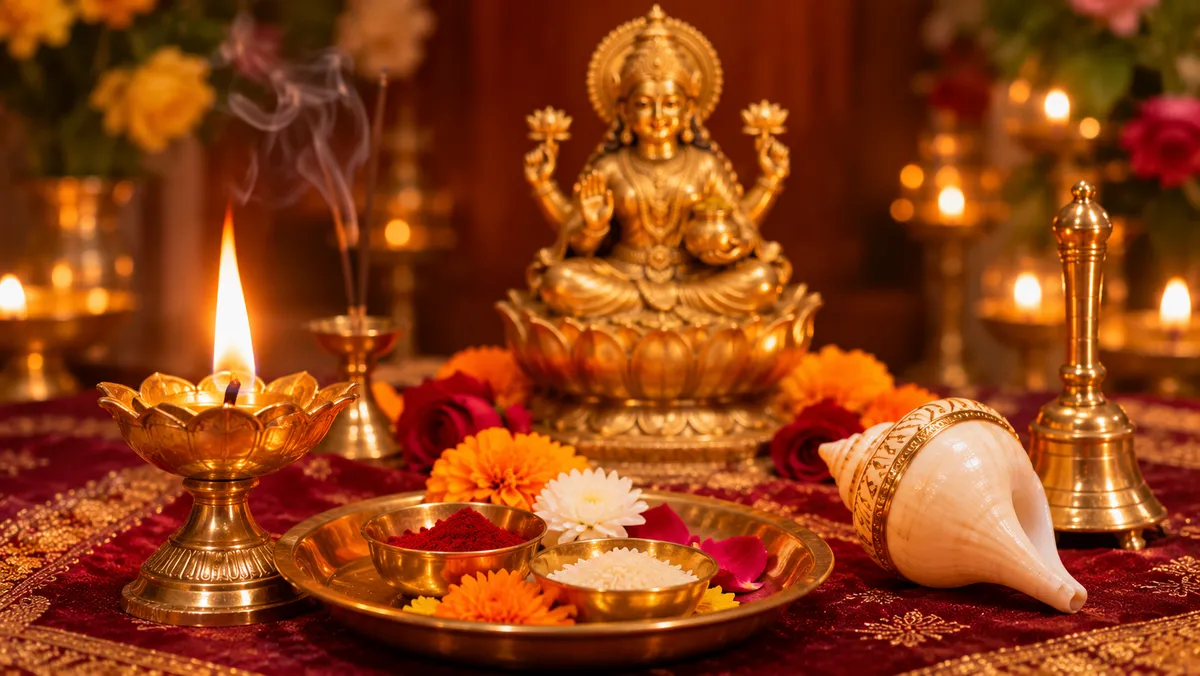
Light has its own place in Lakshmi puja, so the diya counts as an offering too. A diya of cow ghee is considered best. If you don't have that, a diya of sesame or mustard oil can be lit instead. Keep the following in mind.
Wick: use a clean cotton wick and enough oil or ghee for the diya to burn through the puja.
Shankh: many families blow the conch before starting. If you don't have one, a bell works.
Safety: keep the diya on a steady surface, away from curtains, dupattas and children. Never leave a lit lamp alone.
What to Offer on Which Occasion
The offering looks a little different for daily puja and festival puja. This table shows what to keep on which occasion. This year Dhanteras falls on a Friday, and Diwali is on Sunday, 8 November. Links to the full guides are included.
Occasion | What to offer | Keep in mind |
|---|---|---|
Every Friday | One flower, batasha or mishri and a ghee diya | Friday is considered dedicated to Lakshmi. Evening puja is common |
Dhanteras, Friday 6 November | Flowers, kheer or sweets, a diya, and an offering near whatever new item you bought | Full details in our Dhanteras 2026 guide |
Diwali, Sunday 8 November | Lotus, shriphal, kheer or sweets, makhana and batasha, kumkum and akshat, cowrie and coin | See our Diwali 2026 guide for the muhurat |
New shop or new home puja | Flowers, shriphal, sweets and a ghee diya | Ask your pandit ji for the right timing |
How to Offer: A Step-by-Step Method
Every home has its own way, so take this as a simple framework. Roughly the order is: cleaning, Ganesha, flowers, bhog, diya, aarti and finally prasad. Each step below is in plain words, so you can follow it without stress.
Clean the puja area. Bathe and wear clean clothes.
Set up the chowki. Spread a clean cloth and place the picture or idol of Lakshmi.
Greet Ganesha first. Every puja starts with him.
Light the diya and blow the shankh if you like.
Offer tilak and akshat. Apply tilak with kumkum and haldi.
Offer flowers. A lotus is best. Otherwise a rose or marigold.
Place the shriphal and fruit, then a drop or two of perfume and the cloth.
Offer the bhog. Arrange kheer, makhana or batasha on a thali and place it with both hands.
Aarti and mantra. You'll find the Lakshmi Mata aarti here.
Share the prasad. Give it to the elders of the house first.
What to Offer to Lakshmi on a Small Budget
An offering doesn't have to be expensive. If the budget is tight, the puja still counts as complete. The table has three levels so you can pick what suits you and not feel any pressure about it. Devotion decides, not the price tag.
Level | What to offer | Keep in mind |
|---|---|---|
Very simple | One fresh flower, mishri or batasha, a ghee or oil diya | Offer it fully, without rushing |
Regular | All of the above, plus kheer, a fruit and a shriphal | Make the bhog fresh |
Special occasion | Lotus, makhana, sweets, cowrie and coin, perfume and cloth | Don't take a loan for a bigger offering |
What Not to Offer to Lakshmi and What to Avoid
More important than what you offer is what you don't. Most of it comes down to cleanliness and freshness, and none of it is a hard rule. The table is quick to scan, so give it one read before the puja begins.
Do | Don't |
|---|---|
Offer fresh, open flowers | Offer wilted, dry or torn flowers |
Use whole akshat | Offer broken rice |
Wash fruit and clean it | Keep stale or marked fruit |
Make simple, sattvik bhog | Offer food with onion or garlic, which many families avoid |
Follow your family's custom | Change your puja after every list on social media |
Stay within your budget | Take a loan for the offering |
What to Do With the Offerings Afterwards
Some work remains after the puja ends, and this is where people often get stuck. The prasad has to be shared, the flowers removed with respect, and the diyas picked up only after they cool down. This short list should help.
Prasad: after the bhog, share it the same day with family, neighbours and those in need.
Shriphal: after the puja you can break it and share it as prasad.
Flowers: once dry, put them in garden soil or under a tree. Don't tie them in plastic and throw them in a river or drain.
Diyas: pick them up when cool and wipe away leftover oil or ghee.
Cowrie and coin: keep in the safe, cash box or puja room as your family does.
A Simple Lakshmi Mantra
A long chant isn't needed. One short mantra, said slowly and with attention, is enough. This is the one commonly said in Lakshmi puja. It can vary by tradition, so if your pandit ji has given you a version, use that one.
ॐ श्रीं महालक्ष्म्यै नमः।
Meaning: Salutations to Mahalakshmi. Some people chant it 108 times, others only 11 or 21. To keep count, use the Naam Jaap counter in the app.
Offer Simply, Share With Devotion
If you still wonder what to offer to Goddess Lakshmi, the most dependable answer is this: whatever is fresh, clean and brought with heart. A lotus or rose, a shriphal, a simple bhog and a ghee diya, and nothing in the puja is lacking. Honestly, that's enough.
After the puja you can do a few rounds of Naam Jaap or sing the Lakshmi Mata aarti. To learn more about the deities, see our deities page.
For festival preparation, read our Dhanteras 2026 guide and Diwali 2026 guide. If you'd like to visit a mandir, browse temple darshan on the app, and read our other festival guides.
Get the Mobile Mandir app on the App Store or Google Play.
Wishing you all Mata Lakshmi's blessings from all of us at Mobile Mandir.
Frequently Asked Questions
Here are the questions people ask most about offerings to Lakshmi, from flowers, bhog and coconut to Friday, tulsi, Diwali and budget. The answers are short, so you can read them even while you're in the middle of preparing for the puja.
The lotus is considered her favourite, since Lakshmi sits on a lotus and one of her names is Padma. If you can't find one, a rose or marigold can be offered. Just make sure the flowers are fresh and open.
Simple bhog like kheer, makhana, batasha, mishri and halwa is commonly offered. White or saffron sweets are traditional. Whatever you make, make it fresh and share it with everyone after the puja.
It isn't necessary, but it is considered auspicious. The coconut is called shriphal and shri means Lakshmi. If you don't have one, the puja can still be complete with flowers, a diya and bhog.
Friday is considered dedicated to Lakshmi. One fresh flower, batasha or mishri and a ghee diya are enough. You can make kheer in the evening puja too, but there's no compulsion.
Tulsi is usually linked with the worship of Lord Vishnu. Many families offer it in Lakshmi-Narayan puja, but customs differ. So it's best to ask your pandit ji or follow your family's practice.
In Diwali puja people keep lotus, shriphal, kheer or sweets, makhana and batasha, kumkum and akshat, and cowrie and coins. Read our Diwali 2026 guide for the muhurat and full vidhi. Diwali is on Sunday, 8 November this year.
One fresh flower, a little batasha or mishri and a ghee or oil diya are enough for the whole puja. The offering is seen as a symbol of devotion, so there's no need to stretch your budget or take a loan.